



EM Fellowship Match Advice: Ultrasound Fellowship
The EM Residency Match Advice Series is back with its latest installment! We put the focus on emergency ultrasound fellowships, and our sage panel walks us through some of the changes to this year's application cycle. For the first time, Ultrasound Fellowship Programs will participate in the NRMP match program. The Society for Clinical Ultrasound Fellowships (SCUF) provides the fellowship application service (similar to the role of ERAS, but shorter!) for the residency match. Hosted by Drs. Michael Gisondi and Michelle Lin, watch the video or listen to the podcast to learn about important changes to the application process and [+]

5 Tips to Developing the Daily Habit of Writing in Academia
As newly-minted education fellows, we are expected to be productive writers, and we wanted to share what we’ve learned so far about developing the daily habit – yes, habit! – of writing. For some people, writing seems easy. But not everyone can write non-stop, like they’re running out of time. Writing productively is an important skill to learn, especially if you have your sights set on an academic career. Here are 5 tips to get you started! [+]

Trick of the Trade: Hair tourniquet removal using depilatory cream
A hair tourniquet occurs when a strand of hair coils around a patient’s appendage. It can cause damage to the skin, nerves, or affect blood supply. It is more common in infants as their skin appendages are small which allows for hair or thread to trap inside. Because in some cases these pediatric patients can present with inconsolable crying, it is important to perform a thorough physical examination to evaluate for the presence of such a hair tourniquet. We present a simple trick for removing a hair tourniquet using depilatory cream! [+]

Resuscitation of a Drowning Victim: A Literature Review
Drowning cases peak this time of year and represent a leading cause of mortality in children. For example, drowning represents the leading cause of death in boys ages 5-14 years old, and worldwide, there are 500,000 annual deaths from drowning.1 Hypoxic injury and subsequent respiratory failure represent the primary causes of morbidity and mortality. Although providers are typically taught to be aware of possible trauma (e.g. cervical spine fracture) when evaluating a drowning case, less than 0.5% of drownings are traumatic.2 The duration of immersion, volume of aspirated fluid, and water temperature dictate clinical outcomes.1 We review the presentation, pathophysiology, [+]

I am Dr. Craig Newgard, EM Physician and Researcher: How I Stay Healthy in EM
Dr. Craig Newgard is an emergency physician from Portland, Oregon. When he is not in the ED, Dr. Newgard can be found on his mountain bike, conquering the unpredictable trails of his community. Although it can be challenging to incorporate a routine schedule into life as an emergency physician, he has found that it helps him achieve balance and avoid burnout. Here’s how he stays healthy in EM! [+]

ACMT Toxicology Visual Pearls: Toxic Mouth Pain
A middle-aged Asian female presents to the emergency department complaining of 2-3 days of mouth pain. She has chewed betel nut for a number of years. Which of the following is true regarding her presentation and management? Debridement should be avoided. Metronidazole is contraindicated due to the potential of a disulfiram-like reaction. Oral secretagogues should be used due to the anticholinergic effects. The patient is at increased risk of oral cancer. [+]

IDEA Series: Building a High Fidelity Biosimulation Task Trainer for Resuscitative Hysterotomy
The Problem The peri-mortem cesarean section, rebranded in recent years as the “Resuscitative Hysterotomy”, is a potentially lifesaving procedure for both a pregnant mother and her child. It is both daunting and infrequently performed, necessitating frequent review of indications, techniques, and pitfalls to ensure the best possible outcome for mother and baby. The decision to perform this procedure should be made only in pulseless women with a uterine fundus above the umbilicus, which indicates a gestation of >20 weeks.1,2 Prior studies suggest the procedure should be performed within 5 minutes of maternal cardiac arrest in order to maximize the probability of [+]

Ultrasound For The Win! – 57F with Chest Pain and Dyspnea #US4TW
Welcome to another ultrasound-based case, part of the “Ultrasound For The Win!” (#US4TW) Case Series. In this case series, we focus on a real clinical case where point-of-care ultrasound changed the management of a patient’s care or aided in the diagnosis. In this case, a 57-year-old woman presents with chest pain and dyspnea. [+]

John MacIsaac, BSc. Hons, MD Candidate (2019)
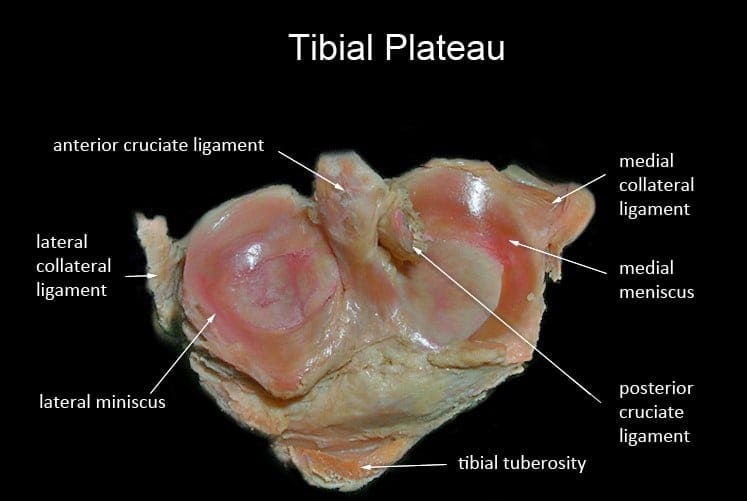
SplintER Series: Tibial Plateau Fractures | Leg Day #1
The SplintER series is back with a new sub-series – Leg Day! We will review lower extremity orthopedic injuries, introduce advanced concepts, and highlight ways to implement these into your next shift. In this post, we summarize the appropriate way to evaluate, diagnose, and manage tibial plateau fractures. This post is peer-reviewed by Dr. Kori Hudson, one of our expert sports medicine colleagues! Please read below for her commentary. [+]

TLDR Book Review: “make it stick: The Science of Successful Learning”
Bookstore shelves and Amazon lists are filled with self-help titles that promise to make you a better manager, a better parent, or a better fishmonger. But most of them suffer from the same weakness: 2 pages of good practical advice is padded with 298 pages of filler. Our new column TLDR (Too Long Didn’t Read) is a solution to what we call the McNugget Problem: trying to find the 5 bullet points of meaty goodness suspended within a mass of stale anecdotes, overcooked platitudes, and bad food analogies. Our TLDR goal is to find the critical take-aways in each book [+]