



ALiEMU 2.0 relaunches with a flexible coached team model
After listening to feedback from educators, and specifically residency directors, who use the ALiEMU platform for asynchronous conference credit, we have decided to reconfigure our learning management system (LMS) platform to accommodate more fluid and diverse teams in flexible fashion. Residents and medical students within the same “class”? No problem. Pharmacy students doing peer-teaching around the world? No problem. Your program is not listed in our drop-down menu? We got rid of that requirement to form teams. The possibilities are endless. [+]

I am Dr. Kelly Williamson, Assistant Residency Program Director: How I Stay Healthy in EM
Dr. Kelly Williamson is an emergency physician and Assistant Residency Program Director from Advocate Christ Medical Center in Chicago. Keeping active and eating right are core values when it come to Dr. Williamson’s wellness. When she’s not spending time in the clinical or academic setting, Dr. Williamson can be found running on the lakefront or spending time with her family. Here’s how she stays healthy in EM! [+]

Teaming Tips Case 2: Resistance to Change | ALiEM Faculty Incubator
Many of you are asked to take a leadership role within your department: managing a research team, joining your administration, or spearheading a clinical effort. It is easy to feel unprepared for these roles, and there are many pitfalls waiting to sabotage your team’s productivity. The ALiEM Faculty Incubator has created a series of 10 case-based teaming problems to provide you with evidence-based advice and solutions for tackling some of the more common problems encountered in our professional team experiences. [+]

IDEA Series: Utilizing On-Shift Shared Google Docs as an Interactive Digital Whiteboard
The Problem Despite the importance of on-shift teaching, finding an effective and efficient method can be challenging when juggling the multiple simultaneous demands of the emergency department. Various EM educators have recently shared their innovative methods for on-shift teaching. Dr. Amal Mattu has championed the #WhiteboardTeaching movement on Twitter, and Drs. Michelle Lin and Rob Cooney have championed the use of post-it notes paired with educational pearls.1,2 Computers, however, have become an inescapable part of ED workflow. Physicians may spend more time in front of computers than talking to patients.3 Perhaps computers, which are readily available at most physician work-stations, can [+]
I am Dr. Julianna Jung, Director of Undergraduate Medical Education: How I Stay Healthy in EM
Dr. Julianna Jung is Associate Professor of Emergency Medicine and Director of Undergraduate Medical Education at Johns Hopkins University. She shares an important story about a challenging case, and how its changed her outlook to be more compassionate for ourselves, colleagues, and patients. Carving out time to remain active, outdoors, and engaged in her outside interests are part of her formula for maintaining wellness. Learn more about how she stays healthy in EM! [+]
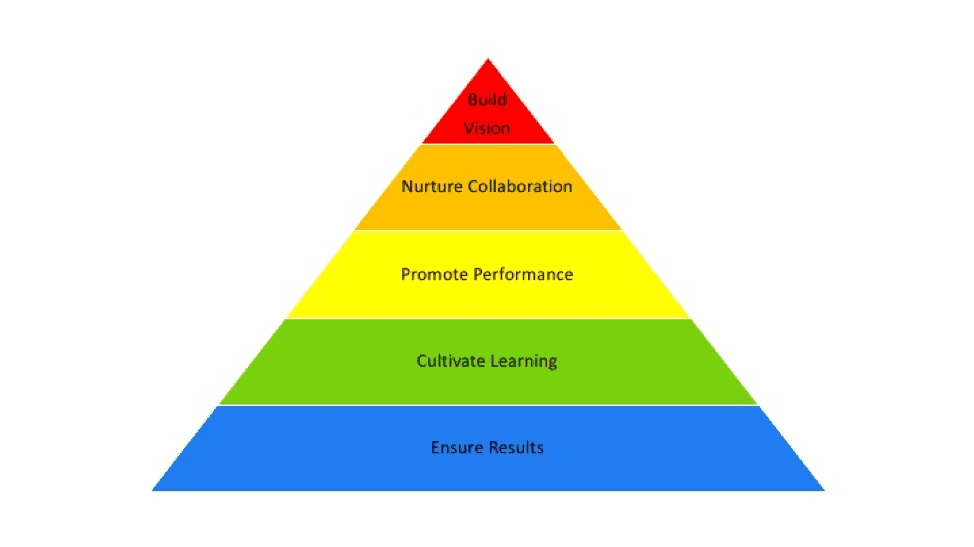
Teaming Tips Case 1: Project Leadership Pyramid | ALiEM Faculty Incubator
Many of you are asked to take a leadership role within your department: managing a research team, joining your administration, or spearheading a clinical effort. It is easy to feel unprepared for these roles, and there are many pitfalls waiting to sabotage your team’s productivity. The ALiEM Faculty Incubator has created a series of 10 case-based teaming problems to provide you with evidence-based advice and solutions for tackling some of the more common problems encountered in our professional team experiences. [+]

PECARN Study: Accuracy of Urinalysis for Febrile Infants ≤60 Days Old
The reported accuracy of the urinalysis (UA) for diagnosing urinary tract infections (UTI) is febrile infants ≤ 60 days has been widely variable. Some guidelines specifically exclude these patients due to this variability or recommend urine culture as the primary test.1 Accuracy of the Urinalysis for Urinary Tract Infections in Febrile Infants 60 Days and Younger, published in Pediatrics in February of 2018, addressed this topic head-on.2 The authors sought to evaluate the accuracy of the UA by analyzing data in a planned secondary analysis of a prospectively collected data set, as part of the Pediatric Emergency Care Applied Research [+]

4 New Podcasts on the Opioid Initiative | ACEP E-QUAL Series
The American College of Emergency Physicians (ACEP) features 3 quality improvement targets within their Emergency Quality Network (E-QUAL) initiative: sepsis, imaging, and chest pain. Most recently, they added a fourth new focus on the opioid epidemic. This opioid initiative covers best-practice approaches and strategies for managing opioid-related complications. In collaboration with ACEP E-QUAL, we have remixed and distilled 5 of their webinars into 4 podcasts. [+]
ALiEMU AIR Obstetrics and Gynecology Module
Welcome to the Obstetrics and Gynecology (Ob/Gyn) Module! After carefully reviewing all relevant posts from the top 50 sites of the Social Media Index, the ALiEM AIR Team is proud to present the highest quality online content related to Ob/Gyn emergencies. 10 blog posts within the past 12 months (as of July 2018) met our standard of online excellence and were curated and approved for residency training by the AIR Series Board. We identified 2 AIR and 8 Honorable Mentions. We recommend programs give 4 hours (about 25 minutes per article) of III credit for this module. [+]

Ultrasound guided peripheral IV: It’s time to clean up our act
Have you ever performed a procedure, when suddenly, you are overcome by a sinking feeling that something just is not right? A mix of fear, guilt, and anger: Fear that you endangered a patient, guilt that you missed an important step in the procedure, and anger at yourself for being careless. The oath we take as physicians echoes loudly: Primum non nocere. First, do no harm. [+]