Opportunities for Naltrexone: AUD and the Emergency Department

naltrexone AUD

Take-Home Point:

Naltrexone is a safe and effective medication for patients with alcohol use disorder that can improve morbidity by decreasing alcohol intake, and most importantly, can be initiated in the emergency department (ED).

The Problem: Alcohol Use Disorder in the Emergency Department

Alcohol use and its varied consequences, from trauma to withdrawal, are frequently encountered in the ED. Despite being ubiquitous in the ED, alcohol use disorder (AUD) often goes under-recognized and undertreated in the ED. The numbers are staggering– approximately 29 million individuals across the country and 400 million across the globe meet criteria for AUD [1]. Yet few patients ever actively receive any treatment, and far fewer are connected to resources from the ED [2].

This represents a massive missed opportunity. While there is a long-held belief that the ED is not an ideal setting to screen and treat patients with various substance use disorders, as emergency physicians, we have been trailblazers in the management of opioid use disorder. It’s time to apply the same innovative approach to AUD. The tools exist—brief screening instruments, effective medications (such as naltrexone [3]), and growing institutional support—but implementation remains limited.

An enduring myth that AUD is simply a “moral failing” may contribute to treatment gap. In reality, AUD is a chronic relapsing disorder with neurobiological foundations, and evidence-based treatments can significantly improve outcomes.

This article will briefly review key AUD screening tools but primarily focus on medication-based treatment of AUD with naltrexone in the ED.

Screening for AUD in the Emergency Department

Identifying AUD in the emergency department is an essential first step, as the ED may be the only healthcare interaction for many patients. While the ED can often be a hectic environment, there are several brief, validated screening tools that can effectively identify AUD in patients.

1. SASQ (Single Alcohol Screening Question)

  • Question: “How many times in the past year have you had X or more drinks in a day?” (X = 5 for men, 4 for women)
  • Threshold: ≥1 day is a positive response
  • Pros [4]:
    • Quickest screening option
    • >80% sensitivity
    • Could easily integrate into triage process
  • Cons:
    • Only captures heavy episodic drinking and may miss chronic daily drinking below binge threshold (e.g., someone who has 3 drinks every single day would screen “0 times” yet is over weekly limits)
    • A positive result does not distinguish severity and needs further screening

2. AUDIT-C (Alcohol Use Disorders Identification Test – Consumption)

  •  Assesses frequency, quantity, and binge drinking (MDCalc calculation)
    • Frequency: “How often do you have a drink containing alcohol?” (score 0-4 ranging from never to 4+ times/week)
    • Quantity: “On a typical drinking day, how many drinks do you have?” (score 0-4 ranging from 1–2 drinks to 10+ drinks)
    • Binge Drinking: “How often do you have ≥6 drinks (for women, ≥4 drinks) on one occasion?”
  • Pros [5, 6]:
    •  Brief
    • >90% sensitivity and specificity
    • Well-validated
  • Cons:
    • Slightly longer than SASQ tool
    • May miss patients who drink modestly, but chronically
    • Can yield false positives in some heavy-but-controlled drinkers
    • Slightly lower specificity than full AUDIT for AUD

3. STAD (Screening Tool for At-Risk Drinking)

  • 2 questions derived from full AUDIT tool
    • Frequency: “How often do you have 6 or more drinks on one occasion?”
    • Guilt: “How often during the last year have you felt guilt or remorse after drinking?”
  • Pros [7]:
    • Brief
    • Performs similarly to AUDIT-C (sensitivity >80% and specificity >95%) in detecting at-risk drinking despite being a shorter tool
    • Designed specifically for high-volume settings like EDs
  • Cons:
    • Newer tool with limited research
    • Does not directly ask about dependence behaviors and primarily focuses on binge drinking
    • Requires further screening if positive

Once patients with AUD are identified, the next step is connecting them with valuable resources and starting treatment. One option is naltrexone, a medication that is FDA-approved to treat alcohol use disorder and reduce cravings [8].

The Evidence for ED Initiation of Naltrexone

Traditionally, initiating AUD medications has not been part of routine emergency care – but this is changing. While there are numerous medications currently approved for use in alcohol use disorder, only roughly 1% of patients receive treatment each year [9]. There was a recent study that demonstrated that initiation of oral naltrexone was not only effective but also feasible in the ED setting [10]. In this study, patients were initiated on 50 mg PO naltrexone in the ED, and then prescribed a 14-day starter pack with outpatient follow-up arranged. They found significant improvements in quality of life, reduction in cravings for alcohol, and, importantly, a decrease in the number of drinks per day. Encouragingly, one-third of patients were engaged in treatment at 1-month [10]. These are all promising results, which further emphasize the importance of treating this condition in the ED.

Don’t just take our word for it. Professional organizations are following suit and taking a more active role in improving the care of patients struggling with AUD. For instance, the recent SAEM Guidelines for Reasonable and Appropriate Care in the Emergency Department (GRACE-4) have further emphasized the importance of medications for AUD. They have developed protocols and recommendations for medications such as naltrexone, acamprosate, disulfiram, and gabapentin. One of their primary recommendations is that for any “adult ED patients with AUD being discharged home, we suggest prescribing an anti-craving medication” [11].

Barriers to Naltrexone Initiation

Unfortunately, there are barriers to implementing any form of medication for AUD in the ED.

  1. Screening for AUD is relatively uncommon in the ED setting. As discussed earlier, there are screening tools that can be rapidly utilized in acute care settings.
  2. ED providers may lack training or knowledge of naltrexone.
  3. ED providers felt that there was a deficit of educational materials for patients, when discussing possible treatment options [12].
  4. There often is no formalized protocol within an institution to initiate medications for AUD.

These can hopefully be overcome, with the recent publication of the SAEM GRACE-4 guidelines. Many of these barriers can also be alleviated by discussing these cases with local poison centers or toxicology services within your institutions.

Naltrexone Fast Facts

Mechanism of Action

  • Competitive antagonist at mu-opioid receptors [8]
  • Alcohol’s pleasurable and reinforcing effects are partly mediated by alcohol-induced release of endogenous opioids, which stimulate mu-receptors and, in turn increase dopamine in reward pathways
  • Blunts the euphoric and rewarding effects of alcohol, leading to reduced craving and reduced “high” if a patient does drink

Dosing and Formulations [8]

  • Standard oral dose: 50 mg once daily
  • Extended-release injectable (brand name Vivitrol): 380 mg intramuscularly every 4 weeks
    • The long-acting injection may enhance adherence by removing the need for daily pill-taking.

Safety

  • Contraindications:
    • History of opioid use disorder – risk of precipitating withdrawal
    • Includes patients actively suboxone (buprenorphine) or methadone
  • Pregnancy – Currently pregnancy category C, ACOG does not have definitive recommendations on its use, likely needs further research specifically in this population
  • Liver disease – Previously had a black box warning for use in liver disease [13]
    • Black box was removed in 2013 due to a lack of evidence of harm in this patient population.
    • Some physicians may feel more comfortable ordering LFTs prior to initiation, but it is not necessary.

Patient Selection

  • Ideal patient
    • No recent opioid use
    • Interested in cutting back on alcohol use
    • Wants medications to reduce cravings
    • Positive screening on tools such as SASQ, AUDIT-C, AUDIT, or STAD
  • Naloxone challenge [14]
    • Prior to naltrexone initiation, a dose of 0.4 mg IV naloxone can be administered to ensure that naltrexone will not precipitate withdrawal when being taken,

Efficacy

  • A 2023 meta-analysis found oral naltrexone (50 mg/d) reduced the risk of returning to heavy drinking (defined often as ≥5 drinks for men/≥4 drinks for women), with a number needed to treat (NNT) of roughly 11 [15].
  • A large multi-hospital study found that patients with AUD who were started on naltrexone during an inpatient admission had significantly fewer heavy drinking days post-discharge [16].
  • The long-acting injection may enhance adherence by removing the need for daily pill-taking. A 2025 RCT showed that both oral and injectable naltrexone were similarly effective in reducing heavy drinking; after 3 months, patients initiated on either form had over a 40% reduction in the number of heavy-drinking days [17].

Naltrexone Initiation in the ED

  1. Develop and implement a plan for universal screening:
    • Implement a universal screening program in your emergency department, using tools such as SASQ, STAD, or AUDIT-C.
    • Use STAD or SASQ for all patients in triage or intake, and for those who screen positive, screen further with AUDIT-C in the ED.
    • If a screening protocol has not been developed or implemented within your institution, then use the full AUDIT tool or ask patients if they would like medications to help reduce cravings
  2. Offer medications for AUD:
    • For patients who screen positive for AUD or express interest in reducing alcohol intake, discuss evidence-based options such as naltrexone.
  3. Prior to naltrexone initiation:
    • Ask about opioid use history – or if currently on buprenorphine or methadone
    • Administer a 0.4 mg IV naloxone challenge dose – Will help to determine if naltrexone would precipitate withdrawal
    • If no precipitated withdrawal occurs, proceed with treatment
  4. Start naltrexone treatment:
    • Oral: Start with 50 mg PO naltrexone
    • Injectable: Start with 380 mg IM naltrexone
  5. Discharge planning:
    • If PO naltrexone is given, then discharge the patient with a prescription for up to 30 days (50 mg daily).
    • If IM naltrexone is given, ensure that the patient has a follow-up appointment in one month.
    • Ensure that all patients have follow-up appointments with primary care or addiction medicine physicians.

Other Medication Options for AUD

While several other medications exist for AUD treatment, naltrexone offers the best combination of safety, efficacy, and practical implementation in the ED setting.

FDA-Approved Alternatives

  1. Acamprosate [15]
    • Second-line option
    • Similar NNT to naltrexone (approximately 11)
    • Major drawback: Requires 6-9 tablets daily
    • High pill burden significantly impacts adherence
    • More complex dosing for busy ED implementation
    • Safe for patients with liver disease and opioid use disorder
  2. Disulfiram [18-21]
    • Works as aversive agent, causing “disulfiram reaction” from accumulation of acetaldehyde, when combined with alcohol
    • Recent RCTs show no significant benefit for reducing alcohol use
    • Poor adherence due to fear of severe side effects
    • Less likely to be prescribed in the ED, as naltrexone is a better option.
    • Due to reduced adherence, disulfiram but may be suitable for patients who are highly motivated to reduce their alcohol consumption.

Off-Label Options

  • Gabapentin
    • Lower NNT of 8 for preventing return to heavy drinking [22]
    • Not FDA-approved for AUD
    • Limited long-term safety data
    • Potentially associated with cases of abuse and overdose [23, 24]
    • Less ideal for ED initiation due to abuse liability

GLP-1 Agonists

An area of recent interest has been on the potential use of GLP-1 agonists, such as semaglutide and liraglutide, for the treatment of AUD. It is believed that these medications work by modulating dopamine in the reward and addiction regions of the brain [25]. One RCT, investigating semaglutide, demonstrated that it significantly reduced cravings and the number of drinks with an initial dose of 0.25 mg [26]. Another retrospective study, which compared semaglutide and liraglutide, found a reduction in hospitalizations secondary to AUD, and demonstrated that they were more effective than other medications for AUD [27]. While early data is impressive, further research is necessary, especially to determine their use in the acute care settings.

Conclusion

While there are numerous options to treat AUD, naltrexone is the most effective and safest option. In the past, there has been limited screening for and initiation of treatment for AUD in the ED, but there are both tools and medications that can feasibly be utilized in this setting. As ED providers, we have an opportunity to save lives, connect patients with resources, and reduce the detrimental impact of alcohol consumption on our patients’ lives. Screen for AUD, offer naltrexone, use a naloxone challenge prior to initiation, and connect patients with outpatient follow-up.

References

  1. Alcohol Use Disorder (AUD) in the United States: Age Groups and Demographic Characteristics | National Institute on Alcohol Abuse and Alcoholism (NIAAA). Accessed July 18, 2025.
  2. Mintz CM, Hartz SM, Fisher SL, et al. A Cascade of Care for Alcohol Use Disorder: Using 2015–2019 National Survey on Drug Use and Health Data to Identify Gaps in Past 12-Month Care. Alcohol Clin Exp Res. 2021;45(6):1276-1286. doi:10.1111/acer.14609
  3. Jonas DE, Amick HR, Feltner C, et al. Pharmacotherapy for adults with alcohol use disorders in outpatient settings: a systematic review and meta-analysis. JAMA. 2014;311(18):1889-1900. doi:10.1001/jama.2014.3628
  4. Smith PC, Schmidt SM, Allensworth-Davies D, Saitz R. Primary Care Validation of a Single-Question Alcohol Screening Test. J Gen Intern Med. 2009;24(7):783-788. doi:10.1007/s11606-009-0928-6
  5. Bush K, Kivlahan DR, McDonell MB, Fihn SD, Bradley KA, for the Ambulatory Care Quality Improvement Project (ACQUIP). The AUDIT Alcohol Consumption Questions (AUDIT-C): An Effective Brief Screening Test for Problem Drinking. Arch Intern Med. 1998;158(16):1789-1795. doi:10.1001/archinte.158.16.1789
  6. van Gils Y, Franck E, Dierckx E, van Alphen SPJ, Saunders JB, Dom G. Validation of the AUDIT and AUDIT-C for Hazardous Drinking in Community-Dwelling Older Adults. Int J Environ Res Public Health. 2021;18(17):9266. doi:10.3390/ijerph18179266
  7. Bae SJ, Kim E, Lee JH. Validation of the screening test for at-risk drinking in an emergency department using a tablet computer. Drug Alcohol Depend. 2022;230:109181. doi:10.1016/j.drugalcdep.2021.109181
  8. Singh D, Saadabadi A. Naltrexone. In: StatPearls. StatPearls Publishing; 2025. Accessed July 30, 2025. 
  9. Qeadan F, Mensah NA, Gu LY, Madden EF, Venner KL, English K. Trends in the Use of Naltrexone for Addiction Treatment among Alcohol Use Disorder Admissions in U.S. Substance Use Treatment Facilities. Int J Environ Res Public Health. 2021;18(16):8884. doi:10.3390/ijerph18168884
  10. Cowan E, O’Brien-Lambert C, Eiting E, et al. Emergency department–initiated oral naltrexone for patients with moderate to severe alcohol use disorder: A pilot feasibility study. Acad Emerg Med. 2025;32(5). doi:10.1111/acem.15059
  11. Borgundvaag B, Bellolio F, Miles I, et al. Guidelines for Reasonable and Appropriate Care in the Emergency Department (GRACE-4): Alcohol use disorder and cannabinoid hyperemesis syndrome management in the emergency department. Acad Emerg Med. 2024;31(5):425-455. doi:10.1111/acem.14911
  12. Duvalyan E, Falade I, Fan W, et al. Implementation and analysis of a multifaceted intervention for alcohol use disorder from a single academic urban emergency department. Acad Emerg Med. 2024;31(5):456-462. doi:10.1111/acem.14860
  13. Thompson R, Taddei T, Kaplan D, Rabiee A. Safety of naltrexone in patients with cirrhosis. JHEP Rep. 2024;6(7):101095. doi:10.1016/j.jhepr.2024.101095
  14. Harlow TR, PharmDa, Peters; Jacob R., et al. Successful Naloxone Challenge Test in a Patient With Atrial Flutter. Psychiatrist.com. Accessed July 31, 2025. 
  15. McPheeters M, O’Connor EA, Riley S, et al. Pharmacotherapy for Alcohol Use Disorder: A Systematic Review and Meta-Analysis. JAMA. 2023;330(17):1653-1665. doi:10.1001/jama.2023.19761
  16. Kirchoff RW, Mohammed NM, McHugh J, et al. Naltrexone Initiation in the Inpatient Setting for Alcohol Use Disorder: A Systematic Review of Clinical Outcomes. Mayo Clin Proc Innov Qual Outcomes. 2021;5(2):495-501. doi:10.1016/j.mayocpiqo.2021.01.013
  17. Magane KM, Dukes KA, Fielman S, et al. Oral vs Extended-Release Injectable Naltrexone for Hospitalized Patients With Alcohol Use Disorder: A Randomized Clinical Trial. JAMA Intern Med. 2025;185(6):635-645. doi:10.1001/jamainternmed.2025.0522
  18. Bahji A, Bach P, Danilewitz M, et al. Pharmacotherapies for Adults With Alcohol Use Disorders: A Systematic Review and Network Meta-analysis. J Addict Med. 2022;16(6):630-638. doi:10.1097/ADM.0000000000000992
  19. Axelrath S. Disulfiram Should Remain Second-line Treatment for Most Patients With Alcohol Use Disorder. J Addict Med. 2024;18(6):617-618. doi:10.1097/ADM.0000000000001360
  20. Chick J, Gough K, Falkowski W, et al. Disulfiram treatment of alcoholism. Br J Psychiatry J Ment Sci. 1992;161:84-89. doi:10.1192/bjp.161.1.84
  21. Stokes M, Patel P, Abdijadid S. Disulfiram. In: StatPearls. StatPearls Publishing; 2025. Accessed July 31, 2025. 
  22. Mason BJ, Quello S, Goodell V, Shadan F, Kyle M, Begovic A. Gabapentin Treatment for Alcohol Dependence: A Randomized Controlled Trial. JAMA Intern Med. 2014;174(1):70-77. doi:10.1001/jamainternmed.2013.11950
  23. Smith RV, Havens JR, Walsh SL. Gabapentin misuse, abuse, and diversion: A systematic review. Addict Abingdon Engl. 2016;111(7):1160-1174. doi:10.1111/add.13324
  24. Kuehn BM. Gabapentin Increasingly Implicated in Overdose Deaths. JAMA. 2022;327(24):2387. doi:10.1001/jama.2022.10100
  25. Klausen MK, Thomsen M, Wortwein G, Fink‐Jensen A. The role of glucagon‐like peptide 1 (GLP‐1) in addictive disorders. Br J Pharmacol. 2022;179(4):625-641. doi:10.1111/bph.15677
  26. Hendershot CS, Bremmer MP, Paladino MB, et al. Once-Weekly Semaglutide in Adults With Alcohol Use Disorder: A Randomized Clinical Trial. JAMA Psychiatry. 2025;82(4):395-405. doi:10.1001/jamapsychiatry.2024.4789
  27. Lähteenvuo M, Tiihonen J, Solismaa A, Tanskanen A, Mittendorfer-Rutz E, Taipale H. Repurposing Semaglutide and Liraglutide for Alcohol Use Disorder. JAMA Psychiatry. 2025;82(1):94-98. doi:10.1001/jamapsychiatry.2024.3599
By |2025-10-10T22:50:22-07:00Oct 15, 2025|Tox & Medications|

SAEM Clinical Images Series: There’s a Bird Stuck in Your Throat

esophagram

The patient is a 61-year-old female with a past medical history of hypertension who presents to the Emergency Department for dysphagia. She states that for the past couple of months, she has experienced some discomfort in her chest as well as progressively worsening pain with swallowing. She was initially able to swallow thoroughly macerated solids and liquids, however over the past several days, she has been unable to tolerate either. She states whenever she eats or drinks something, she feels like the food gets stuck in her chest, causing her to regurgitate it. She denies any other complaints at this time.

[/fusion_text]

 No additional images

Vitals: All vital signs are normal.

General: Patient is in no acute distress.

HEENT: Mucous membranes are moist, no signs of mass or foreign body.

Respiratory: Clear to auscultation, no increased work of breathing.

Cardiovascular: Regular rate and rhythm, no murmurs.

Abdomen: Normal.

The esophagram shows the classic “bird’s beak” finding associated with Achalasia.

Dysphagia can be broken down into two categories, transfer dysphagia and transport dysphagia. Transfer dysphagia involves the oropharynx. The differential includes stroke, Parkinson’s disease, degenerative diseases such as multiple sclerosis, brain stem tumors, post-infectious causes due to polio and syphilis, peripheral neuropathy, myasthenia gravis, polymyositis, dermatomyositis, and muscular dystrophy. Transport dysphagia, as this patient has, involves the esophagus. The differential includes achalasia, diffuse esophageal spasm, ingested foreign body, esophageal web, malignancy, Schatzki ring, scleroderma, strictures, vascular compression, and Zenker’s diverticulum. The classic finding of Achalasia is a “bird’s beak” appearance on XR esophagram, as seen in the image. The esophagus tapers smoothly into a narrow gastroesophageal junction due to a hypertensive lower esophageal sphincter. There may also be dilation of the proximal esophagus, reduced or absent peristalsis on fluoroscopy, air-fluid levels in the esophagus, absence of intra-gastric air, and/or a sigmoid-like appearance of the esophagus.

Take-Home Points

  • Gastroenterology consultation is warranted if a diagnosis of achalasia is suspected, as esophagogastroduodenoscopy (EGD) is the next step in diagnosis and management.
  • The timing of EGD depends on the degree of dysphagia at presentation and speed of symptom progression.

Momodu II, Wallen JM. Achalasia. StatPearls [Internet]. Treasure Island (FL): StatPearls Publishing; 2024 Jan. Spieker MR. Evaluating dysphagia. Am Fam Physician. 2000 Jun 15;61(12):3639-48. PMID: 10892635.

[/fusion_builder_column][/fusion_builder_row][/fusion_builder_container]

SAEM Clinical Images Series: Tropical Rash

rash

The patient is a 30-year-old female with no past medical history who presents to the Emergency Department with 2 months of non-healing ulcers on multiple parts of her body. She reports getting bitten by flies while traveling in wooded trails from Venezuela through Mexico. She reports the bites started as small scabs that have since enlarged, but they are non-painful or pruritic. She has ulcerative lesions on her left hand, right arm, back, and gluteal areas. She has taken multiple antibiotics from a doctor in Mexico including clindamycin, ceftriaxone, nitrofurantoin, flagyl, and doxycycline. She denies any fevers, chills, nausea, vomiting, weight loss, or night sweats, but given the persistence of the lesions, she comes in for evaluation.

Vitals: BP 143/91 HR 60 R 17 T 98.4 O2sat 100% room air.

General: Well-appearing, breast-feeding her child.

HEENT: Oropharynx is clear, moist mucous membranes, nares clear.
Cardiovascular: Regular rate and rhythm, no murmur.

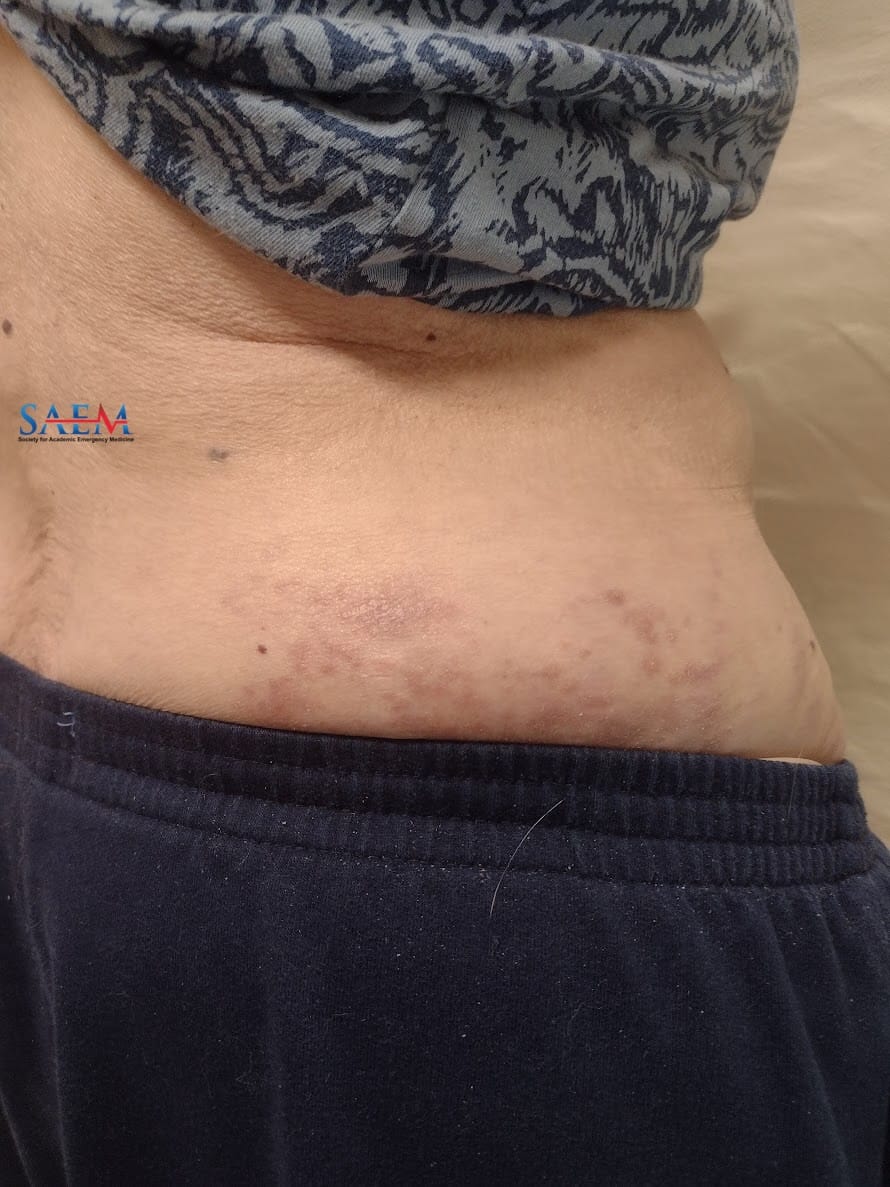
Skin: There are multiple lesions as shown in the images provided. These
are annular ulcerated pink plaques with erythematous indurated borders
and are located diffusely. The larger lesion shown is on her right arm and
is newer than the other lesions shown on her hand and trunk.

CBC: WBC: 7.6 Hgb 12.2

CRP: 0.3

Hep C/HIV/syphilis/GCCT: negative

This patient has cutaneous leishmaniasis.

Cutaneous leishmaniasis (CL) is caused by the protozoan parasite Leishmania and is transmitted through the bite of an infected female sandfly. CL is commonly diagnosed in travelers and immigrants who are susceptible to exposure. The lesions of CL usually begin as small erythematous papules that increases in size and eventually ulcerate and crust over. Lesions generally have distinct borders that are raised and erythematous. The diagnosis can be made based on travel history, lesion appearance, skin biopsy, and serology. Without treatment, the ulcers heal slowly but can leave disfiguring scars. Treatment modalities include pentamidine, amphotericin B, antimoniate, paromomycin, imiquimod, thermotherapy and cryotherapy. Visceral leishmaniasis (VL) is the most serious form of infection and is almost always fatal if untreated. With VL, the parasites directly infect organs including the spleen, liver, bone marrow, and other viscera. Common signs and symptoms of VL include fever, weight loss, fatigue, weakness, night sweats, hepatosplenomegaly, and pancytopenia.

Take-Home Points

  • Cutaneous Leishmaniasis should be suspected in travelers who have been to endemic areas and present with non-healing skin ulcerations. Visceral Leishmaniasis is the most severe form of disease and carries an extremely high mortality rate if untreated.
  • The vector for this disease is the sandfly; diagnosis is made through skin biopsy and direct microscopy of the parasite.

1. Eiras DP, Kirkman LA, Murray HW. Cutaneous Leishmaniasis: Current Treatment Practices in the USA for Returning Travelers. Curr Treat Options Infect Dis. 2015;7(1):52-62. doi:10.1007/s40506-015-0038-4

2. Chappuis, F., Sundar, S., Hailu, A. et al. Visceral leishmaniasis: what are the needs for diagnosis, treatment and control?. Nat Rev Microbiol 5, 873–882 (2007). https://doi.org/10.1038/nrmicro1748

By |2025-10-27T08:26:58-07:00Oct 3, 2025|Dermatology, SAEM Clinical Images|

SAEM Clinical Images Series: When in Doubt, Swab It Out

eczema

A 26-year-old female with a history of atopic dermatitis presents with one week of rash that began on her lower lip but spread over her face, eyelids, and neck, plus one day of fevers and headache. She was seen at an urgent care and referred to the emergency department for evaluation and management of “impetigo.” On presentation, she endorsed nausea, headache, and mild neck pain.

Vitals: Temp 100.7° F; BP 134/85; HR 121; SpO2: 100%

General: Uncomfortable appearing.

Cardiovascular: Tachycardia

Neurological: AOx3. CN II-XII grossly intact. Moves all extremities equally and spontaneously.

Skin: Upper cutaneous lip – eroded plaque with yellow crust. Bilateral jaw line, cheek, neck, eyelids – eroded papules. Lichenified patches in antecubital fossa bilaterally.

CBC: WBC 10.7; PLT 244

Lactate: 1.31

CSF: Colorless, clear; WBC 1; RBC<1; Protein 23; Glucose 55, Gram Stain Negative

Given the patient’s history of atopic dermatitis and evidence of crusted over papules/pustules on exam, this patient’s presentation was most consistent with diagnosis of eczema herpeticum (EH).

Swabs of the upper lip lesion were positive for HSV1 DNA, which confirmed the diagnosis. Early identification and treatment of EH is critical to preventing dangerous complications including ocular involvement, viremia, meningoencephalitis, hepatitis, or secondary infection with S. aureus resulting in bacteremia. Patients with EH involving the face, periocular areas, or systemic symptoms should be admitted for intravenous antiviral therapy and supportive care.

Take-Home Points

  • The diagnosis of EH is primarily based on history and physical, but the presence of HSV in skin lesions can be confirmed by PCR.
  • Delayed treatment is associated with increased risk of complications and prolonged hospitalization.

1.Wollenberg A, Wetzel S, Burgdorf WH, Haas J. Viral infections in atopic dermatitis: pathogenic aspects and clinical management. J Allergy Clin Immunol. 2003 Oct;112(4):667-74. PMID: 14564342.

2.Aronson PL, Yan AC, Mittal MK, Mohamad Z, Shah SS. Delayed acyclovir and outcomes of children hospitalized with eczema herpeticum. Pediatrics. 2011 Dec;128(6):1161-7. PMID: 22084327.

By |2025-10-27T08:24:25-07:00Sep 29, 2025|Dermatology, SAEM Clinical Images|

ACMT Toxicology Visual Pearl: Danger in the Shallows

In addition to local pain and dermal injury, stings from this marine animal can result in what systemic symptoms?

  1. Acute liver injury
  2. Hypotension, arrhythmia, and cardiac arrest
  3. Nausea, vomiting, and respiratory arrest
  4. Numbness, tingling, and muscle paralysis

[Image courtesy of Guido Gautsch, Wikimedia Commons]

(more…)

Go to Top