ALiEM AIR Series | Vascular Module (2025)


Welcome to the AIR Vascular Module! After carefully reviewing all relevant posts in the past 12 months from the top 50 sites of the Digital Impact Factor [1], the ALiEM AIR Team is proud to present the highest quality online content related to related to HEENT emergencies in the Emergency Department. 8 blog posts met our standard of online excellence and were approved for residency training by the AIR Series Board. More specifically, we identified 3 AIR and 5 Honorable Mentions. We recommend programs give 4 hours of III credit for this module.


AIR Stamp of Approval and Honorable Mentions


In an effort to truly emphasize the highest quality posts, we have 2 subsets of recommended resources. The AIR stamp of approval is awarded only to posts scoring above a strict scoring cut-off of ≥30 points (out of 35 total), based on our scoring instrument. The other subset is for “Honorable Mention” posts. These posts have been flagged by and agreed upon by AIR Board members as worthwhile, accurate, unbiased, and appropriately referenced despite an average score.


Take the Vascular Module at ALiEMU


Interested in taking the AIR quiz for fun or asynchronous (Individualized Interactive Instruction) credit? Please go to the above link. You will need to create a free, 1-time login account.


Highlighted Quality Posts: Vascular 2025


SiteArticleAuthorDateLabel
EMCritPulmonary embolism diagnosis and treatment of low-risk PEDr. Josh FarkasMarch 5, 2024

AIR

EMCritAortic dissectionDr. Josh FarkasSeptember 28, 2024AIR
EMDocsAcute chest syndromeDr. Rachel BridwellJune 27, 2024AIR
EMCritApproach to chest painDr. Josh FarkasJanuary 15, 2024HM
Rebel EMDon’t forget the IO in the critically ill patientDr. Kristen WileyApril 29, 2024HM
RCEMlearningCervical artery dissectionDr. Jason LouisJanuary 22, 2024HM
CanadiEMIs IO cannulation an underutilized method of emergency vascular accessDr. Ming LiOctober 15, 2024HM
PedEM MorselsKounis syndromeDr. Christyn MagillMarch 22, 2023HM


(AIR = Approved Instructional Resource; HM = Honorable Mention)


If you have any questions or comments on the AIR series, or this AIR module, please contact us!

Reference

    1. Lin M, Phipps M, Chan TM, et al. Digital Impact Factor: A Quality Index for Educational Blogs and Podcasts in Emergency Medicine and Critical Care. Ann Emerg Med. 2023;82(1):55-65. doi:10.1016/j.annemergmed.2023.02.011, PMID 36967275


PEM POCUS Series: Pediatric Cardiac

PEM POCUS pediatric cardiac

Read this tutorial on the use of point of care ultrasonography (POCUS) for pediatric cardiac evaluation. Then test your skills on the ALiEMU course page to receive your PEM POCUS badge worth 2 hours of ALiEMU course credit.

Module Goals

  1. List the indications and limitations of pediatric cardiac point-of-care ultrasound (POCUS)
  2. Describe the technique for performing cardiac POCUS
  3. Identify anatomical landmarks accurately on cardiac POCUS
  4. Interpret abnormal findings on cardiac POCUS
  5. Describe the basic literature behind pediatric cardiac POCUS

Case Introduction: Child with respiratory distress

You are in the emergency department evaluating a 2-month-old full-term male infant presenting with worsening respiratory distress over the past few days. He has had no fever, rhinorrhea, congestion, or cough. He is feeding poorly and has only had two wet diapers in the past 24 hours.
On arrival, his vital signs are:

Vital SignFinding
Temperature36.4 C
Heart rate190 bpm
Blood pressure97/63
Respiratory pate62
Oxygen saturation (room air)95%

Exam

He is ill-appearing. The cardiac exam is notable for tachycardia and 2+ femoral pulses. There is no appreciable murmur. Pulmonary exam shows tachypnea, clear lungs, and mildly increased work of breathing. The abdomen is mildly distended with a liver palpable 2 cm below the costal margin. Capillary refill is 2 seconds.

Diagnostics and Management

You order a chest x-ray and labs, and order blood and urine cultures. You start a fluid bolus and empiric antibiotics. While waiting for your initial work-up, you perform a cardiac POCUS.

Cardiac POCUS can help providers rapidly identify significant cardiac pathology and drastically change management. The major POCUS questions are qualitative evaluation of:

  1. Ventricular function
  2. Pericardial effusion
  3. Relative chamber sizes
  4. Fluid tolerance (or volume status)

In the context of cardiac arrest, POCUS can assess the presence of cardiac activity. Additionally, performing repeat cardiac POCUS exams can help providers gauge response to interventions.

Limitations

Cardiac POCUS is NOT a replacement for comprehensive echocardiography. A number of applications are beyond the scope of cardiac POCUS and should be evaluated by comprehensive echocardiography, including:

  • Valvular pathology
  • Structural abnormalities
  • Congenital heart defects
  • Quantitative measurements (i.e., quantitative ventricular function, flow measurements)

Like other POCUS applications, sonographer skill and experience can influence the sensitivity/specificity of the exam to detect abnormalities.


  • Supine positioning as tolerated. Raise head of bed if needed for comfort.
    • Left lateral decubitus position can improve the A4CH and parasternal views.

Figure 1. Phased array ultrasound probe

  • Phased array probe: Smaller footprint for intercostal windows and useful for moving objects.
  • Cardiac setting on the machine (if available). Can improve temporal resolution of the images.
  • Tips for young children:
    • If fearful of staff, consider seating the child in the guardian’s lap.
    • Distract the child with a video or toy.
    • Obtain the subxiphoid view last (as this sometimes requires pressure).
    • Warmed gel can be very helpful!

A cardiac POCUS includes five standard views of the heart and inferior vena cava (below). Sonographers should recognize each of the ideal views and limitations of suboptimal views.

  • Parasternal long axis (PSLA or PLAX)
  • Parasternal short axis (PSSA or PSAX)
  • Apical four chamber view (A4CH)
  • Subxiphoid view (SUBX)
  • Inferior vena cava (IVC)

A note on probe marker orientation:

Probe marker orientation varies across pediatric disciplines, including cardiology, pediatric emergency medicine, critical care, and neonatology. This especially differs for the parasternal long axis view (discussed in more detail below). This may result in an image that appears “flipped,” or rotated 180 degrees, on the screen. Practice obtaining the views in your local environment, but also gain comfort interpreting a flipped image.

(Although all views can be used to evaluate gross ventricular function and for pericardial effusion, highlights of each view are listed below.)

Highlights of View

  • Excellent overall assessment
  • Gross LV function
  • Pericardial effusion
  • General chamber sizes

Probe Placement

Figure 2 PSLA probe placement

Figure 2. PSLA probe placement with phased array probe. (Image from Dr. Margaret Lin-Martore)

  1. Place the probe to the left of the sternum, near the 3rd-4th intercostal space.
  2. Point the probe marker towards the patient’s left hip.
  3. Slide the probe up and down intercostal spaces to obtain an ideal window.
  4. Make subtle adjustments to optimize the view.

In this image and the ones below, note that the probe is larger than a typical phased-array probe (Figure 1).

Note: The direction of the probe marker, especially for the parasternal long axis, may vary across specialties and institutions. Some specialties point the probe marker towards the left hip and others towards the right shoulder. This may result in an image that appears “flipped” (or rotated 180 degrees) on the screen.

Normal View and Landmarks

normal pediatric cardiac POCUS PSLA view

Video 1: Normal PSLA cardiac view (Image from thepocusatlas.com. Images: Dr. Lindsay Davis, Dr. Hanna Kopinski. Image Editing: Michael Amador and Dr. Matthew Riscinti)

Color labels in video:

  • Right ventricle (green)
  • Left ventricle (violet)
  • Left atrium (teal)
  • Mitral valve (yellow-brown), visualize both leaflets with the anterior leaflet centered and hitting or nearly hitting the septum
  • Aortic valve (pink)
  • Descending aorta (black circle behind pericardium)
  • Pericardium (pink), note tapering anterior to the descending aorta

Troubleshooting and Tips

  • If the left ventricle is oblique (and not horizontal across the screen), slide up a rib space.
  • The patient can hold breath in exhalation to decrease lung artifact.
  • Ensure adequate depth to see the descending aorta.
  • Try subtle micro-adjustments (fan and rotate the probe until you obtain the ideal image).
  • If the lung is obscuring the view, try rolling the patient into the left lateral decubitus position.

Normal Ultrasound Video (PSLA)

Video 2. Normal PSLA view

Highlights of View

  • Gross LV function
  • Interventricular septum position

Probe Placement

PSSA probe placement

Figure 3. Probe placement for PSSA. From the PLSA view, center the left ventricle (LV) on the screen then rotate the probe 90° clockwise towards the right hip.


Normal View and Landmarks

video normal PSSA view

Video 3: Normal PSSA view (Image from thepocusatlas.com – Dr. Lindsay Davis, Dr. Hanna Kopinski. Image editing: Michael Amador and Dr. Matthew Riscinti.)


Color labels in video:

  • Left ventricle (red)
  • Mitral valve (blue)
  • Right ventricle (top of the screen)

The ideal view is at the mid-papillary level, meaning both papillary muscles are visible in the LV at approximately 4 and 8 o’clock.  Note that this video starts with the “fish mouth” view of the mitral valve and ends with the mid-papillary view.

Additional views: Fanning through the PSSA view, starting at the apex → mid-papillary view → “fish mouth” view of the mitral valve → “Mercedes-Benz” view of the aortic valve (video 3A).

 Video 3a. Troubleshooting the PSSA view with the “PSSA sweep”


Troubleshooting and Tips

  • If you see the “fish mouth” view of the mitral valve, fan the probe towards the apex to visualize the papillary muscles.
  • If you only see one papillary muscle, anchor that side of the probe and move the other side of the probe back-and-forth (like a windshield wiper) until you find the second papillary muscle.
Video 3b. Troubleshooting the PSSA View -The Windshield Wiper:
If you cannot find the view, try sliding the probe towards the apex. Alternatively, you can return to the PSLA view and rotate from there. Rock the probe to center the LV on the screen.


Video 3c. Troubleshooting the PSSA view: Rocking the probe

Normal Ultrasound Video (PSSA)

Video 4. Normal PSSA view

Highlights of View

  • Gross chamber sizes
  • Interventricular septum position

Additional Uses:

  • Global assessment of function
  • Another view for pericardial effusion
  • Can be useful in cardiac arrest during active compressions (though SUBX most commonly used)
  • Pro tip: often helpful for advanced applications (calculations and evaluation for valvular dysfunction)

Probe Placement

Probe placement for apical 4-chamber view (A4CH)

Figure 4. Probe placement for apical 4-chamber view (A4CH). Image from Dr. Margaret Lin-Martore.

  1. From the PSSA view, slide the probe towards the apex of the heart, keeping the probe marker towards the patient’s right hip.
  2. Flatten the probe to point it towards the right shoulder.
  3. For patients with breast tissue, place the probe near the inframammary line.

Normal View and Landmarks

Normal A4CH view

Video 5: Normal A4CH view (Image from thepocusatlas.com. Images: Dr. Lindsay Davis, Dr. Hanna Kopinski. Image Editing: Michael Amador and Dr. Matthew Riscinti.)

Color labels in video:

  • Left ventricle, left atrium, mitral valve (blue, screen right)
  • Right ventricle, right atrium, tricuspid valve (red, screen left)
  • A5CH view includes the aortic outflow tract (video 5 above initially shows the A5CH view before becoming the A4CH view)
Normal A4CH view with labels

Figure 5. Normal A4CH view with labels

Troubleshooting and Tips

Ventricle differentiation: Regardless of probe marker orientation, you can still differentiate the 2 ventricles in a number of ways:

  1. The tricuspid valve inserts more apically (towards the top of the screen) than the mitral valve.
  2. The LV connects to the aortic outflow tract.
  3. The LV occupies the most apical point of the heart.
  4. The RV contains the moderator band near the apex.
Figure 5 Probe placement A4CH left lateral decub

Figure 6. Left lateral decubitus positioning for A4CH probe positioning

Optimize views:

  1. Roll the patient onto their left side (left lateral decubitus) to bring the heart towards the chest wall and decrease lung artifact (figure 5). This maneuver improves PSLA and PSSA views too, but can be essential to acquire the A4CH view.
  2. If the heart appears oblique, you are likely too medial.
    1. Slide laterally.
    2. Flatten the probe.
    3. Point the probe towards the right shoulder.

Normal Ultrasound Video

Video 6. Normal apical 4-chamber (A4CH) views

Highlights of View

  • Pericardial effusion (most sensitive view)
  • Cardiac arrest (most commonly used)

Probe Placement

Figure 6 subxiphoid view probe

Figure 7. Subxiphoid view probe placement (Image from Dr. Margaret Lin-Martore)

  1. With the probe marker pointing to the patient’s right, place the probe inferior to the xiphoid process.
  2. Switch to an overhand grip, flatten the probe, apply adequate pressure, and point towards the patient’s left shoulder.

Normal View and Landmarks

Video 7 SUBX view normal

Video 7. Normal subxiphoid view (Image from thepocusatlas.com by Dr. Lindsay Davis, Dr. Hanna Kopinski. Image Editing: Michael Amador and Dr. Matthew Riscinti)

Anatomy in video:

  • Liver (top of the screen)
  • Left ventricle and atrium (red)
  • Right ventricle and atrium (blue) (RV = most anterior chamber)

Troubleshooting and Tips

  • Position the patient supine if possible.
  • Have the patient bend knees to relax abdominal muscles.
  • Have the patient hold breath in inhalation to move the heart inferiorly.
  • Slowly apply moderate pressure to displace bowel gas. Sometimes children cannot tolerate the pressure needed for an adequate view.
  • Using the liver as an acoustic window, try sliding the probe to the patient’s right and pointing the probe towards the patient’s heart through the liver.

Pro tip: Sweeping through this view can allow further assessment for pericardial effusions

Normal Ultrasound Video

 Video 8. Normal subxiphoid view

Highlights of View

  • Rough estimate of fluid tolerance / volume status
  • Adjunct to overall hemodynamic assessment

Probe Placement

Figure 7. Probe placement for IVC transverse view

Figure 8. Probe placement for IVC transverse view. Tilt the probe perpendicular to the patient in a similar location as the subxiphoid view with probe marker to patient’s right. (Image from Dr. Margaret Lin-Martore)

Figure 8. Probe placement IVC sagittal

Figure 9. Probe placement for IVC sagittal view. Center the IVC on the screen, then rotate the probe 90 degrees with probe marker to patient’s head. Slide the probe cephalic until you see the IVC entering the right atrium.  (Image from Dr. Margaret Lin-Martore)

Notes:

  • It is important to evaluate the IVC at its maximum diameter. If you are off-axis in this view, the IVC may appear artificially narrower.
  • Practice obtaining both views, as occasionally it can be difficult to obtain one of the two views depending on patient comfort and the presence of bowel gas.

Normal View and Landmarks

Figure 9. IVC transvere view with anatomy labels

Figure 10. IVC transverse view with anatomy labels. Locate the spinal column (shadowing posteriorly). This shadowing can be seen even in a patient with a larger body habitus. Just anterior to the spinal column, locate the IVC (screen left, patient right) and abdominal aorta (screen right, patient left).

Figure 10 IVC sagittal view labelled

Figure 11. IVC sagittal view with anatomy labels. Visualize the IVC entering into the right atrium (note the hepatic vein draining into the IVC). Examine for collapsibility just distal to the hepatic vein.

Measurements

Various IVC measurements exist, including IVC collapsibility index and IVC-aorta ratio.

1. IVC Collapsibility Index

In the sagittal plane at the level of the IVC just distal to the entry of the hepatic vein, measure the maximum and minimum IVC diameters. A collapsibility index of >50% may represent volume responsiveness.

  • IVC collapsibility index = [Max IVC diameter – Min IVC diameter] / Max IVC diameter

2. IVC-Aorta Ratio

In the transverse plane near the entry of the renal vein, measure the maximum IVC and aorta diameters. Numerous cutoffs for IVC/Ao ratio exist, and can vary by patient age. An IVC/Ao ratio < 0.8 may be suggestive of dehydration.

  • IVC/Ao ratios vary by age, ranging from 0.83 (young infants) to 1.22 (older children) [1].

Please see Facts and Literature Review section for more information on IVC and volume status.

Troubleshooting and Tips

Transverse

  • Many structures can be mistaken for the IVC, including the aorta, portal vessels, and gallbladder. Locate the IVC using the spinal column (shadowing deep on the screen). In a patient without situs inversus, the IVC will be located on screen left (patient right), and the aorta is located on the other side. Both vessels may appear pulsatile, and the IVC shape can change depending on a variety of hemodynamic factors.

Sagittal

  • A common mistake is misidentifying the aorta as the IVC. The aorta is located more to the patient’s left and dives more posteriorly as it crosses the diaphragm. “Prove” that the vessel is the IVC by showing:
    1. The IVC entering the right atrium
    2. The hepatic vein draining into the IVC
  • Because the IVC is a cylindrical structure, it can look like it is completely collapsing if you are located on the edge of the vessel.

Serial IVC Exams:

  • Repeating the IVC exam after interventions (like giving a fluid bolus) can be more helpful than evaluating the IVC at a single point in time.

Normal Ultrasound Video

Video 9: Inferior vena cava (transverse view)
Video 10. Inferior vena cava (sagittal view)

Cardiac POCUS is used primarily to detect significant abnormalities, including:

  1. Gross ventricular dysfunction
  2. Pericardial effusion +/- cardiac tamponade
  3. Gross chamber dilation
  4. Completely collapsed or plethoric IVC

Left Ventricular Systolic Dysfunction

  •     Goal is to identify clinically significant moderate/severe dysfunction.
  •     Qualitative assessment is sufficient, and pattern recognition is important!
  •     As with any diagnostic test, clinical correlation is key
  •     Views: Best assessed on PSLA and PSSA
  •     PSLA:
    • Qualitative assessment of overall “squeeze,” including wall thickening and decrease in chamber size
    • Anterior leaflet of mitral valve excursion: The anterior leaflet should touch or nearly touch the interventricular septum during diastole. Adult POCUS commonly measures this distance, known as EPSS (E-point septal separation); however, age-specific norms are not yet defined in children.
      • Pitfall – An oblique view can underestimate mitral valve movement.
  •     PSSA: 
    • Qualitative assessment of overall “squeeze.”
    • The LV chamber diameter should shorten by ~1/3 and have uniform concentric contraction.

Note: Lung POCUS views may show diffuse B-lines. These vertical white lines originating from the pleura can suggest pulmonary edema in the presence of heart failure. Please see ALiEM PEM POCUS Series: Pediatric Lung Ultrasound for more information.

Ultrasound videos of severe LV dysfunction

Video 11. PSLA view – Severe LV dysfunction in a teenager with new diagnosis of cardiomyopathy. Note the poor overall squeeze, poor excursion of the anterior leaflet of the mitral valve, and lack of thickening of the LV free wall.


Video 12. PSSA view in the same patient – note the poor concentric squeeze of the left ventricle


Video 13. PSLA view – Severe LV dysfunction in a young infant presenting with failure to thrive and ALCAPA (anomalous left coronary artery from the pulmonary artery). Again note the poor overall squeeze, poor excursion of the anterior leaflet of the mitral valve, lack of thickening of the LV free wall, and dilation of the LV.


Video 14. PSSA view – Again note the poor concentric squeeze of the LV and the LV dilation.
  • Views: An effusion should be visible on multiple views.
  • SUBX view:
    • Most sensitive view
    • Pericardial effusion is located between the liver and the right ventricle.
  • PSLA view:
    • Both pericardial and pleural effusions can be seen posterior to the heart.
    • Pericardial effusions track anterior to the descending aorta.
    • Pleural effusions stop posterolateral to the descending aorta and do not cross anteriorly.

Figure 12. Pericardial and pleural effusion on PSLA view

Beware of 2 potential false positives when evaluating for pericardial effusion.

1. Pericardial fat pad

In the PSLA view, this looks like a hypoechoic rim anterior to the heart (closest to probe marker) but NOT posterior to the heart. Typically a fat pad will move in sync with the heart while an effusion does not.

Video 15. Pericardial fat pad and effusion (From thepocusatlas.com by Dr. Dimitri Livshits; Dr. Jane Belyavskaya; Dr. Chris Hanuscin)

2. “Myocardial dropout”

Myocardial dropout occurs when ultrasound waves strike cardiac muscle fibers at specific angles, causing alterations in echogenicity. This acoustic phenomenon can result in the myocardium appearing as a hypoechoic rim. It’s important to note that this rim represents actual myocardial tissue rather than an external collection such as a pericardial effusion. By adjusting the probe angle during the examination, the echogenicity of the myocardium will correspondingly shift, confirming that the hypoechoic area is indeed myocardial tissue rather than a fluid collection (e.g., pericardial effusion).

Figure 13. “Myocardial dropout” effect with asterisks marking drop out area – Changes in echogenicity of the myocardium can sometimes look like a hypoechoic rim. This rim is within the myocardium and not external to the heart as expected for a pericardial effusion. (Image: Dr. Margaret Lin-Martore)

Ultrasound videos of pericardial effusion

Video 16. Pericardial effusion (PSLA view) – The anechoic pericardial effusion is anterior to the heart and also posterior to the heart, tapering just in front of the descending aorta.
Video 17. Pericardial effusion (PSSA view) – Note the circumferential pericardial effusion. A pathologic pericardial effusion should be visualized in multiple views.
Video 18. Pericardial effusion (A4CH view) – Note the pericardial effusion at the apex, right, and left sides of the heart.
Video 19. Pericardial effusion (SUBX view) – Note the pericardial effusion between the liver and the heart. This effusion also surrounds the apex of the heart. Remember that the subxiphoid view is the most sensitive view for detecting pericardial effusion.
Video 20. Trace pericardial effusion (PSLA view) – There is a trace pericardial effusion between the LV free wall and the pericardium. A trace effusion will disappear during part of the cardiac cycle.
Video 21. Pericardial and plerual effusions (PSLA view) – Note both the pericardial and pleural effusions. The pericardial effusion tapers anteriorly to the descending aorta. The pleural effusion stops laterally / posteriorly to the descending aorta.

Definitive diagnosis of cardiac tamponade is beyond the scope of this module, and immediate specialist consultation is recommended if there is clinical concern. However, some concerning ultrasound features would include:

Features:

  1. Circumferential pericardial effusion
  2. Right atrial systolic collapse (earliest sign)
  3. Right ventricular diastolic collapse (*most specific*)
  4. Plethoric IVC

Views:

  • Any view can be used, but the A4CH view shows right-sided structures best.
Video 22. Cardiac tamponade (A4CH view)

Right ventricular function assessment is beyond the scope of this module and typically cardiac POCUS is used as a general assessment. If there is clinical concern for this, specialist consultation is recommended.

Etiologies include pulmonary hypertension, pulmonary embolism, and right heart failure.

  • Increased RV size can suggest increased right heart pressures.
  • Views: Best assessed on A4CH and PSSA.
  • A4CH:
    • A dilated RV will be equal to or larger than the LV
    • Increased RV pressures cause flattening or bowing of the interventricular septum.
  • PSSA view:
    • Increased RV pressures cause flattening of the interventricular septum.
    • “D-sign” = The LV looks like the letter “D” from septal flattening

Figure 13. The D-sign (Image from thepocusatlas.com by Drs. Ronald Rivera, Elizabeth Hanson, Melanie Malloy, Kelly Maurelius, Kings County/SUNY Downstate Emergency Medicine.)

Pitfall:

Beware the “Pseudo D-Sign”. If only one papillary muscle is in view due to probe rotation, the interventricular septum may appear artificially flattened.

Figure 14. Pseudo D-Sign

Video 23. Pseudo D-Sign mimicking right ventricular dilation
Video 24. Right ventricular dilation (PSSA view) – Note the dilation of the right ventricle and flattening of the interventricular septum (D-sign).
Video 25. Right ventricular dilation (A4CH view) – Although this video is intermittently off axis, you can still appreciate right ventricular (RV) dilation. Note the enlarged right ventricle and bowing of the inter ventricular septum into the left ventricle. In a normal heart, the RV should be approximately 2/3 the size of the LV in the apical four chamber view. In infants, the RV can be equal to the size of the LV.
Video 26 RV dilation PSLA

Video 26. RV dilation (PSLA view) – Note the enlarged right ventricle at the top of the screen.

Video 27 McConnells sign PE

Video 27. McConnell’s sign in acute massive pulmonary embolism, showing akinesia of the lateral wall of the right ventricle and hypercontractility of the apical wall. (Image from thepocusatlas.com by Dr. Kelly Maurelus, Matthew Riscinti – Kings County Emergency Medicine)

In general, IVC assessment is most useful at the extremes:

  • Completely collapsed: Walls touch with inhalation.
    • Suggests the patient may benefit from fluid resuscitation.
    • Could be consistent with hypovolemia or distributive shock.
  • Completely plethoric (full): Minimal respiratory variation.
    • Suggests the patient may not need or tolerate significant fluid resuscitation.
    • May consider other medications or treatment.
    • Could be consistent with cardiogenic or obstructive shock.

When evaluating the IVC, it is important to interpret in the overall context of the patient’s presentation. For example, a plethoric IVC with minimal XXX

Video 28. Plethoric IVC – The IVC is very large and does not change in size with respiration.
Video 29. Flattened IVC – The IVC is flat and the walls completely collapse during inspiration.

Cardiac POCUS Literature

Much of the foundation for pediatric cardiac POCUS use is extrapolated from adult studies. Marbach et al. provide an excellent summary of the adult literature and highlights that cardiac POCUS improves clinicians’ bedside diagnostic accuracy, which influences management decisions, expedites time to diagnosis, and decreases resource use [2].

Pediatric-specific studies are summarized below. In general, cardiac POCUS demonstrates adequate sensitivity and specificity in evaluating for pericardial effusion and left ventricular systolic dysfunction [3]. POCUS may even be a promising adjunct to cardiology consultation for children with a variety of preexisting cardiac conditions [4]. These studies are primarily retrospective and warrant further future study.

In pediatric septic shock, cardiac POCUS can help clinicians characterize hemodynamics and often changes clinical management [5].

When it comes to interpretation errors, learners struggle more with evaluation for cardiac dysfunction and ventricle abnormalities than for pericardial effusion [6]. Additionally, novice trainees are more likely to make interpretation errors in real-time at the bedside than when reviewing images remotely [7]. These studies may inform future educational curricula surrounding pediatric cardiac POCUS.

YearAuthorsStudy Type, N, AgesFindings
2021Hamad et al. [9]Case series

  • 10 cases
  • Age 0-21 years
Examples of acute heart failure in children
2022Miller et al. [3]Retrospective review, single center (2015-2017)

  • 456 scans
  • Median age 14.7 years (IQR 9.1-17.5)
Test characteristics for cardiac POCUS interpretation by pediatric emergency medicine (PEM) physicians for detection of pericardial effusion (16 cases) and LV systolic dysfunction (18 cases)

PEM physicians compared to POCUS experts:

  • Pericardial effusion: Sn 100% / Sp 99.5%
  • LV dysfunction: Sn 100% / Sp 99.5%

PEM physicians compared to echocardiography done within 96 hours:

  • Pericardial effusion: Sn 88% / Sp 89%
  • LV systolic dysfunction: Sn 79% / Sp 96%
2024Hoffman et al. [4]Retrospective review,
single center (2015-2017)

  • 104 scans
  • Median age 16.3 years (IQR 8.6-20.1)
Test characteristics for cardiac POCUS interpretation by (PEM physicians for detection of pericardial effusion and LV systolic dysfunction in children with preexisting cardiac disease, including:

  • Congenital heart disease
  • Acquired cardiac disease
  • Arrhythmias

PEM physicians compared to POCUS experts:

  • Pericardial effusion: Sn 100% / Sp 98%
  • LV dysfunction: Sn 100% / Sp 99%

PEM physicians compared to echocardiography done within 96 hours:

  • Pericardial effusion: Sn 88% / Sp 87%
  • LV systolic dysfunction: Sn 100% / Sp 96%

Test characteristics were lower when including technically limited studies (5/104 studies).

Limitations:

  • Possible selection bias: POCUS may have been avoided in more complex cardiac patients
  • Exams with uninterpretable images were excluded (though were not common)
  • Only 1 patient with single ventricle included
2024Scott et al. [9]Retrospective review (pilot study)

  • 21 cases (9 POCUS)
  • Median age 11.8 years (IQR 4.9-16.8)
Examined time-based metrics if POCUS used in ED for pediatric heart failure.

  • Trend towards faster time to 1st IV heart failure medication (p<0.1).
  • No difference in ED or CICU length of stay.
Table 4. Key published studies on pediatric cardiac POCUS

IVC Literature

The evidence is highly variable for using IVC measurements (size, collapsibility index, IVC/Ao ratio) in isolation for predicting fluid responsiveness or central venous pressure [11-13]. A systematic review and meta analysis suggested IVC respiratory variation did not seem to reliably predict fluid responsiveness (AUC 0.71, Sn 71%, Sp 75%) [14]; however, this review also acknowledged high study heterogeneity.

Below are a few best practices when using the IVC assessment in your clinical care:

  • Avoid using the IVC in isolation. It is a data point in the overall clinical picture of your patient.
  • IVC size is most likely helpful at the extremes (completely plethoric or completely collapsing).
  • Serial (repeated) IVC assessments can help evaluate the patient’s response to your interventions.

Case Resolution

Your cardiac POCUS (5 videos below) shows severe left ventricular dysfunction and dilation.


PSLA view

PSSA view

A4CH view

SUBX view

IVC view

The chest X-ray shows cardiomegaly with pulmonary edema. Labs are notable for severe hypocalcemia to 4.2 mg/dL (thought to be secondary to congenital hypoparathyroidism in the setting of 22q11 syndrome). The labs are otherwise unremarkable.

You suspect his cardiac dysfunction is secondary to severe hypocalcemia, give him calcium gluconate, and emergently transfer him to the nearest pediatric center with cardiac intensive care.

Note: The IVC view does have some respiratory variation, although we more commonly see a plethoric IVC in the setting of heart failure. This is a reminder to avoid making decisions based solely on the IVC view. It’s an extra data point in the overall context of the other POCUS views.

Learn More…

References

  1. Mannarino S, Bulzomì P, Codazzi AC, et al. Inferior vena cava, abdominal aorta, and IVC-to-aorta ratio in healthy Caucasian children: Ultrasound Z-scores according to BSA and age. J Cardiol. 2019;74(4):388-393. https://doi.org/10.1016/j.jjcc.2019.02.021
  2. Marbach JA, Almufleh A, Di Santo P, et al. A Shifting Paradigm: The Role of Focused Cardiac Ultrasound in Bedside Patient Assessment. Chest. 2020;158(5):2107-2118. PMID: 32707179 DOI: 10.1016/j.chest.2020.07.021
  3. Miller AF, Arichai P, Gravel CA, et al. Use of Cardiac Point-of-Care Ultrasound in the Pediatric Emergency Department. Pediatr Emerg Care. 2022;38(1):e300-e305. doi:10.1097/PEC.0000000000002271
  4. Hoffmann RM, Neal JT, Arichai P, et al. Test Characteristics of Cardiac Point-of-Care Ultrasound in Children With Preexisting Cardiac Conditions. Pediatr Emerg Care. 2024;40(4):307-310. doi:10.1097/PEC.0000000000003050
  5. Arnoldi S, Glau CL, Walker SB, et al. Integrating Focused Cardiac Ultrasound Into Pediatric Septic Shock Assessment. Pediatr Crit Care Med. 2021;22(3):262-274. doi:10.1097/PCC.0000000000002658
  6. Kwan C, Weerdenburg K, Pusic M, et al. Learning Pediatric Point-of-Care Ultrasound: How Many Cases Does Mastery of Image Interpretation Take?. Pediatr Emerg Care. 2022;38(2):e849-e855. doi:10.1097/PEC.0000000000002396
  7. Thomas-Mohtat R, Sable C, Breslin K, et al. Interpretation errors in focused cardiac ultrasound by novice pediatric emergency medicine fellow sonologists. Crit Ultrasound J. 2018;10(1):33. Published 2018 Dec 9. doi:10.1186/s13089-018-0113-4
  8. Hamad A, Ng C, Alade K, D’Amico B, et al. Diagnosing Acute Heart Failure in the Pediatric Emergency Department Using Point-of-Care Ultrasound. J Emerg Med. 2021 Sep;61(3):e18-e25. doi: 10.1016/j.jemermed.2021.03.015. Epub 2021 Jun 4. PMID: 34092442.
  9. Scott C, Alade K, Leung SK, Vaughan RM, Riley AF. Cardiac Point-of-Care Ultrasound and Multi-Disciplinary Improvement Opportunities in Acute Systolic Heart Failure Management in a Pediatric Emergency Center. Pediatr Cardiol. 2024;45(6):1353-1358. doi:10.1007/s00246-023-03125-w
  10. Ng L, Khine H, Taragin BH, Avner JR, Ushay M, Nunez D. Does bedside sonographic measurement of the inferior vena cava diameter correlate with central venous pressure in the assessment of intravascular volume in children?. Pediatr Emerg Care. 2013;29(3):337-341. doi:10.1097/PEC.0b013e31828512a5
  11. Modi P, Glavis-Bloom J, Nasrin S, et al. Accuracy of Inferior Vena Cava Ultrasound for Predicting Dehydration in Children with Acute Diarrhea in Resource-Limited Settings. PLoS One. 2016;11(1):e0146859. Published 2016 Jan 14. doi:10.1371/journal.pone.0146859
  12. Via G, Tavazzi G, Price S. Ten situations where inferior vena cava ultrasound may fail to accurately predict fluid responsiveness: a physiologically based point of view. Intensive Care Med. 2016;42(7):1164-1167. https://doi.org/10.1007/S00134-016-4357-9
  13. Orso D, Paoli I, Piani T, Cilenti FL, Cristiani L, Guglielmo N. Accuracy of Ultrasonographic Measurements of Inferior Vena Cava to Determine Fluid Responsiveness: A Systematic Review and Meta-Analysis. J Intensive Care Med. 2020;35(4):354-363. https://doi.org/10.1177/0885066617752308

Additional Reading

  • Marbach JA, Almufleh A, Di Santo P, et al. Comparative Accuracy of Focused Cardiac Ultrasonography and Clinical Examination for Left Ventricular Dysfunction and Valvular Heart Disease: A Systematic Review and Meta-analysis. Ann Intern Med. 2019;171(4):264-272. doi:10.7326/M19-1337

By |2025-05-20T23:09:38-07:00May 21, 2025|Cardiovascular, Pediatrics, PEM POCUS|

SAEM Clinical Images Series: Pain and Swelling in a Roofer’s Right Wrist

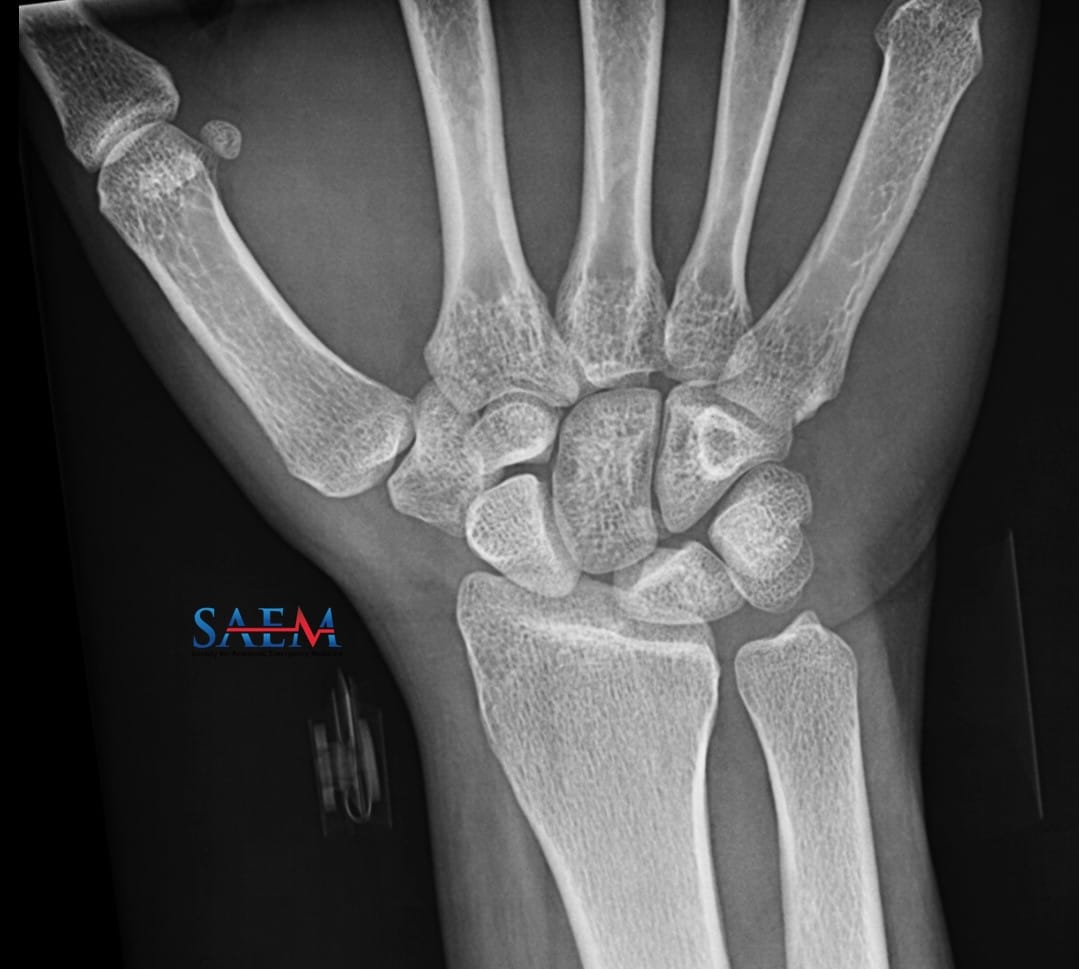
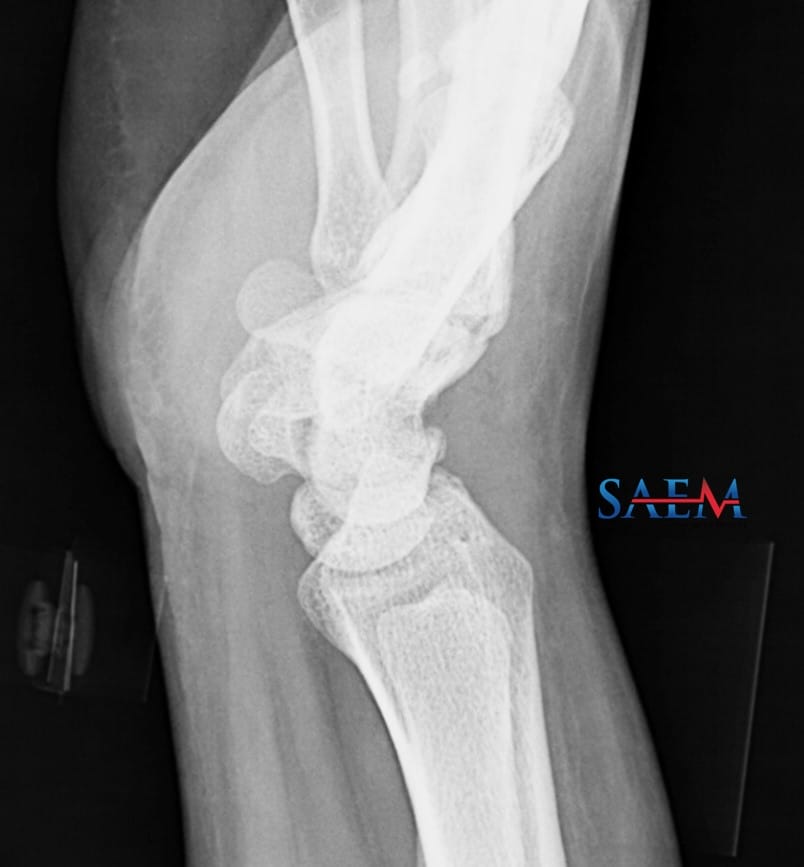
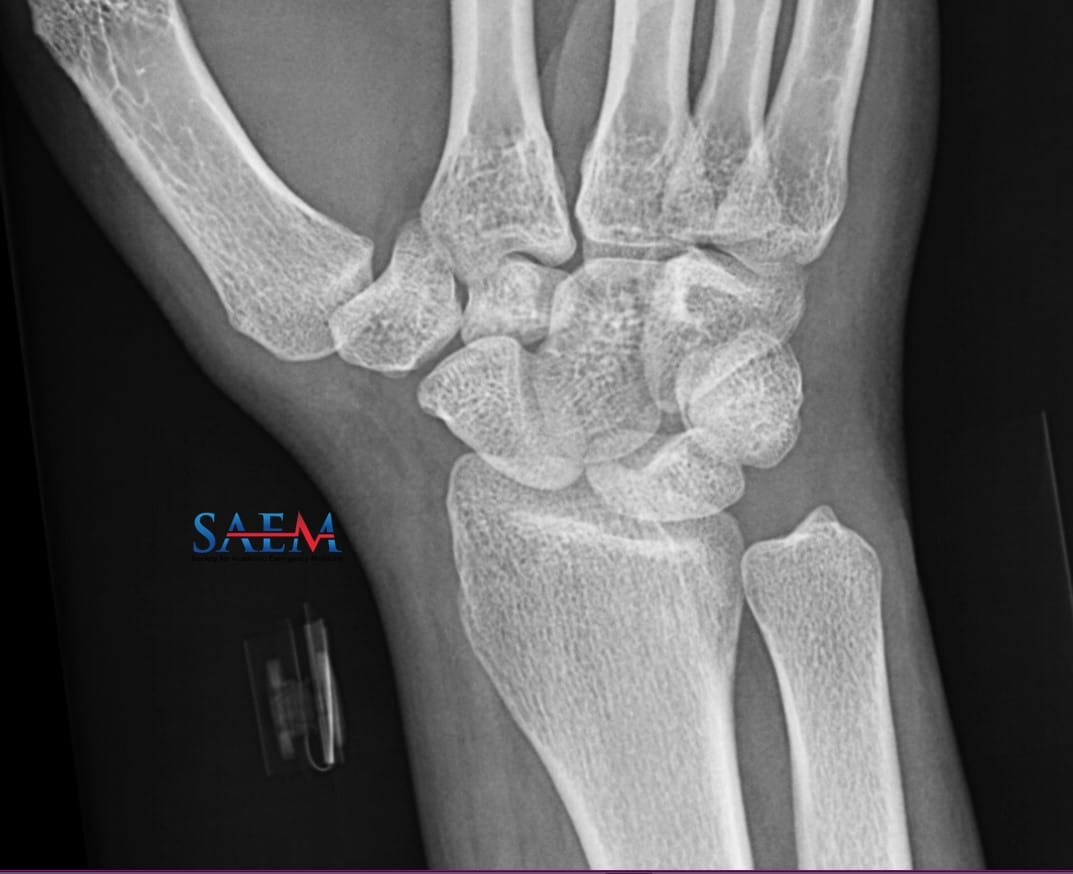
A 27-year-old male with no significant past medical history presented to the ED due to right hand pain and swelling. The patient reported that he works as a roofer and felt severe, sharp pain in his right hand immediately after using a nail gun this morning. The pain was followed by gradual swelling of the right wrist and hand. There was no loss of sensation or bleeding from the injury site. He additionally denied any injury from the nail itself. The patient was in moderate pain but hemodynamically stable while in the ED.

Vitals: Temp 36.6 °C; BP 155/99; HR 71; RR 18; SpO2 99%

General: Alert, mild distress.

Musculoskeletal: No gross deformities to right hand, reduced right hand flexion/extension due to pain, normal ROM of right shoulder and elbow, pain with right forearm supination/pronation, swelling of right hand and fingers and diffusely tender carpal bones.

Non-contributory

Comminuted lunate fracture. Lunate fractures, especially comminuted lunate fractures, usually result from high-energy trauma, with an incidence ranging from only 0.5% to 6.5% of carpal fractures. Up to one-third of wrist fractures appear to be overlooked on traditional radiography. Further imaging should be warranted for patients who are clinically suspicious of wrist fractures in the ED. Multidetector Computed Tomography (MDCT) with multiplanar reformat capability is a useful method to identify occult wrist fractures.

The blood supply of the lunate bone comes from the palmar and medial arteries of the carpometacarpal branch of the radial artery. Damage to the artery may lead to avascular necrosis (Kienböck disease). Comminuted lunate fractures may result in severe intraosseous destruction of vasculature, increasing the risk of lunate bone necrosis. An at-risk nerve is the median nerve, which runs through the carpal tunnel. If the lunate is fractured or displaced, it may compress or damage the median nerve, resulting in pain, paresthesia, or sensory loss in the palmar surface of the thumb, index, and middle fingers and radial half of the ring finger.

Take-Home Points

  • Associated risk factors for a lunate fracture include occupations or sports involving repetitive pressure to the base of the hand with the wrist in extension (eg, roofer, gymnast, jack-hammer operator).

  • Due to complex carpal anatomy, traditional radiography may not be sufficient to detect lunate fractures.

  • At-risk structures that require evaluation in the case of lunate fracture include the palmar and medial branches of the radial artery and the median nerve.

  • Li, Jun, et al. “Comminuted lunate fracture combined with distal radius fracture and scaphoid fracture: A case report.” Medicine, vol. 102, no. 29, 2023, https://doi.org/10.1097/md.0000000000034393.

  • Balci, Ali, et al. “Wrist fractures: Sensitivity of radiography, prevalence, and patterns in MDCT.” Emergency Radiology, vol. 22, no. 3, 2014, pp. 251–256, https://doi.org/10.1007/s10140-014-1278-1.

  • Geissler, William B. “Carpal fractures in athletes.” Clinics in Sports Medicine, vol. 20, no. 1, 2001, pp. 167–188, https://doi.org/10.1016/s0278-5919(05)70254-4.

By |2025-04-28T14:39:34-07:00May 2, 2025|Orthopedic, SAEM Clinical Images|

SAEM Clinical Images Series: Painful Great Toe

great toe

A 63-year-old-male with a past history of hypertension, renal failure with dialysis three times per week, and prior infective endocarditis appropriately treated with a regimen that ended four weeks ago presented with left great toe pain that started three weeks ago. The toe began swelling two weeks ago with continued pain and tenderness, becoming discolored approximately one week ago. He noted subjective fever and chills, but had no other complaints.

Vitals: Heart Rate 104, BP 111/69 mmHg, Temperature oral 38.1°C, Respiratory Rate 16; SpO2: 99% on room air

Skin: The plantar surface of the left great toe has violaceous discoloration extending to the dorsum of the distal phalanx around the nail. It is tender to touch at the plantar surface only. There is dark brown to black discoloration 16 mm x 8 mm at the distal medial aspect of the toe without ulceration.

Musculoskeletal: Good range of motion at all joints without pain.

Cardiovascular: 3/6 systolic murmur noted at the right sternal border.

The rest of the examination is normal.

BMP: BUN 19 mg/dL, Creatinine  5.21 mg/dL

Hemoglobin: 12.3 g/dL

WBC: 12.28 x 10^9/L

Imaging: X-ray of the left foot is unremarkable

Yes, the patient should be admitted; an Osler node or Janeway lesion is indicative of active endocarditis. An Osler node is a painful, tender, nodular lesion that is bluish-purple and is located on the distal phalanx of the fingers or toes. Classically, pain precedes any swelling, with subsequent discoloration occurring with skin pigmentation being described as reddish, cyanotic, bluish-purple, vivid pink, or erythematous. The skin may desquamate or darken, but ulceration is rare. Histologic evaluation reveals necrotizing vasculitis and inflammatory infiltration of the vascular channels. Aspiration and culture of the lesions typically yields no organisms, though several case reports note positive bacterial growth with organisms that match the underlying endocarditis bacteria. Whether an Osler node is caused by micro-septic emboli or by an immune response is a controversy that has not yet been settled. Janeway lesions, also seen in endocarditis, are similar discolored macules on the palms or soles. However, Janeway lesions are normally painless, which is a key factor that differentiates them from Osler nodes. Osler nodes or Janeway lesions are indicative of active endocarditis. Patients with these lesions, such as the patient in this case, should be admitted for blood cultures, echocardiography, and intravenous antibiotics. This patient was admitted, and his echo confirmed multiple vegetative lesions with severe aortic valvular disease. The patient was subsequently transferred for valve replacement surgery after three weeks of intravenous antibiotics.

Take-Home Points

  • Osler nodes are tender, violaceous nodules located on the finger or toe pads.

  • Janeway lesions, located on the palms or soles, have similar discoloration but are not tender.

  • Osler nodes and Janeway lesions are uncommon but important manifestations of infective endocarditis.

  • Farrior JB, Silverman ME. A consideration of the differences between a Janeway’s lesion and an Osler’s node in infectious endocarditis. Chest. 1976 Aug;70(2):239-43. doi: 10.1378/chest.70.2.239. PMID: 947688.

  • Philip J, Bond MC. Emergency Considerations of Infective Endocarditis. Emerg Med Clin North Am. 2022 Nov;40(4):793-808. doi: 10.1016/j.emc.2022.07.001. Epub 2022 Oct 7. PMID: 36396222.

ALiEM AIR Series | Environmental Module (2025)

Welcome to the AIR Environmental Module! After carefully reviewing all relevant posts in the past 12 months from the top 50 sites of the Digital Impact Factor [1], the ALiEM AIR Team is proud to present the highest quality online content related to related to Environmental emergencies in the Emergency Department. 5 blog posts met our standard of online excellence and were approved for residency training by the AIR Series Board. More specifically, we identified 1 AIR and 4 Honorable Mentions. We recommend programs give 3 hours of III credit for this module.


AIR Stamp of Approval and Honorable Mentions


In an effort to truly emphasize the highest quality posts, we have 2 subsets of recommended resources. The AIR stamp of approval is awarded only to posts scoring above a strict scoring cut-off of ≥30 points (out of 35 total), based on our scoring instrument. The other subset is for “Honorable Mention” posts. These posts have been flagged by and agreed upon by AIR Board members as worthwhile, accurate, unbiased, and appropriately referenced despite an average score.


Take the Environmental Module at ALiEMU


Interested in taking the AIR quiz for fun or asynchronous (Individualized Interactive Instruction) credit? Please go to the above link. You will need to create a free, 1-time login account.


Highlighted Quality Posts: Environmental 2025


SiteArticleAuthorDateLabel
EM OttawaThe Deep Freeze: A Review of Frostbite ManagementDr. Maria Doubova and Dr. Amanda MatticeNovember 2, 2023AIR
EM OttowaDon’t Sweat It! Heat Related IllnessDr. Steven SandersJuly 6, 2023HM
EMDocsToxCard: Crotalid Envenomation Part 2 – CroFab vs. AnaVip: What’s the Difference?Dr. Sean TrostelAugust 31, 2023HM
Taming the SRUMastering Minor Care: Dog BitesDr. Melanie YatesJuly 12, 2023HM
Kings CountyIt’s Getting Hot in Here: Exertional Heat StrokeDr. Esteban DavilaFebruary 27, 2024HM


(AIR = Approved Instructional Resource; HM = Honorable Mention)


If you have any questions or comments on the AIR series, or this AIR module, please contact us!

Reference

    1. Lin M, Phipps M, Chan TM, et al. Digital Impact Factor: A Quality Index for Educational Blogs and Podcasts in Emergency Medicine and Critical Care. Ann Emerg Med. 2023;82(1):55-65. doi:10.1016/j.annemergmed.2023.02.011, PMID 36967275

SAEM Clinical Images Series: I Cannot See My Rashes

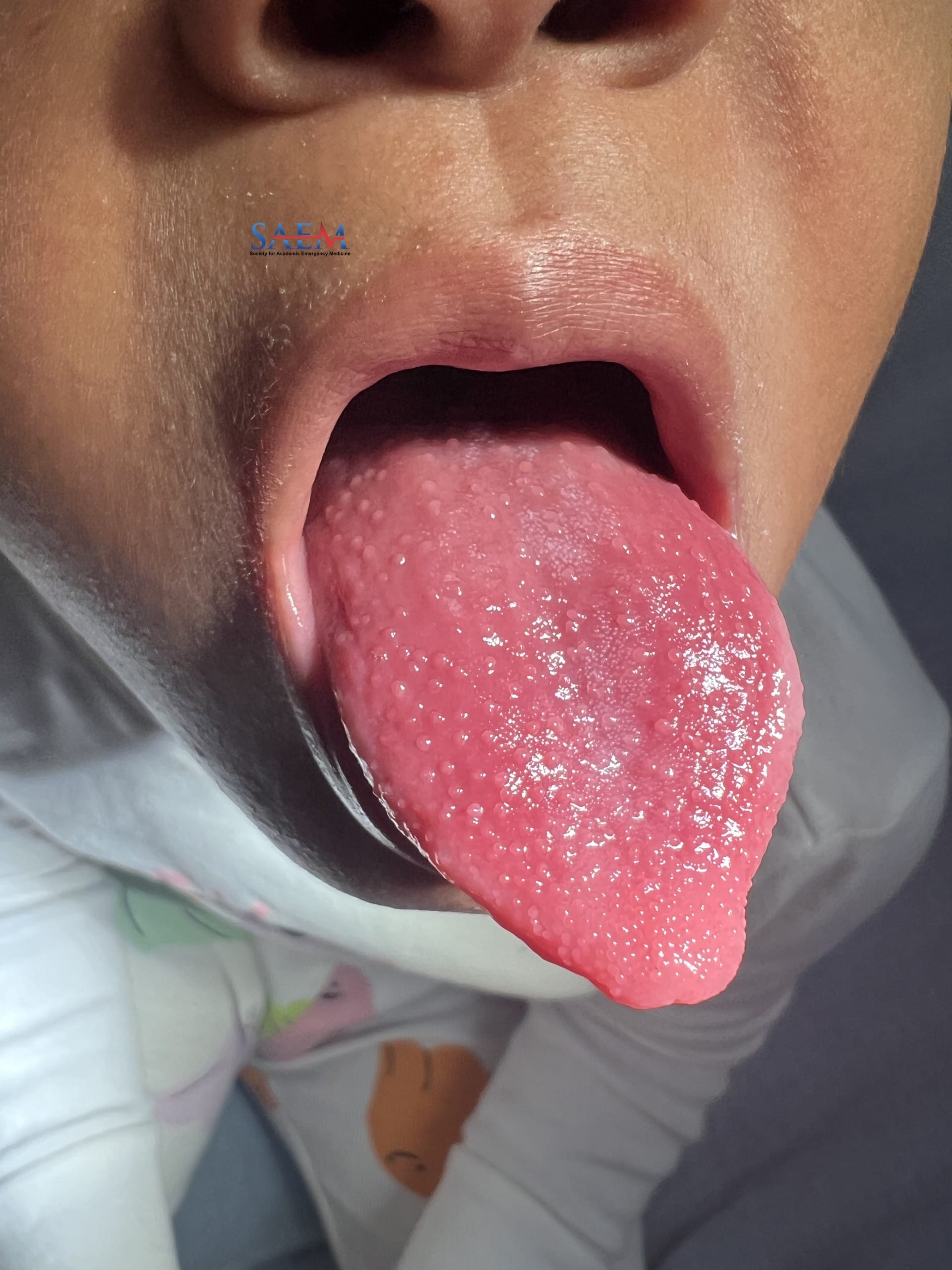
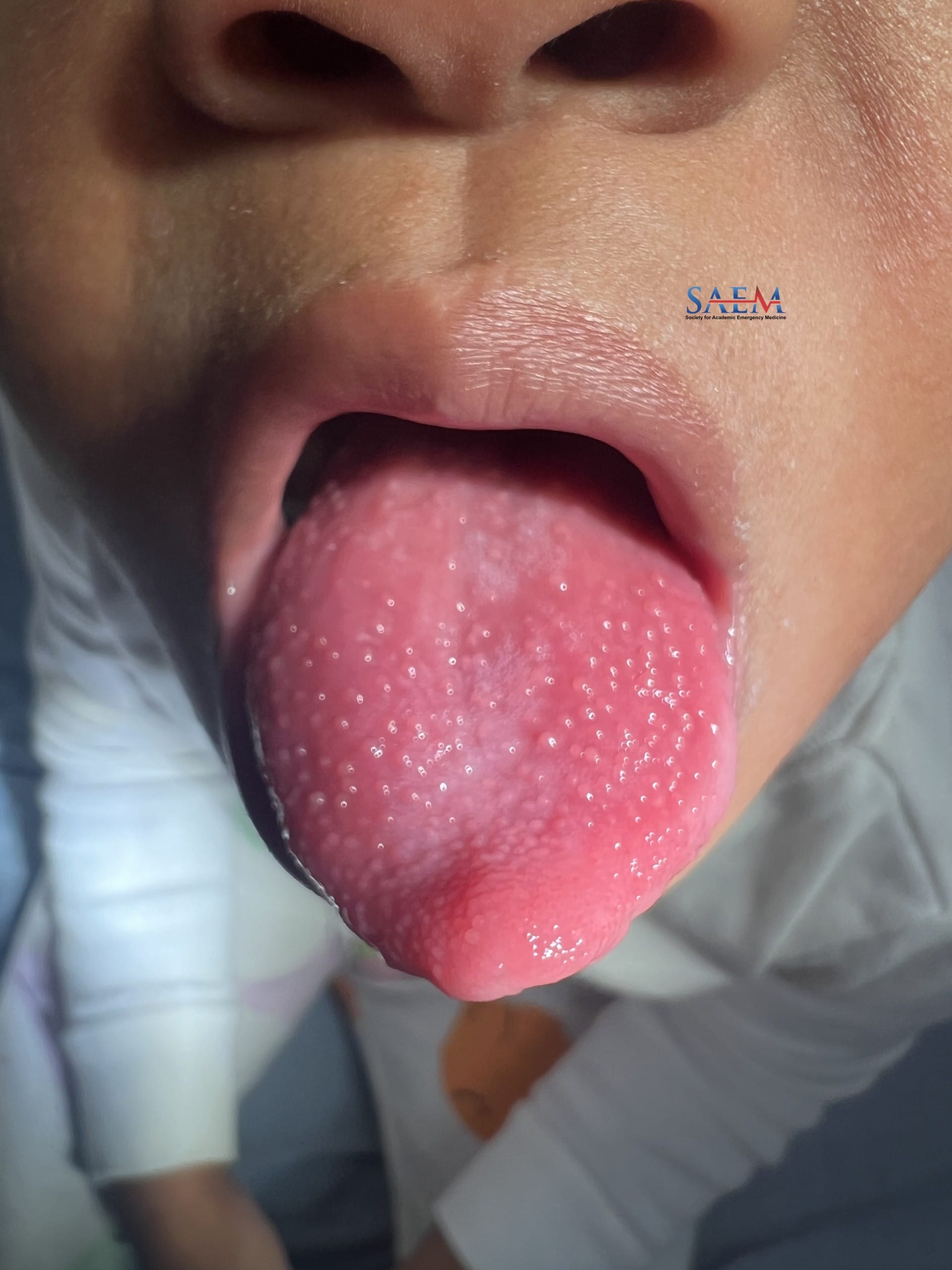
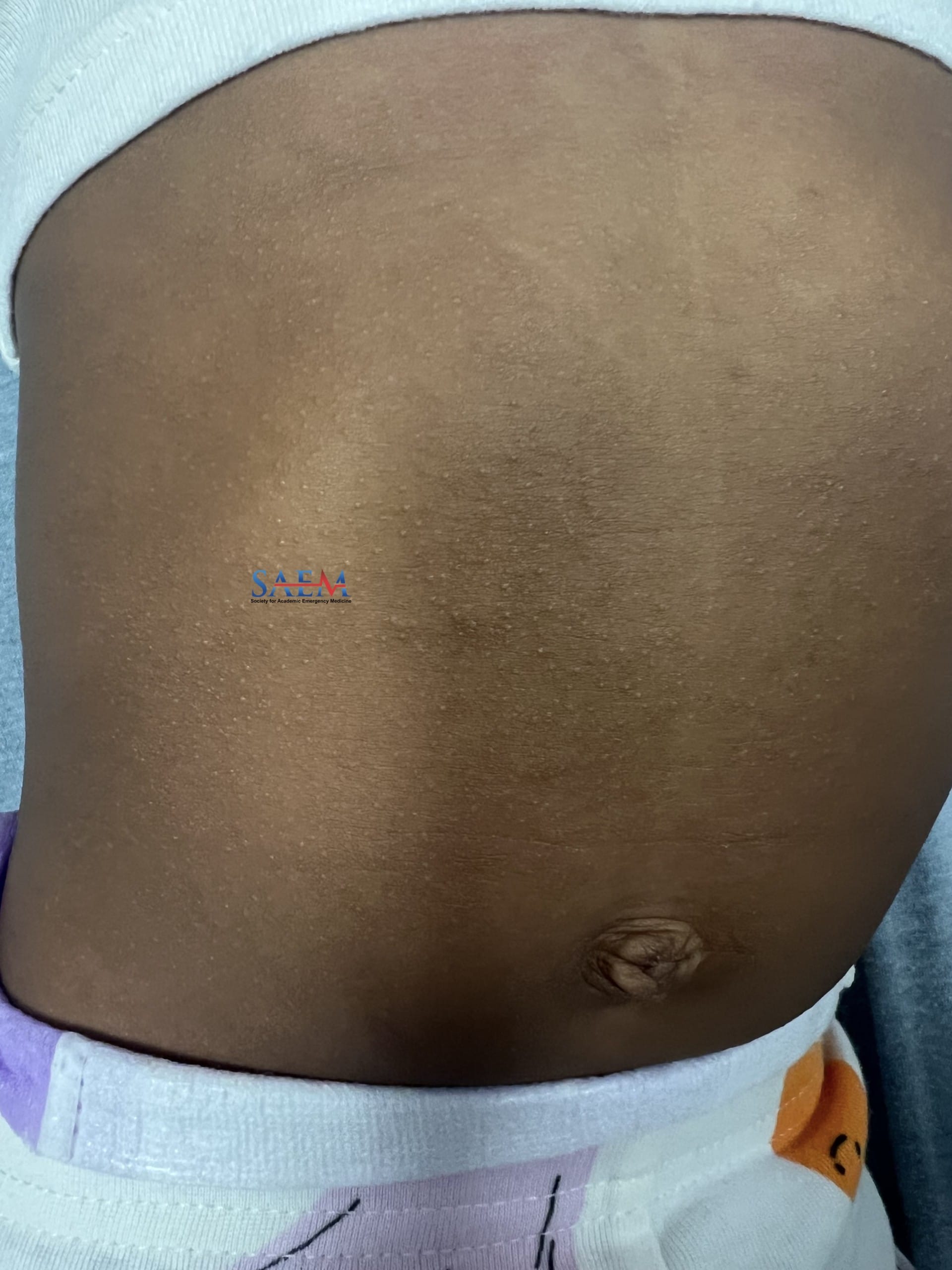
A 37-year-old African-American transgender patient presented with progressive, bilateral painful vision loss. The symptoms began acutely in the right eye two weeks prior to presentation, eventually extending to the left eye. Symptoms were worse in the right eye and included headache, blurry vision, photophobia, and pain with eye movement. Additionally, the patient reported the appearance of a diffuse, generalized, non-pruritic, non-tender rash of unknown duration or timeline. The rash was hyperpigmented and located on the trunk, face, genitalia, palms, and soles. The patient denied any recent trauma, using eye drops, wearing glasses, recent new detergents, soaps, illness, nausea, vomiting or sick contacts.

Vitals: HR 114; Temp 101.4 °F; BP 120/77; Resp 16; O2 98%

HEENT: Erythematous eyelids, bilateral conjunctival injection with a hazy cornea. Dilated and poorly reactive pupils, and overlying corneal edema without abrasion. Slit-lamp examination showed keratic precipitates in the anterior chamber. Visual acuity RE 20/200, LE 20/70. Intraocular Pressure (IOP) notable for OD 52, LOS 32.

Respiratory: Good bilateral air entry, clear breath sounds.

Cardiovascular: Normal rate, regular rhythm, S1,S2, no added sounds.

Skin/Extremities: Disseminated maculopapular rash all over the body, not itchy/crusty, nontender.

Neuro: At baseline mental status, AO X 3

WBC: 11.6

Hgb: 11.2

Platelets: 507

ALT: 70

AST: 80

ALK PHOS: 1449

HIV: Non-reactive

Hepatitis B: Non-reactive

Orthopoxvirus DNA: Not-detected

If emergency medicine physicians consider glaucoma due to syphilitic uveitis on their differential for patients presenting with skin and ocular symptoms, this can result in more rapid diagnosis and aggressive treatment. The CDC reported 176,713 cases of syphilis in 2021, showing an annual increase and a collective surge of 28.6% from 2020 to 2021. While the frequency of confirmed syphilis cases can vary, the global trend reveals a consistent rise in reported incidences, suggesting continued transmission of the infection. This is especially concerning because some individuals may not exhibit noticeable symptoms due to its challenging diagnosis and presentation. As a result, not all cases of syphilis are diagnosed or confirmed. Prompt recognition and treatment are crucial to save the patient’s vision and quality of life. The patient was empirically started on IOP-reducing medications, intravenous penicillin and admitted with a presumptive diagnosis of ocular syphilis. During admission, both Rapid Plasma Reagin (RPR) and trepanomal tests confirmed the syphilis diagnosis. Subsequently, the patient’s IOP normalized and vision improved to 20/200 in the right eye and 20/70 in the left.

Take-Home Points

  • High suspicion, improved awareness, increased testing, and effective surveillance systems are essential for accurately assessing the prevalence of syphilis in a given population.

  • Beginning treatment early on and before confirmatory testing in the ED will only help improve patient outcomes throughout hospitalization.

  • Centers for Disease Control and Prevention. Sexually Transmitted Disease Surveillance 2021 – Syphilis. Centers for Disease Control and Prevention. https://www.cdc.gov/std/statistics/2021/overview.htm#Syphilis. Accessed January 10, 2024.

  • Mathew D, Smit D. Clinical and laboratory characteristics of ocular syphilis andneurosyphilis among individuals with and without HIV infection. Br J Ophthalmol.2021;105:70-74.

Go to Top