SAEM Clinical Images Series: I’m Plugged Up

foreign body

A 56-year-old male with a history of crack cocaine and opiate drug use presented to the Emergency Department (ED) with concerns about a persistent dry cough for seven days. The cough started after smoking cocaine from a homemade glass pipe. The day before arrival, he developed sharp chest pain with coughing associated with shortness of breath and a sore throat. The patient denied fevers, chills, or shortness of breath. He denied hemoptysis, nausea, vomiting, and diarrhea. A chest x-ray was obtained with the findings seen below.

Vitals: Temp: 36.6°C; HR: 78 bpm; RR: 18; BP: 128/85 mmHg; SpO2: 98% RA

General: Disheveled male who is alert in no acute respiratory distress.

Neck: Supple, no crepitus.

Cardiovascular: Regular rate and rhythm, No murmur, gallop, rubs.

Respiratory: Decreased air movement in the right lower lobe without wheezes, rales, rhonchi.

Chest wall: No tenderness.

Gastrointestinal: Soft, Nontender, Non distended, Normal bowel sounds.

WBC: 16.59 x10(3)/mcL

Images 1 and 2 show a radiopaque object in the right bronchus intermedius. By age 15 the aorta makes a prominent indent on the trachea and left mainstem bronchus, increasing the acute angle of the left bronchus compared to the trachea. This results in a relative straightening of the right mainstem bronchus in relation to the trachea and left mainstem bronchus. Thus, foreign bodies are more commonly found in the right bronchial tree of adults and children over 15 years old. In children younger than 15 years of age the angle of the left and right bronchus are symmetrical thus bronchial aspirated foreign bodies are equally likely to be found in either lung. In younger children the relative anatomical narrowing of the tracheobronchial tree results in more proximal airway obstructions at the level of the glottis, larynx, or trachea. (1)

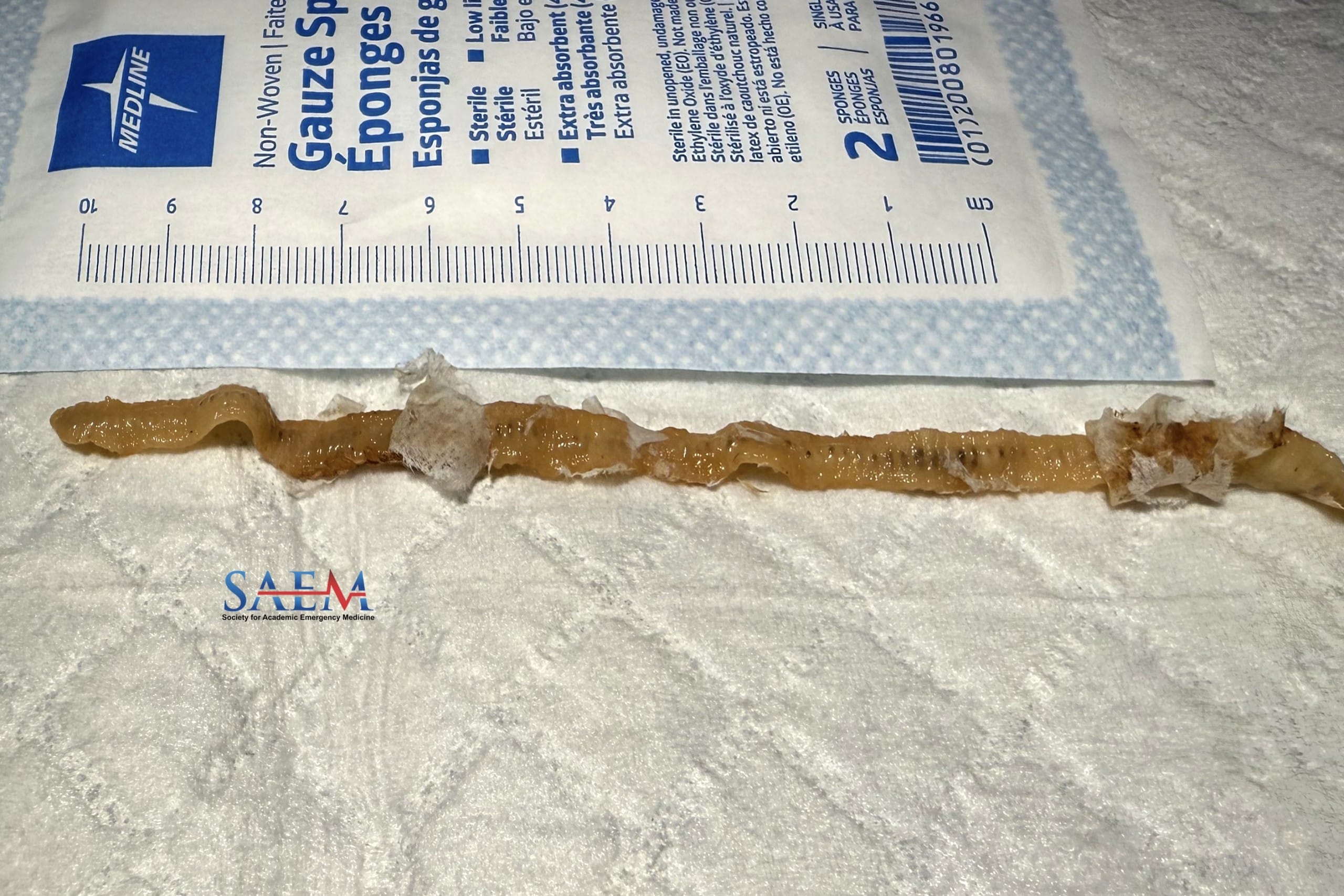
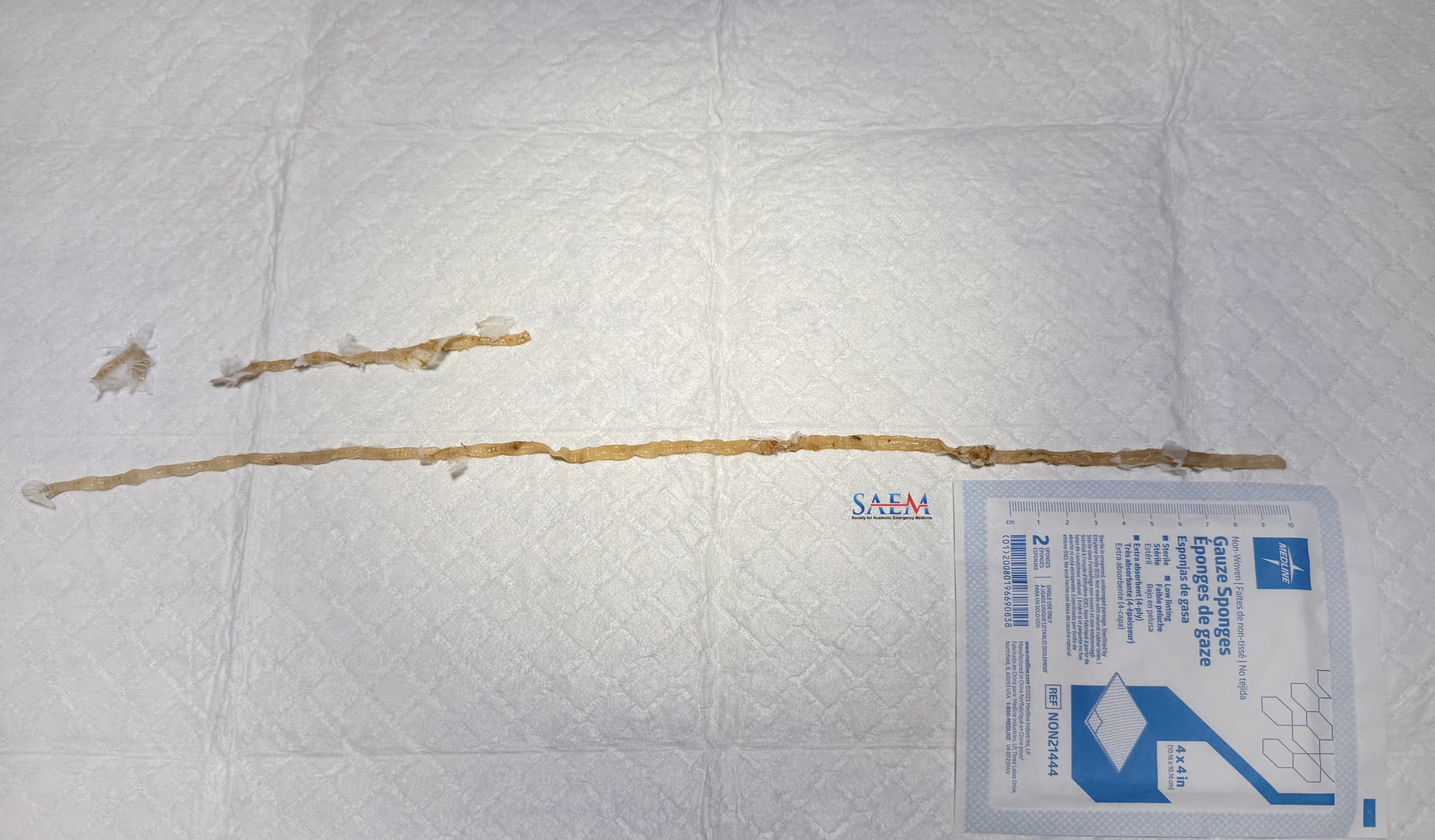
Picture 3 shows a steel wool plug after it was removed from the right bronchus by flexible bronchoscopy. The patient had used the steel wool as a filter for smoking cocaine and accidentally inhaled it during use. Steel wool, like most foreign bodies, causes direct trauma to the tracheobronchial tree as well as post-obstructive pneumonia. Steel wool filters present an added hazard in crack cocaine smoking due to thermal injury to the upper airway (2). Flexible bronchoscopy is the preferred modality for evaluation and treatment of tracheobronchial tree foreign bodies in adults. It has several advantages over rigid bronchoscopy. Flexible bronchoscopy allows better visualization of the distal airways and may be performed using local anesthesia under procedural sedation. (3) In one meta-analysis the procedure had a 90% success rate for foreign body removal. (4) The use of flexible bronchoscopy in children is less clear. A comparison of rigid verses flexible bronchoscopy in children showed a lower rate of respiratory complication in the rigid bronchoscopy group. However, there was no statistically significant overall complication rate for the two modalities. (5)

Take-Home Points

  • Right bronchial foreign bodies are more common after age 15.

  • Steel wool used as a filter in a glass pipe may lead to thermal or mechanical injuries to the upper airway, and post obstructive pneumonia due to aspiration of the entire steel wool plug.

  • Flexible bronchoscopy is the procedure of choice for the removal of bronchial foreign bodies in adults.

  • Cramer N, Jabbour N, Tavarez MM, et al. Foreign Body Aspiration. [Updated 2023 Jul 31]. In: StatPearls [Internet]. Treasure Island (FL): StatPearls Publishing; 2023 Jan-.Available from: https://www.ncbi.nlm.nih.gov/books/NBK531480/

  • Alda Moettus, Dan Tandberg, Brillo® pad crack screen aspiration and ingestion. The Journal of Emergency Medicine, Volume 16, Issue 6, 1998, Pages 861-863, ISSN 0736-4679, https://doi.org/10.1016/S0736-4679(98)00099-7. (https://www.sciencedirect.com/science/article/pii/S0736467998000997)

  • Bajaj D, Sachdeva A, Deepak D. Foreign body aspiration. J Thorac Dis. 2021 Aug;13(8):5159-5175. doi:10.21037/jtd.2020.03.94. PMID: 34527356; PMCID:PMC8411180.

  • Sehgal IS, Dhooria S, Ram B, Singh N, Aggarwal AN, Gupta D, Behera D, Agarwal R. Foreign Body Inhalation in the Adult Population: Experience of 25,998 Bronchoscopies and Systematic Review of the Literature. Respir Care. 2015 Oct;60(10):1438-48. doi: 10.4187/respcare.03976. Epub 2015 May 12. PMID: 25969517.

  • Wiemers A, Vossen C, Lücke T, Freitag N, Nguyen TMTL, Möllenberg L, Pohunek P, Schramm D. Complication rates in rigid vs. flexible endoscopic foreign body removal in children. Int J Pediatr Otorhinolaryngol. 2023 Mar;166:111474. doi: 10.1016/j.ijporl.2023.111474. Epub 2023 Feb 1. PMID: 36753891.

By |2025-04-15T21:24:51-07:00Apr 18, 2025|Pulmonary, SAEM Clinical Images|

ACMT Toxicology Visual Pearl: Turning Blue

What commercially available product can cause blue-grey discoloration of the skin and conjunctiva with long term use?

  1. Benzocaine, 20% oral gel
  2. Colloidal silver, 30 ppm liquid solution
  3. Ferrous sulfate, 325 mg tablet
  4. Methylene blue, 1% oral solution

[Image from Herbert L. Fred, MD and Hendrik A. van Dijk via Wikimedia Commons]

(more…)

SAEM Clinical Images Series: Weird Flex

tenosynovitis

A 29-year-old female with a history of depression, anxiety, and tobacco use disorder presented with worsening right index finger pain, swelling, and redness for the previous three days. Additionally, she reported that she was unable to further flex or extend her finger. She denied fevers, chills, rashes, or recent illness. There was no history of trauma, aquatic or other environmental exposures, insect bites, or intravenous drug use. She did note that she uses a copper brillo pad to clean her dishes at home which often causes small abrasions to her fingers.

Vitals: BP 160/112; PR 73; Temp 36.4°C; RR 18; SpO2 100% on RA

General: Well-appearing, no acute distress.

Cardiovascular: Right index finger capillary refill <2 sec.

Skin: Right index finger uniformly edematous and erythematous with tenderness to palpation along the tendon sheath; small healed abrasions over distal palmar aspect of the digit; no focal area of fluctuance.

MSK: right index finger held in flexion, pain with passive extension.

WBC: 8.6

ESR: 129

CRP: 105.5

This patient has flexor tenosynovitis, an infection of the synovial sheath surrounding the flexor tendon of the hand. The condition is usually caused by local inoculation from penetrating trauma although can also result from hematogenous spread. Flexor tenosynovitis is considered a surgical emergency, as delayed intervention can lead to significant morbidity including tendon rupture, deep space infection, abscess development, soft tissue necrosis, amputation, and/or chronically compromised hand function. Diagnosis is usually clinical, based on history and physical exam findings; however, laboratory evaluation may reveal leukocytosis and/or elevated inflammatory markers. If there is a history of penetrating trauma, x-rays of the affected digit are recommended to rule out retained foreign body. Management in the ED includes prompt surgical consultation and broad-spectrum antibiotics against common cutaneous pathogens. Antibiotic coverage should be broadened in patients with a history of marine exposure or Pseudomonal risk factors including immunocompromised status.

Flexor tenosynovitis presents with four classic exam findings called “Kanavel Signs.” Kanavel Signs include (1) flexion of the involved digit, (2) tenderness to palpation over the tendon sheath, (3) pain with passive extension, and (4) uniform swelling of the finger. The presence of all four Signs has a sensitivity for flexor tenosynovitis as high as 97.1%, although early in the course of infection, pain with passive extension may be the only finding.

Take-Home Points

  • Flexor tenosynovitis is an infection of the flexor tendon sheath of the hand and a history of trauma or penetrating injury to the area should raise suspicion.

  • Flexor tenosynovitis is a “can’t miss” clinical diagnosis in the ED as there is a risk of significant complications with delayed antibiotics and surgical intervention.

  • Infection can reliably be identified by the presence of the four Kanavel Signs on physical exam.

  • Chan E, Robertson BF, Johnson SM. Kanavel signs of flexor sheath infection: a cautionary tale. Br J Gen Pract. 2019 Jun;69(683):315-316. doi: 10.3399/bjgp19X704081. PMID: 31147342; PMCID: PMC6532803.

  • Chapman T, Ilyas AM. Pyogenic Flexor Tenosynovitis: Evaluation and Treatment Strategies. J Hand Microsurg. 2019 Dec;11(3):121-126. doi: 10.1055/s-0039-1700370. Epub 2019 Nov 2. PMID: 31814662; PMCID: PMC6894957.

  • Hermena S, Tiwari V. Pyogenic Flexor Tenosynovitis. In: StatPearls. StatPearls Publishing; 2022.

  • Kennedy CD, Huang JI, Hanel DP. In Brief: Kanavel’s Signs and Pyogenic Flexor Tenosynovitis. Clin Orthop Relat Res. 2016 Jan;474(1):280-4. doi: 10.1007/s11999-015-4367-x. Epub 2015 May 29. PMID: 26022113; PMCID: PMC4686527.

By |2025-03-30T20:30:57-07:00Apr 7, 2025|Orthopedic, SAEM Clinical Images|

SAEM Clinical Images Series: Ptosis? A Don’t Miss Diagnosis!

ptosis

A 50-year-old female with no past medical history presented to the emergency department for a headache. She developed progressive dull, left-sided head pain with sinus pressure one week prior, associated with sleep disturbance. In addition, she described two days of left eyelid drooping. She had no fever, chills, cough, difficulty breathing, neck pain, jaw claudication, vision changes, dizziness, numbness, or recent weight loss. She also denied any recent trauma to the head or neck.

Vitals: BP 119/59; PR 92; Temp 37°C; RR 16; SpO2 100% on RA

General: Well-appearing, no acute distress.

HEENT: EOMI, left eyelid ptosis with miosis of left pupil.

Cardiovascular: RRR, normal S1/S2, no murmur.

Neurologic: Alert and oriented x 3, normal strength and sensation bilateral upper and lower extremities, left ptosis and miosis, otherwise cranial nerves II-XII unremarkable.

WBC: 8.9

INR: 0.9

This patient presented with Horner Syndrome, a triad of ipsilateral anhidrosis, miosis, and ptosis, the latter two of which are evident in this clinical image. Horner Syndrome presents when a lesion or insult disturbs the three-order sympathetic pathway that innervates the head, neck, and ipsilateral eye. Physical examination findings may be variable and/or subtle in patients with carotid dissection. Interestingly, isolated Horner Syndrome is the only abnormal physical finding in up to 50% of patients with carotid dissection. Further, patients with carotid dissection may present with only a partial Horner’s, with anhidrosis limited to the ipsilateral eyebrow, which can be difficult to identify. Evaluation of a patient with a new Horner Syndrome in the emergency department should include CT brain, CXR, and, if there is concern for carotid artery dissection, CTA or MRA head/neck. Carotid artery dissection is a neurologic emergency with significant morbidity and mortality ranging between 25-46% if left untreated. Management requires emergent neurology consultation with activation of the stroke team, as the treatment may require systemic thrombolytics and/or mechanical thrombectomy. Patients who present outside the time-window for stroke care, or who demonstrate resolving symptoms should be treated with antiplatelet or anticoagulant therapy. Notably, for patients with intracranial dissection or dissection involving the aorta, the preferred treatment is antiplatelet therapy in conjunction with neurology consultation.

Horner syndrome has a broad differential diagnosis including stroke, neoplastic disease (brain, neck or lung), vascular injury, demyelinating disease, lymphoma, and iatrogenic injuries. This patient’s Horner syndrome was attributable to a carotid artery dissection (the most common vascular cause of Horner’s). Carotid dissection may occur after blunt trauma to the neck, but also as a result of seemingly innocuous movements of the neck. For example, evidence suggests that yoga, massage, and roller coaster rides each may increase risk for carotid dissection.

Take-Home Points

  • Horner syndrome is the triad of ipsilateral anhidrosis, miosis, and ptosis, although physical exam findings may be subtle.

  • The differential for Horner Syndrome includes several urgent and emergent underlying etiologies.

  • Carotid artery dissection is an important cause of Horner Syndrome to consider in the appropriate clinical context.

  • Hakimi R, Sivakumar S. Imaging of Carotid Dissection. Curr Pain Headache Rep. 2019 Jan 19;23(1):2. doi: 10.1007/s11916-019-0741-9. PMID: 30661121.

  • Keser Z, Chiang CC, Benson JC, Pezzini A, Lanzino G. Cervical Artery Dissections: Etiopathogenesis and Management. Vasc Health Risk Manag. 2022 Sep 2;18:685-700. doi: 10.2147/VHRM.S362844. PMID: 36082197; PMCID: PMC9447449.

  • Flaherty PM, Flynn JM. Horner syndrome due to carotid dissection. J Emerg Med. 2011 Jul;41(1):43-6. doi: 10.1016/j.jemermed.2008.01.017. Epub 2008 Sep 14. PMID: 18790590.

  • Maloney WF, Younge BR, Moyer NJ. Evaluation of the causes and accuracy of pharmacologic localization in Horner’s syndrome. Am J Ophthalmol. 1980 Sep;90(3):394-402. doi: 10.1016/s0002-9394(14)74924-4. PMID: 7425056.

  • Stein DM, Boswell S, Sliker CW, Lui FY, Scalea TM. Blunt cerebrovascular injuries: does treatment always matter? J Trauma. 2009 Jan;66(1):132-43; discussion 143-4. doi: 10.1097/ TA.0b013e318142d146. PMID: 19131816.

By |2025-04-03T09:22:20-07:00Apr 4, 2025|Neurology, SAEM Clinical Images|

SAEM Clinical Images Series: Case of Painless Vision Changes

lens

A 62-year-old female presented to the emergency room with a chief complaint of atraumatic painless blurry vision. She reported a medical history of bilateral lens replacements in 1999 and a prior history of bilateral retinal detachments and expressed concern that she may have detached her retina again. The patient first noted floaters starting 3 days ago, that progressed yesterday to sudden onset blurry vision of her right eye. She denied any sensation of “a curtain falling. The patient clarified that this presentation is different in nature to her prior bilateral retinal detachments.

Vitals: BP 115/70; Pulse 98; Temp 98.7°F, Resp 22, SpO2 100%

Constitutional: Patient is well-appearing, alert, oriented x 3 in no acute distress.

HEENT:

Visual acuities: Left eye: 20/ 30 ; Right eye: 20/ 200 . Bilateral: 20/25.

Lids & Lashes: Normal, no erythema or swelling.

Pupils: Equal and reactive to light and accommodation, 3 mm bilaterally reactive.

EOM’s: Intact. Nonpainful. Horizontal beating nystagmus noted of the right eye.

Conjunctivae: No injection noted Cornea: No corneal abrasion visualized.

Anterior chamber: Fluttering of iris during EOM right eye IOP in right eye 18 mmHg; left eye 20 mmHg

Cardiovascular: Normal rate, regular rhythm and normal heart sounds.

Neurological: She is alert. She exhibits normal muscle tone. NIH 0.

Image 2 is a great image demonstrating the anterior chamber, iris and ciliary body, posterior chamber, and the lens floating.

This case highlights the importance of recognizing iridodonesis as a clinical sign for possible lens subluxation and partial dislocation. Iridodonesis is a clinical sign commonly seen in lens partial dislocation/subluxation. It can indicate weakness or laxity in the zonular fibers that support the lens within the eye. This is particularly relevant in cases of trauma, advanced age, or surgical complications. This case emphasizes the importance in performing a thorough history and physical exam. In particular, the history of cataract surgery in the right eye raises suspicion for zonular weakness as a potential cause of iridodonesis. Lastly, point-of-care ocular ultrasound is an essential diagnostic modality in the emergency department for ophthalmologic presentations.

Image 1 demonstrates subluxation of the right lens. Image 3 is a freeze frame of the iridodonesis movement.

Take-Home Points

  • In patients who have undergone cataract surgery, the presence of lens subluxation and iridodonesis likely suggest compromised zonular integrity.

  • Iridodonesis is commonly associated with pseudoexfoliation syndrome, a condition characterized by the accumulation of abnormal extracellular material in various ocular tissues.

  • Oustoglou, Eirini, et al. “Prime Pubmed: Reoperations after Cataract Surgery: Is the Incidence Predictable through a Risk Factor Stratification System?” PRIME PubMed | Reoperations After Cataract Surgery: Is the Incidence Predictable Through a Risk Factor Stratification System?, 3 Nov. 2020, www.unboundmedicine.com/medline/citation/33133858/ Reoperations_After_Cataract_Surgery:_Is_the_Incidence_Predictable_Through_a_Risk_Factor_Stratification_System. Pieklarz B;Grochowski ET;Saeed E;Sidorczuk P;Mariak Z;Dmuchowska DA; “IRIDOSCHISIS-A Systematic Review.” Journal of Clinical Medicine, U.S. National Library of Medicine, pubmed.ncbi.nlm.nih.gov/33081187/. Accessed 9 Jan. 2024.

  • RH;, Marques DM;Marques FF;Osher. “Subtle Signs of Zonular Damage.” Journal of Cataract and Refractive Surgery, U.S. National Library of Medicine, pubmed.ncbi.nlm.nih.gov/15177607/. Accessed 9 Jan. 2024.

Greater Occipital Nerve Block in the Emergency Department

Chief complaints of non-traumatic headaches represent approximately 2% of emergency department (ED) visits in the United States [1]. Headaches are classified as primary (standalone condition) or secondary (a symptom of another medical condition), with primary headaches being the more common type [2].

In the ED, it is critical to rule out life-threatening causes of headaches such as subarachnoid hemorrhages, stroke, or meningitis. Headaches such as migraines, occipital neuralgia, cervicogenic headaches, and cluster headaches while more benign may still be debilitating for patients (Figure 1).

GON headache types

Figure 1. Headaches that may benefit from greater occipital nerve blockade [illustration by Dr. Felipe Ocampo]

Treatment of such headaches includes supportive care, medications, and procedures, including blockade of the greater occipital nerve (GON) [3, 4]. Peripheral nerve blocks such as GON blockade provide pain relief and its effects may outlast the duration of the local anesthetic. The GON block is an efficient, low-cost, and safe intervention for treatment of such headaches in the ED [5, 6]. In this article, we review the GON block, its relevant anatomy, indications, and procedural technique.

Identifying the Greater Occipital Nerve

Anatomy

Bilaterally, the GON originates from the second cervical spinal nerve (C2) and innervates the posterior scalp [7].

After arising from the C2 spinal nerve, the fibers of the GON ascend through the fascial plane between the obliquus capitis inferior and semispinalis capitis muscles. The fibers then pierce the semispinalis capitis and travel deep to the trapezius muscle until exiting the aponeurosis inferior to the superior nuchal line where it lies subcutaneously, medial to the occipital artery (Figure 2). The nerve measures approximately 2.5 to 3.5 mm in diameter [8].

Anatomy of greater occipital nerve for block

Figure 2: Anatomy around the greater occipital nerve (occipital aspect of the skull) [illustration by Dr. Felipe Ocampo]

GON Block: Necessary Equipment

The basic supplies one should collect for the GON block procedure:

  • Chlorhexidine gluconate or isopropyl alcohol applicator
  • 5 mL syringe
  • 18 gauge needle for drawing solution
  • 2 to 4 mL of either: 0.25 – 0.5% bupivacaine or 1 – 2% lidocaine
    • Consider a 1:1 mix in the same syringe for both short and longer lasting relief,
    • Example: 1.5 mL 1% lidocaine + 1.5 mL 0.25% bupivacaine
  • 1.5 inch 25- or 27-gauge needle for injecting solution

Note about inclusion of corticosteroids: The data is weak except in the case of cluster headaches where it is moderate [9].

equipment for greater occipital nerve block

Figure 3. Basic equipment necessary to perform a GON block [illustration by Dr. Felipe Ocampo]

GON Block: Procedural Technique

Procedural Technique #1: Palpation Approach

Traditionally, the GON block can be done by palpating the external occipital protuberance (OP) and the mastoid process (MP). Anesthetic is injected approximately one-third the distance from the OP to the MP (Figure 4) [6]. With this approach, the nerve is targeted more distally from its origin, where it is found more superficially at a median depth of 8 mm [10]. Here, the occipital artery can typically be palpated lateral to the location of the greater occipital nerve but anatomy can vary [11].

surface anatomy injection site for greater occipital nerve block

Figure 4: Injection site for the greater occipital nerve block along the occipital surface of the scalp [illustration by Dr. Felipe Ocampo]

  1. Position patients with their head flexed forward with either technique:
    • Sitting on the edge of the bed with their palms (or a procedure stand with a pillow) supporting their face
    • Prone with a pillow under the chest
  2. Find landmarks by palpating the external OP and MP
  3. Your target will be approximately one-third the distance from the OP to MP
  4. Ensure there is no palpable pulse at your target
  5. After sterilizing the area, insert the needle approaching from an inferior angle.
    • If you hit periosteum/skull, withdraw the needle slightly
    • Aspirate to ensure that you are not in the occipital artery or another vessel
    • Inject the anesthetic solution (typically 1-3 mL per side)
    • Consider slightly withdrawing and advancing while injecting to bathe multiple planes in anesthetic
  6. Assess for numbness along the posterior scalp (within 5 minutes for lidocaine and 10-15 minutes for bupivacaine)

Note: A modified version of this technique is to ask patients to pinpoint the area where pain is maximal or originates and if in general distribution of the GON between the OP and MP, this can be targeted assuming no palpable pulse and/or blood on withdrawal of syringe.

Procedural Technique #2: Ultrasound-Guided Approach

For the ultrasound-guided approach, the GON is typically targeted more proximally from its origin, at the level of the C2 vertebra. Here, the GON lies within the fascia above the obliquus capitis inferior (OCI) at a median depth of 1.8 cm [10].

  1. Positioning: same as landmark approach above.
  2. Prep the skin and transducer before insertion of the needle.
  3. Apply a generous amount of ultrasound gel to the lower posterior scalp
  4. A high-frequency linear probe is used with the indicator pointing towards the scanner’s left in the axial view starting at the midline external occipital protuberance (OP). With this view, one can see the semispinalis capitis (SSC) on either side. Note that this view may not be attainable in a patient with longer hair.
  5. Then, the probe can be translated downwards until the bifid C2 spinous process is visualized – here the trapezius, SSC, and obliquus capitis inferior (OCI) are seen on either side.
  6. By rotating the probe obliquely and slightly laterally towards the ear of the affected side, one can visualize the GON lying in the fascia above the OCI. Once this view is achieved, lateral to medial in-plane technique can be used to position the needle (25-27 gauge needle) adjacent to the GON, injecting 1-3 mL of solution to achieve spread around the nerve.
    • Pro Tip: The GON is often not visualized on ultrasound, but as long as your other landmarks are clear (between the OCI and SSC), injecting the solution into the plane is sufficient as long as you visualize your needle tip and confirm you are not intravascular.
  7. As with the palpation method, assess for numbness along the posterior scalp after 5-15 minutes, depending on anesthetic used.

ultrasound GON block

Figure 5: Illustrated sonographic views around the greater occipital nerve (yellow); SSC – semispinalis capitis, OP – occipital protuberance, TM – trapezius muscle, OCI – obliquus capitis inferior, C2 – C2 vertebra [illustration by Dr. Felipe Ocampo]

Greater occipital nerve block GON ultrasound anatomy

Figure 6: Sonographic anatomy of the greater occipital nerve (GON); TM- trapezius muscle, SSC – semispinalis capitis, OCI – obliquus capitis inferior, C2 – C2 vertebra [image from Dr. Felipe Ocampo]

GON Block: Comparing Techniques

Choosing a GON block technique may be up to clinician and/or patient preference or equipment availability.

Studies comparing the 2 approaches seem to favor ultrasound-guided GON blockade at the proximal (C2) site due to:

  • Improved analgesia [10]
  • A theoretical lower risk of damaging the occipital artery because (a) it is further from the GON in the proximal ultrasound-guided approach and (b) the ability to visualize structures [11]
  • Easier skin disinfection as injection site tends to be below the hairline [10, 11]
  • Anatomical variants in GON location making the landmark-based/palpation approach less accurate [14]

GON Block: Contraindications and Adverse Effects

Absolute Contraindications

  • Patient refusal
  • Anesthetic allergy
  • Open skull defect
  • Infection at procedural site

Relative Contraindications

  • Coagulopathy
  • Arnold-Chiari Malformations
  • Inability to lie still

Adverse Effects

  • Hematoma
  • Local infection
  • Lesion to nerve
  • Allergy to local anesthetics
  • Local anesthetic systemic toxicity (LAST)
  • Intradural infiltration
  • Vasovagal syncope
  • Alopecia around injection site

Common Indications for GON Block

Conclusions

In the emergency department, it is critical to evaluate for life-threatening headaches. However, when indicated for patients presenting with specific headaches, the GON block may be an effective and efficient tool in providing analgesia.

References

  1. Goldstein JN, Camargo CA Jr, Pelletier AJ, Edlow JA. Headache in United States emergency departments: demographics, work-up and frequency of pathological diagnoses. Cephalalgia. 2006;26(6):684-690. doi:10.1111/j.1468-2982.2006.01093.x PMID 16686907
  2. Headache Classification Committee of the International Headache Society (IHS). The International Classification of Headache Disorders, 3rd edition (beta version). Cephalalgia. 2013;33(9):629-808. doi:10.1177/0333102413485658. PMID 23771276
  3. Austin M, Hinson MR. Occipital Nerve Block. [Updated 2023 Apr 17]. In: StatPearls [Internet]. Treasure Island (FL): StatPearls Publishing; 2024 Jan-.
  4. Afridi SK, Shields KG, Bhola R, Goadsby PJ. Greater occipital nerve injection in primary headache syndromes–prolonged effects from a single injection. Pain. 2006;122(1-2):126-129. doi:10.1016/j.pain.2006.01.016. PMID 16527404
  5. Guner D, Bilgin S. Efficacy of Adding a Distal Level Block to a C2 Level Greater Occipital Nerve Block under Ultrasound Guidance in Chronic Migraine. Ann Indian Acad Neurol. 2023;26(4):513-519. doi:10.4103/aian.aian_169_23. PMID 37970254
  6. Levin M. Nerve blocks in the treatment of headache. Neurotherapeutics. 2010;7(2):197-203. doi:10.1016/j.nurt.2010.03.001. PMID 20430319
  7. Yu M, Wang SM. Anatomy, Head and Neck, Occipital Nerves. [Updated 2022 Oct 31]. In: StatPearls [Internet]. Treasure Island (FL): StatPearls Publishing; 2024 Jan-.
  8. Güvençer M, Akyer P, Sayhan S, Tetik S. The importance of the greater occipital nerve in the occipital and the suboccipital region for nerve blockade and surgical approaches–an anatomic study on cadavers. Clin Neurol Neurosurg. 2011;113(4):289-294. doi:10.1016/j.clineuro.2010.11.021. PMID 21208741
  9. Benzon HT, Elmofty D, Shankar H, et al. Use of corticosteroids for adult chronic pain interventions: sympathetic and peripheral nerve blocks, trigger point injections – guidelines from the American Society of Regional Anesthesia and Pain Medicine, the American Academy of Pain Medicine, the American Society of Interventional Pain Physicians, the International Pain and Spine Intervention Society, and the North American Spine Society. Reg Anesth Pain Med. Published online August 7, 2024. doi:10.1136/rapm-2024-105593. PMID 39019502
  10. Greher M, Moriggl B, Curatolo M, Kirchmair L, Eichenberger U. Sonographic visualization and ultrasound-guided blockade of the greater occipital nerve: a comparison of two selective techniques confirmed by anatomical dissection. Br J Anaesth. 2010;104(5):637-642. doi:10.1093/bja/aeq052. PMID 20299347
  11. Gürsoy G, Tuna HA. Comparison of two methods of greater occipital nerve block in patients with chronic migraine: ultrasound-guided and landmark-based techniques. BMC Neurol. 2024;24(1):311. Published 2024 Sep 4. doi:10.1186/s12883-024-03816-8. PMID 39232647
  12. Santos Lasaosa S, Cuadrado Pérez ML, Guerrero Peral AL, et al. Consensus recommendations for anaesthetic peripheral nerve block. Guía consenso sobre técnicas de infiltración anestésica de nervios pericraneales. Neurologia. 2017;32(5):316-330. doi:10.1016/j.nrl.2016.04.017. PMID 27342391
  13. Blumenfeld A, Ashkenazi A, Napchan U, et al. Expert consensus recommendations for the performance of peripheral nerve blocks for headaches–a narrative review. Headache. 2013;53(3):437-446. doi:10.1111/head.12053. PMID 23406160
  14. Shim JH, Ko SY, Bang MR, et al. Ultrasound-guided greater occipital nerve block for patients with occipital headache and short term follow up. Korean J Anesthesiol. 2011;61(1):50-54. doi:10.4097/kjae.2011.61.1.50. PMID 21860751
  15. Djavaherian DM, Guthmiller KB. Occipital Neuralgia. [Updated 2023 Mar 6]. In: StatPearls [Internet]. Treasure Island (FL): StatPearls Publishing; 2024 Jan-.
  16. Choi I, Jeon SR. Neuralgias of the Head: Occipital Neuralgia. J Korean Med Sci. 2016 Apr;31(4):479-488. https://doi.org/10.3346/jkms.2016.31.4.479. PMID 27051229
  17. Pescador Ruschel MA, De Jesus O. Migraine Headache. [Updated 2024 Jul 5]. In: StatPearls [Internet]. Treasure Island (FL): StatPearls Publishing; 2024 Jan-.
  18. Korucu O, Dagar S, Çorbacioglu ŞK, Emektar E, Cevik Y. The effectiveness of greater occipital nerve blockade in treating acute migraine-related headaches in emergency departments. Acta Neurol Scand. 2018;138(3):212-218. doi:10.1111/ane.12952. PMID 29744871
  19. Yanuck J, Shah S, Jen M, Dayal R. Occipital Nerve Blocks in the Emergency Department for Initial Medication-Refractory Acute Occipital Migraines. Clin Pract Cases Emerg Med. 2019;3(1):6-10. Published 2019 Jan 22. doi:10.5811/cpcem.2019.1.39910. PMID 30775654
  20. Al Khalili Y, Ly N, Murphy PB. Cervicogenic Headache. [Updated 2022 Oct 3]. In: StatPearls [Internet]. Treasure Island (FL): StatPearls Publishing; 2024 Jan-.
  21. Gabrhelík T, Michálek P, Adamus M. Pulsed radiofrequency therapy versus greater occipital nerve block in the management of refractory cervicogenic headache – a pilot study. Prague Med Rep. 2011;112(4):279-287. PMID 22142523
  22. Kandel SA, Mandiga P. Cluster Headache. [Updated 2023 Jul 4]. In: StatPearls [Internet]. Treasure Island (FL): StatPearls Publishing; 2024 Jan-.
  23. Gönen M, Balgetir F, Aytaç E, Taşcı İ, Demir CF, Müngen B. Suboccipital steroid injection alone as a preventive treatment for cluster headache. J Clin Neurosci. 2019;68:140-145. doi:10.1016/j.jocn.2019.07.009. PMID 31326284
  24. Gordon A, Roe T, Villar-Martínez MD, Moreno-Ajona D, Goadsby PJ, Hoffmann J. Effectiveness and safety profile of greater occipital nerve blockade in cluster headache: a systematic review. J Neurol Neurosurg Psychiatry. 2023;95(1):73-85. Published 2023 Dec 14. doi:10.1136/jnnp-2023-331066. PMID 36948579
Go to Top