SAEM Clinical Images Series: Leg Rash

ulcer

A 42-year-old male with no significant medical problems presented to the Emergency Department with a 5-week history of abdominal pain and bloody diarrhea. He also reported painful intraoral blisters and ulcerative lesions on the bilateral lower extremities and scrotum. The patient had been self-managing his symptoms with over-the-counter antidiarrheal medications and has unsuccessfully attempted to establish care with a gastroenterologist. He denied any history of intravenous drug use, cutaneous injections, or previous skin infections and has no other complaints at this time.

Vitals: BP 125/85; HR 97; R 22; T 99.2°F; O2 sat; 100% on room air

General: Overall well-appearing but uncomfortable.

HEENT: Dry mucous membranes, no lesions seen.

Respiratory: Clear to auscultation.

Cardiovascular: Regular rhythm without murmurs, rubs, or gallops.

Abdominal: Mild diffuse tenderness on palpation of abdomen without rebound or guarding. Bowel sounds mildly hyperactive.

Genitourinary: External purulent lesion on anus. Gross bright red blood on digital rectal exam.

Skin: Overall pallor, there are Scattered purulent ulcers on bilateral lower extremities and scrotum. Image 1 shows a lesion on the inner right thigh. Image 2 shows a second lesion on the right inner buttock. The right inner thigh lesion has been present longer.

WBC: 17.9

Hgb: 10.6

Plt: 654,000

ESR: 112

CRP: 21.8

This rash is consistent with ulcerative pyoderma gangrenosum (PG), a rare inflammatory condition which may occur in isolation or in association with systemic diseases. PG typically manifests as an erythematous nodule or pustule that progresses to form a purulent or necrotic ulcerative base. The lower extremities are the most frequently affected sites. In this patient, the presence of abdominal pain, hematochezia, and elevated inflammatory markers raises suspicion for an underlying diagnosis of ulcerative colitis. Measurement of fecal calprotectin may provide additional diagnostic support. Management of mild flares in an outpatient setting may include rectal or oral mesalamine (5-ASA) in combination with oral prednisone. Severe exacerbations often require hospitalization for systemic glucocorticoid therapy and gastroenterology consultation. The patient was started on IV glucocorticoids and during his admission had resolution of his rectal bleeding and improvement in his rash. Colonoscopy results confirmed the underlying diagnosis of ulcerative colitis. The patient was discharged in stable condition with outpatient gastroenterology follow-up.

Take-Home Points

  • Pyoderma gangrenosum features erythematous nodules and pustules that progress to form a purulent or necrotic base, and is associated with inflammatory bowel diseases.

  • Severe cases of PG generally require glucocorticoid therapy.

  • Ruocco E, Sangiuliano S, Gravina AG, Miranda A, Nicoletti G. Pyoderma gangrenosum: an updated review. J Eur Acad Dermatol Venereol. 2009 Sep;23(9):1008-17. doi: 10.1111/j.1468-3083.2009.03199.x. Epub 2009 Mar 11. PMID: 19470075.
  • Ko CW, Singh S, Feuerstein JD, Falck-Ytter C, Falck-Ytter Y, Cross RK; American Gastroenterological Association Institute Clinical Guidelines Committee. AGA Clinical Practice Guidelines on the Management of Mild-to-Moderate Ulcerative Colitis. Gastroenterology. 2019 Feb;156(3):748-764. doi: 10.1053/j.gastro.2018.12.009. Epub 2018 Dec 18. PMID: 30576644; PMCID: PMC6858922.


ALiEM AIR Series | OBGYN Module (2025)


Welcome to the AIR OBGYN Module! After carefully reviewing all relevant posts in the past 12 months from the top 50 sites of the Digital Impact Factor [1], the ALiEM AIR Team is proud to present the highest quality online content related to related to OBGYN emergencies in the Emergency Department. 3 blog posts met our standard of online excellence and were approved for residency training by the AIR Series Board. More specifically, we identified 1 AIR and 2 Honorable Mentions. We recommend programs give 1.5 hours of III credit for this module.


AIR Stamp of Approval and Honorable Mentions


In an effort to truly emphasize the highest quality posts, we have 2 subsets of recommended resources. The AIR stamp of approval is awarded only to posts scoring above a strict scoring cut-off of ≥30 points (out of 35 total), based on our scoring instrument. The other subset is for “Honorable Mention” posts. These posts have been flagged by and agreed upon by AIR Board members as worthwhile, accurate, unbiased, and appropriately referenced despite an average score.


Take the OBGYN Module at ALiEMU


Interested in taking the AIR quiz for fun or asynchronous (Individualized Interactive Instruction) credit? Please go to the above link. You will need to create a free, 1-time login account.


Highlighted Quality Posts: OBGYN 2025


SiteArticleAuthorDateLabel
EMDocsTachyarrhythmias in PregnancyDr. Derick Tompkins, Dr. Jordan Boggs, Dr. Patrick GraceMay 20, 2024

AIR

EMCritPulmonary and cardiac complications of pregnancyDr. Josh FarkasMarch 5, 2024HR
EMDocsEM@3AM: Amniotic Fluid EmbolismDr. Kyle Smiley, Dr. Brit LongJune 22, 2024HR


(AIR = Approved Instructional Resource; HM = Honorable Mention)


If you have any questions or comments on the AIR series, or this AIR module, please contact us!
Reference

    1. Lin M, Phipps M, Chan TM, et al. Digital Impact Factor: A Quality Index for Educational Blogs and Podcasts in Emergency Medicine and Critical Care. Ann Emerg Med. 2023;82(1):55-65. doi:10.1016/j.annemergmed.2023.02.011, PMID 36967275


SAEM Clinical Images Series: Tangled in the Toilet

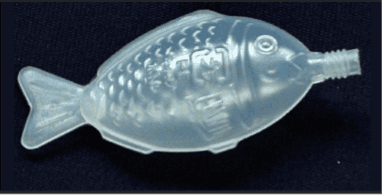
An otherwise healthy 46-year-old male presented to the Emergency Department with 18 months of diarrhea and intermittent abdominal cramping that has acutely worsened in the past week. On the morning of presentation, he noticed a worm-like object in his stool, which he brought to the ED (See images), prompting his visit. Throughout these 18 months, he experienced 4-10 loose bowel movements per day. He tried dietary modifications, including the removal of dairy, gluten, and soy, all without relief. The patient frequently travels for work, mainly to the US, Europe, and intermittently to Asia. His diet includes all forms of meat, fish, and shellfish. He denied fevers, chills, headaches, chest pain, shortness of breath, unexpected weight loss or gain, nausea, vomiting, or changes in his urinary habits. His stool has been non- greasy and has not contained any blood or mucous.

Vitals: BP 136/85; HR 70; R 18; T 98.2°F; O2 sat; 97% room air.

General: Well appearing, no acute distress.

Abdomen: There is mild tenderness to palpation in bilateral lower quadrants. Bowel sounds present in all quadrants. No rebound tenderness or guarding. No organomegaly.

Lymph: No lymphadenopathy present.

Skin: No rashes.

WBC: 5.4

Hgb: 14.4

Dibothriocephalus (Diphyllobothrium) latus: a tapeworm.

This patient is infected with Dibothriocephalus (Diphyllobothrium) latus, a tapeworm distinctive for its proglottids with central hyperpigmented reproductive organs, as shown in the images. Patients rarely visualize the tapeworm in their stool, so diagnosis is usually made with a stool ova and parasite study. Diphyllobothrium latus infection is commonly caused by eating raw, undercooked, or lightly pickled seafood contaminated with tapeworm eggs. Tapeworm eggs are also occasionally used as weight loss supplements. The market for these supplements is not regulated; thus, the eggs may be from other parasites, leading to more severe manifestations of infection in different body areas, such as the brain, lungs, or muscles. Diphyllobothrium latus infection can cause pernicious anemia, as 80% of Vitamin B12 intake may be absorbed by the worm. Treatment for Diphyllobothrium latus is a single dose of praziquantel. Due to fecal-oral transmission, patients who engage in high risk transmission-prone behaviors should consider having their partners tested and treated as well.

Take-Home Points

  • Diphyllobothrium latus infection may cause Vitamin B12 deficiency and resultant anemia as the worm may absorb up to 80% of B12 intake.

  •  A single dose of praziquantel is generally sufficient to eradicate tapeworm infection.

  • Schantz, P. M. (1996). Tapeworms (cestodiasis). Gastroenterology Clinics of North America., 25(3), 637–653. https://doi.org/10.1016/s0889-8553(05)70267-3
  • Craig P, Ito A. Intestinal cestodes. Curr Opin Infect Dis. 2007 Oct;20(5):524-32. doi: 10.1097/QCO.0b013e3282ef579e. PMID: 17762788
  • Scholz T, Garcia HH, Kuchta R, Wicht B. Update on the human broad tapeworm (genus Diphyllobothrium), including clinical relevance. Clin Microbiol Rev. 2009; 22:146–160

By |2025-10-26T13:38:34-07:00Oct 31, 2025|Infectious Disease, SAEM Clinical Images|

SAEM Clinical Images Series: A Case of Sudden Right Arm Pain and Deformity


popeye sign

A 73-year-old male presented to the Emergency Department with acute pain in his upper right arm. The pain began suddenly upon attempting to lift a 30-lb box that had been delivered to his house. He stated that as he began to lift the box, he felt a sudden pop coupled with the acute onset of pain. Since the injury, he had difficulty with flexion of his right upper extremity. He denied any other complaints.

Vitals: All vital signs are normal.

General: Alert and oriented, well appearing.

Chest: Heart and lung sounds are normal. Chest palpation is unremarkable.

Musculoskeletal: See provided images comparing right versus left upper arm appearance. The patient reports pain with right elbow range of motion. No bony tenderness is present. Flexion of the right upper extremity is limited on exam.

Neurologic: Sensation is intact throughout. The patient has weakness of right elbow flexion, but other tests of strength are preserved.

Non-contributory

The patient has a “Popeye sign” – a proximal biceps bulge at the anterior mid-arm level of his right arm.

The patient has a biceps tendon rupture of his right arm.

Patients with biceps tendon ruptures present with anterior upper arm pain, often after contraction against resistance. Ruptures of the proximal tendon are more common than distal ruptures. Risk factors include advanced age, male gender, chronic biceps tendinopathy, tobacco use, and obesity. Acute ecchymosis and swelling are common. Proximal ruptures such as in this case demonstrate a proximal muscular bulge at the anterior mid-arm level (known as the Popeye sign). Distal rupture can be examined with several maneuvers such as the hook test, supination pronation test,biceps squeeze test, and distal biceps provocation test, which overall have high sensitivity and specificity for diagnosing distal biceps tendon rupture. Proximal ruptures may be treated conservatively, though surgical repair options exist. For distal ruptures, definitive treatment is surgical intervention. Factors affecting recommendations for surgery include the location and severity of the tear (complete vs. partial), and the patient’s medical fitness. Though rare, rhabdomyolysis and compartment syndrome are possible complications.

Take-Home Points

  • Biceps tendon ruptures are usually due to forcible contraction against significant resistance.

  • Initial treatment can be conservative in the ED, though all biceps tendon ruptures require urgent outpatient orthopedic referral.

  • Kelly, Mick P., et al. “Distal Biceps Tendon Ruptures: An Epidemiological Analysis Using a Large Population Database.” The American Journal of Sports Medicine, vol. 43, no. 8, 2015, pp. 2012–17, https://doi.org/10.1177/0363546515587738.
  • Vishwanathan K, Soni K. Distal biceps rupture: Evaluation and management. J Clin Orthop Trauma. 2021 May 20;19:132-138. doi: 10.1016/j.jcot.2021.05.012. PMID: 34099972; PMCID: PMC8167284.

By |2025-10-26T13:32:30-07:00Oct 27, 2025|Orthopedic, SAEM Clinical Images|

SAEM Clinical Images Series: First a Splash and then a Rash

rash

The patient is a 25-year-old female with no significant past medical history who presents to the Emergency Department with a pruritic rash. She reported three days of progressive pruritus with an associated diffuse rash extending from the lower extremities to the proximal upper extremities with involvement of the chest and back. She denies fevers, chills, difficulty breathing, nausea, vomiting, or history of similar rash. She has no history of dermatologic or immunologic conditions. She has had no new exposures to new soaps or chemicals. She has no known allergies, is up to date on all vaccinations, and has not traveled in the last year other than a day trip to an indoor water park three days ago.

Vitals: Normal

General: No acute distress but uncomfortable from itching.
HEENT: Oropharynx clear without edema, erythema, or mucosal lesions.
Respiratory: Clear to auscultation bilaterally.
Skin: Key findings as shown in the image provided. There is a diffuse papular rash extending from the bilateral distal lower extremities up to level of the sternum with uniform involvement of the abdomen, chest, back, and upper extremities. Negative Nikolsky’s sign. No involvement of the head, neck, palms of the hands, or soles of the feet.

Pseudomonas aeruginosa folliculitis (“Hot Tub folliculitis”)

This patient presented with a history and exam classic for Pseudomonas aeruginosa folliculitis, or “hot tub” folliculitis. The primary risk factor for this condition is exposure to contaminated water, typically via public swimming pools or hot tubs with inadequate chlorine levels. Longer durations of exposure, female gender, and underlying skin trauma are additional risk factors. The infection is associated with a tender and pruritic rash which begins as papules and can progress to papulopustular or nodular lesions. The rash may develop on any body part that is exposed to the contaminated water. Symptoms classically begin within 8 to 48 hours of the initial exposure, however can develop up to five days later. A subset of patients may develop systemic symptoms of malaise and fever. Most cases are self-limited, resolving without treatment in one to two weeks. However, patients with significant cutaneous involvement or discomfort, systemic symptoms, or immunocompromised state should be treated empirically with an oral fluoroquinolone. Symptomatic

Take-Home Points

  • In patients presenting with follicular rashes, be sure to ask about public pool or hot tube exposures.
  • Hot tub folliculitis is a pseudomonas infection and can be treated with oral fluroquinolones.

1. Centers for Disease Control and Prevention (CDC). Pseudomonas dermatitis/folliculitis associated with pools and hot tubs–Colorado and Maine, 1999-2000. MMWR Morb Mortal Wkly Rep. 2000;49(48):1087-1091.

2. Tate D, Mawer S, Newton A. Outbreak of Pseudomonas aeruginosa folliculitis associated with a swimming pool inflatable. Epidemiol Infect. 2003;130(2):187-192. doi:10.1017/s0950268802008245

3. Jacob JS, Tschen J. Hot Tub-Associated Pseudomonas Folliculitis: A Case Report and Review of Host Risk Factors. Cureus. 2020;12(9):e10623. Published 2020 Sep 23. doi:10.7759/cureus.10623

4. Silverman AR, Nieland ML. Hot tub dermatitis: a familial outbreak of Pseudomonas folliculitis. J Am Acad Dermatol. 1983;8(2):153-156. doi:10.1016/s0190-9622(83)70017-4

5. Luelmo-Aguilar J, Santandreu MS. Folliculitis: recognition and management. Am J Clin Dermatol. 2004;5(5):301-310. doi:10.2165/00128071-200405050-00003

By |2025-10-27T08:34:29-07:00Oct 24, 2025|Dermatology, SAEM Clinical Images|

SAEM Clinical Images Series: Tongue Twisters

tongue
The patient is a 68-year-old male with a past medical history of hypertension who presents to the Emergency Department for evaluation of tongue swelling. The patient reports that his left tongue was swollen 3 weeks ago. He was evaluated, prescribed Levaquin, and was advised to gargle peroxide/salt water per his primary care provider. The swelling resolved after approximately 2 days. This morning, he awoke at 2 AM with swelling in the right side of his tongue. He denies any allergies or prior intubations. He denies any new foods, exposures, any other complaints at this time. He states that his tongue has not increased in size since awakening. The patient has been on no new medications and has taken enalapril daily for the past 10 years.

Vitals: BP 130/90, HR 77, RR 14, T 97.8F, O2sat 99% room air.

General: Comfortable, no signs of distress, voice tone is clear but he has difficulty articulating his words due to his tongue swelling.
HEENT: Relevant findings are shown in the image provided. Uvula midline. Mallampati class 2 airway.
Neck: Supple, no stridor.
Cardiovascular: Regular rate, rhythm, normal peripheral pulses.
Skin: No rash or urticaria seen.

ACE-inhibitor-induced angioedema.

Our patient presented to the ED complaining of unilateral tongue swelling in the setting of enalapril as his only medication, making ACE-inhibitor- induced angioedema his most likely diagnosis. ACE-inhibitor-induced angioedema can occur at any point during the course of treatment (our patient had been on enalapril for ten years). Non-histaminergic (non- allergic) angioedema is typically a result of elevated bradykinin levels. Classification of angioedema includes four subtypes: Hereditary angioedema with or without C1 esterase inhibitor deficiency, acquired C1 esterase inhibitor deficiency, ACE-inhibitor-induced angioedema, and idiopathic angioedema. ACE-inhibitor induced angioedema has an overall incidence of 0.3% to 0.7% and is 3 to 4 times more likely in African-Americans. Females are at a 50% higher risk than males. Airway compromise is the most feared complication of angioedema. In cases requiring intubation, advanced airway setups and techniques along with surgical backup is advisable.

Take Home Points

1. ACE-inhibitor-induced angioedema does not respond to epinephrine and treatment is mainly supportive.
2. In severe cases requiring intubation, awake fiberoptic intubation is a preferred method when accessible and feasible, and paralytics should be utilized with caution.

  1. Frank MM, Gelfand JA, Atkinson JP. Hereditary angioedema: the clinical syndrome and its management. Ann Intern Med. 1976;84:580–593. doi: 10.7326/0003-4819-84-5-580.
  2. Lee JH, Cho JY, Nam DH, Hong CS. A case of hereditary angioedema. Allergy. 1994;14:695–701. Weis M. Clinical review of hereditary angioedema: diagnosis and management. Postgrad Med. 2009;121:113–120. doi: 10.3810/pgm.2009.11.2071.

By |2025-10-27T08:32:23-07:00Oct 20, 2025|ENT, SAEM Clinical Images, Uncategorized|
Go to Top