


Climate Change and Emergency Medicine: A Specialty on the Frontline
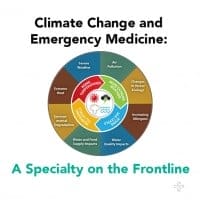 Emergency medicine (EM) is on the frontlines of climate change, which the Lancet Commission declared “the biggest global health threat of the 21st century” with “potentially catastrophic risk to human health.”1,2 Climate change is having broad and profound negative impacts on the health of our patients, especially for the vulnerable populations. It is also affecting our healthcare systems and mandating the creation of climate-resilient emergency departments (ED) with robust disaster preparedness. EM needs to engage climate change advocacy efforts for 2 key reasons. It has a profound impact on our specialty, and it is built into the moral fiber of our practice. As this threat continues to grow, EM is perfectly situated to lead the charge.
(more…)
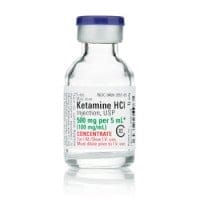 Ethanol withdrawal is a complex disease state. Two of the main players are GABA (an inhibitory neurotransmitter) and glutamate (an excitatory transmitter that can act on NMDA receptors). Simplistically, chronic ethanol use leads to a down-regulation of GABA receptors and an up-regulation in glutaminergic receptors, such as NMDA. When ethanol is abruptly discontinued, we are left with a largely excitatory state with less ability for GABA-mediated inhibition and more capacity for NMDA/glutamate-mediated excitation. While much of the treatment of severe ethanol withdrawal is focused on GABA, there are agents, such as phenobarbital and propofol, that can suppress the glutaminergic response. Ketamine seems like it should confer benefit, as well, due to its NMDA antagonist properties. Until recently there was only one clinical study using ketamine for severe ethanol withdrawal.


 The Toxicologist Mindset series features real-life cases from the San Francisco Division of the California Poison Control System.
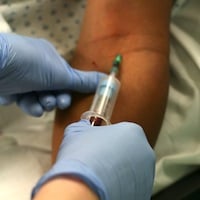 A middle-aged man with a history of diabetes and hypertension presents with nausea, vomiting, and shortness of breath. His laboratory testing is remarkable for a leukocytosis, ketonemia, and an anion gap acidosis (pH of 7.13). The EM resident caring for this patient is surprised to find that the blood glucose is 121 mg/dL.