Replace dolutegravir (Tivicay) with raltegravir (Isentress) for post-exposure prophylaxis
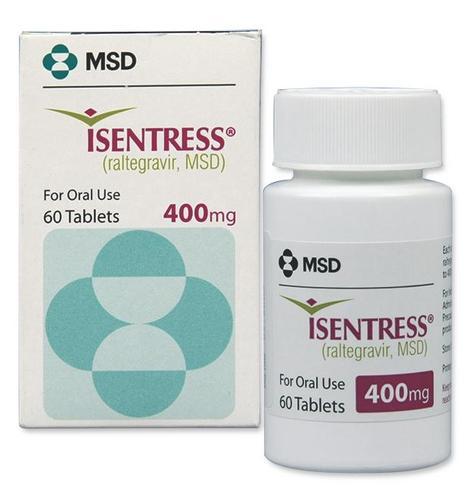 Post-exposure prophylaxis (PEP) of patients who may have been exposed to HIV includes a combination HIV nucleoside analog reverse transcriptase inhibitor emtricitabine/tenofovir (Truvada) plus an integrase inhibitor. The CDC initially recommended the integrase inhibitor dolutegravir (Tivicay). However on May 18, 2018, the CDC placed an alert about the neural tube defect risk with dolutegravir.1 How does this change our ED practice?
The evidence
Based on an interim analysis in an ongoing safety of dolutegraivir, the U.S. Health and Human Services announced:
The concern stems from a preliminary unscheduled analysis of an ongoing NIH-funded birth surveillance study in Botswana, which has reported an increased risk of neural tube defects among infants of women who became pregnant while taking DTG [dolutegravir]-based regimens. The study reported 4 cases of neural tube defects out of 426 infants born to women who became pregnant while taking DTG-based regimens. This rate of approximately 0.9% compares to a 0.1% risk of neural tube defects among infants born to women taking non-DTG-based regimens at the time of conception.
Use raltegravir as an alternative integrase inhibitor for PEP
For men and women who are not able or likely to get pregnant, it is safe to administer dolutegravir for PEP. However for women of child-bearing age (which includes many of ED patients who are evaluated for sexual assault), these patient should instead receive raltegravir (Isentress).
Why use an integrase inhibitor with reverse transcriptase inhibitors?
Utilizing a 3-drug regimen for HIV PEP is recommended by multiple guideline committees including the CDC and WHO despite low quality evidence suggesting benefit over 2-drug regimens because of the availability of well tolerated medications. Integrase inhibitors offer a few beneficial characteristics over alternative HIV medication classes that may be included in addition to a standard nucleotide and non-nucleotide reverse transcriptase inhibitor combination (e.g. Truvada).
- By interfering with the integration of transcribed viral DNA into a host cell, this medication class is effective against a later state of the viral life cycle than reverse transcriptase inhibitors allowing for later efficacy following viral exposure.2
- Integrase inhibitors produce rapid viral suppression compared to other medication classes which may benefit individuals with recent exposure.3,4
- Medications in this class are generally well tolerated and have fewer drug interactions than the alternative options while offering an alternative mechanism and barrier to resistance.
PEP Dosing for HIV
- Emtricitabine/tenofovir (Truvada): 200 mg/300 mg (1 tablet) PO daily
- Raltegravir (Isentress): 400 mg PO twice daily
Because the preventative effectiveness of these medications decline over time, it is critically important to administer the first dose of each in the Emergency Department in a timely fashion. Evidence extrapolated from animal data suggests that efficacy of HIV post exposure medications decreases greatly 72 hours after exposure and should not be provided.5–7
Reference
- Zash R, Makhema J, Shapiro R. Neural-Tube Defects with Dolutegravir Treatment from the Time of Conception. N Engl J Med. July 2018. [PubMed]
- Marsden M, Krogstad P, Zack J. Virological evidence supporting the use of raltegravir in HIV post-exposure prophylaxis regimens. Antivir Ther. 2012;17(7):1375-1379. [PubMed]
- Hoenigl M, Chaillon A, Moore D, et al. Rapid HIV Viral Load Suppression in those Initiating Antiretroviral Therapy at First Visit after HIV Diagnosis. Sci Rep. 2016;6:32947. [PubMed]
- Rahangdale L, Cates J, Potter J, et al. Integrase inhibitors in late pregnancy and rapid HIV viral load reduction. Am J Obstet Gynecol. 2016;214(3):385.e1-7. [PubMed]
- Irvine C, Egan K, Shubber Z, Van R, Beanland R, Ford N. Efficacy of HIV Postexposure Prophylaxis: Systematic Review and Meta-analysis of Nonhuman Primate Studies. Clin Infect Dis. 2015;60 Suppl 3:S165-9. [PubMed]
- Martin L, Murphey-Corb M, Soike K, Davison-Fairburn B, Baskin G. Effects of initiation of 3’-azido,3’-deoxythymidine (zidovudine) treatment at different times after infection of rhesus monkeys with simian immunodeficiency virus. J Infect Dis. 1993;168(4):825-835. [PubMed]
- Tsai C, Emau P, Follis K, et al. Effectiveness of postinoculation (R)-9-(2-phosphonylmethoxypropyl) adenine treatment for prevention of persistent simian immunodeficiency virus SIVmne infection depends critically on timing of initiation and duration of treatment. J Virol. 1998;72(5):4265-4273. [PubMed]


 Envenomation by the pictured snake would be expected to produce which clinical effects?