


Trick of the Trade: Fluorescein for lost contact lens
A patient’s contact lens broke when she was trying to take it off. She feels the pieces are still inside her eye, but she was unable to fish them out. When you look through the slit lamp, you are unable to to see whether there are contact lens pieces inside since they are clear. [+]
NG Lavage: Indicated or Outdated?
Nasogastric lavage (NGL) seems to be a logical procedure in the evaluation of patients with suspected upper GI bleeding, but does the evidence support the logic? Most studies state that endoscopy should occur within 24 hours of presentation, but the optimal timing within the first 24 hours is unclear. Rebleeding is the greatest predictor of mortality, and these patients benefit from aggressive, early endoscopic hemostatic therapy and/or surgery. So what are the arguments for and against NGL? [+]
Chest Pain: Can we do 2-hour rule outs?
Hospital admissions for chest pain often incur costly and resource-intensive workups for ACS. Is there a way to identify a low risk group who can be discharged home in a timely manner, without further workup, and without short-term adverse events from ACS? [+]
Rivaroxaban for Pulmonary Embolism: One pill and done?
With Dr. Jeff Tabas giving a lecture on the perennially hot topic of pulmonary embolism (PE) at the upcoming UCSF High Risk EM Conference (main link, PDF Brochure) in San Francisco May 22-24, 2013, I thought I would get a sneak peek into his discussion points. Rivaroxaban for Pulmonary Embolism: One pill and done? By Prathap Sooriyakumaran, MD and Jeffrey Tabas, MD UCSF-SFGH Emergency Medicine [+]
Is ATLS wrong about palpable blood pressure estimates?
In Advanced Trauma Life Support (ATLS), we learned that a carotid, femoral, and radial pulse correlates to a certain systolic blood pressure (SBP) in hypotensive trauma patients. Specifically ATLS stated: Carotid pulse only = SBP 60 – 70 mmHg Carotid & Femoral pulse only = SBP 70 – 80 mmHg Radial pulse present = SBP >80 mmHg [+]

Chest Pain: What is the Value of a Good History?
Every year there are 6 million visits to the Emergency Department (ED) for chest pain, and approximately 2 million hospital admissions each year.1 This is approximately about 10% of ED visits and 25% of hospital admissions with 85% of these admissions receiving a diagnosis of a non-ischemic etiology to their chest pain (CP).2 This over triage has enormous economic implications for the US health care system estimated at $8 billion in annual costs. [+]
Mythbuster: No Maximum Dose of Enoxaparin
Venous thromboembolism (VTE) is often treated with low molecular weight heparins (LMWH) such as enoxaparin. For patients with normal renal function, dosing is as follows: Enoxaparin: 1 mg/kg subcutaneously every 12 hours, or 1.5 mg/kg every 24 hours Dalteparin 200 IU/kg subcutaneously once daily Tinzaparin: 175 IU/kg subcutaneously once daily What about the obese patient? Is there a maximum dose for enoxaparin? [+]
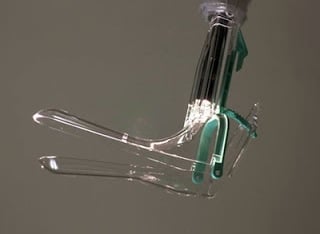
Trick of the Trade: No pelvic bed? No problem
Often finding a pelvic examination bed for a female patient needing a speculum exam can be challenging. Without the elevated foot stirrups, the bed under the patient’s buttocks obstructs the pelvic speculum handle so that it can’t rotate completely into a 6 o’clock position. Some people place an upside-down bed pan to elevate the patient’s buttocks slightly in order to create more space for the speculum. Not only is the position uncomfortable for the patient, it seems a waste of a perfectly good bed pan. Fortunately there is an alternative approach. [+]

Ketofol: Is this the “Game Changer” of Procedural Sedation and Analgesia?
When talking about procedural sedation and analgesia, our goal is to minimize pain and anxiety, with the appropriate agent that matches the needs of our patient and the clinical scenario. So what are some qualities of this “ideal agent?” In a perfect world, it would have: Minimal adverse effects Rapid onset and offset of action Pharmocokinetic predictability across a spectrum of patients [+]
First ALiEM journal article: Trial of void for acute urinary retention
A patient may present to the ED after foley catheter placement for acute urinary retention (AUR) a few days ago and now requests catheter removal. Ideally this should be performed in the urologist’s office. However, occasionally patients cannot or do not follow up with the urologist in a timely manner and return to the ED expecting urethral catheter removal. A careful history and physical should be performed along with a consulting urologist. If the eventual decision is to remove the urethral catheter in the ED, what is important to know about a Trial of Void (TOV)? [+]

Director of Growth, Strategic Alliance Initiative, Center for Innovation and Digital Health
Massachusetts General Hospital;
Chief Scientific Officer, Conductscience.com
Latest posts by Shuhan He, MD (see all)
- The Discharge Severity Index: Early Research on ED Readmission Risk Assessment - August 14, 2025
- Suboxone and the Emergency Physician: Get Waivered Training - August 12, 2022
- A Tale of Two Epidemics: COVID-19 and the Opioid Crisis - April 23, 2020