



Simulation Trick of the Trade: Bleeding Cricothyroidotomy Model
One advantage of simulation as an educational tool is the re-creation of cognitive and emotional stresses in caring for patients. Doing this for a high fidelity scenario is relatively easy – add additional patients, make a them loud, combative, or otherwise cantankerous, and add interruptions for good measure. However, when training for procedures in the simulation lab, we practice the procedure in isolation on a “task trainer” without cognitive and emotional stress for context. An off-the-shelf task trainer can do a superb job of teaching the mechanics of performing a procedure, but they lack complexity necessary to train for performing the procedure under stress. [+]
Transitions of Care: Top 10 things admitting providers wish we did for older adults
“Transitions of care” has become a hot topic in the care of older adults. It is usually applied to the transition from the hospital to home or the hospital to a nursing facility. But what about the transition from the ED to an inpatient service? It turns out there are plenty of things we could be doing (or not doing) to help smooth that transition and improve patient care. Here are some thoughts from admitting physicians with geriatrics training. [+]
Critical Thinking: Minimizing NOT knowing what you do not know
Socratic questioning, a dialectic approach to acquiring knowledge, has been around for ages. If done appropriately, it’s a rigorous method of learning. Questioning reveals our knowledge base, reasoning, and want for clarification; invites a dialogue; and establishes a relationship with others. Socratic questioning can also aid in the development of critical thinking. [+]
![Shuhan [+]</p></body></html>](https://www.aliem.com/wp-content/uploads/2020/03/Shuhan_He_MD.jpg)

MEdIC Series: The Case of the Exasperated Educator
Image credit: wstera Teaching in the emergency department can be a challenge. Distractions and interruptions are everywhere and there always seem to be more things to do than there are people to do them. These challenges are magnified when our learners are struggling. In The Case of the Exasperated Educator, we will discuss these issues and how we, as educators in emergency medicine, can address them as effectively as possible. [+]

Trick of the Trade: Nail Bed Repair With Tissue Adhesive Glue
Patients with fingertip injuries involving the nail bed typically present to the emergency department and require meticulous repair of the nail bed to prevent long-term cosmetic and functional disability. There are several methods to repair nail beds, typically involving absorbable suture, but maybe there is a faster way with similar cosmetic and functional outcomes. [+]

Assessment in medical education: Finding the signal in the noise
This past December it was reported in the Harvard Crimson that the median grade at their prestigious University was an A-.1 A flood of articles followed bemoaning grade inflation at educational institutions with a former Harvard President noting cheekily that “the most unique honor you could graduate with was none”.2 This might be alright if well-developed criterion-based instruments are used to grade the students, but given the variability in courses taught at the University and difficulty of developing such tools, it is unlikely. That being the case, if the median is an A-, one wonders how sub-par performance must be [+]

Ondansetron: Has it reduced need for IV rehydration in vomiting kids?
A 3-year-old male presents to the emergency department (ED) complaining of vomiting and diarrhea that has been occurring for 2 days. The mother states that the child has had fewer wet diapers today but has made tears when crying. On physical examination you note no rebound or guarding of the abdomen and determine that the child is moderately dehydrated. Your initial plan is to administer ondansetron and rehydrate the child orally. This is what you have been taught but is it actually efficacious? A just published 2014 JAMA Pediatrics article attempted to answer this question. [+]
Piperacillin/Tazobactam and Risk of Acute Kidney Injury with Vancomycin
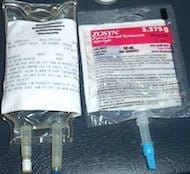
There are a few reasons why piperacillin/tazobactam (Zosyn) is not usually my first choice for a broad-spectrum gram-negative agent in the ED. First, at my institution, the Pseudomonas aeruginosa susceptibilities to pip-tazo are lower than that for cefepime. Second, pip-tazo does not have great CNS penetration, especially compared to ceftriaxone, cefepime, or even meropenem. Third, do we really need the anaerobic coverage that pip-tazo provides for every sick patient? Pip-tazo is great for empiric treatment of intra-abdominal and severe diabetic foot infections, but may not be needed for a hospital-acquired pneumonia. Fourth, with its frequent dosing (every 6 hours), too often the second dose is missed if the [+]

Getting Semmelweised: An Essay on Fear and Medical Innovation
The man who saved more lives than any other physician (in the history of humanity combined) died in a mental institution—unrecognized and shunned by the medical community. He was beaten by guards and died a miserable death. Dr. Ignaz Semmelweis was a Hungarian obstetrician practicing in the mid-1800’s, years before Louis Pasteur came up with his germ theory and Joseph Lister popularized hand washing. [+]
Improving debriefing skills: Two-column case and learning pathways grid
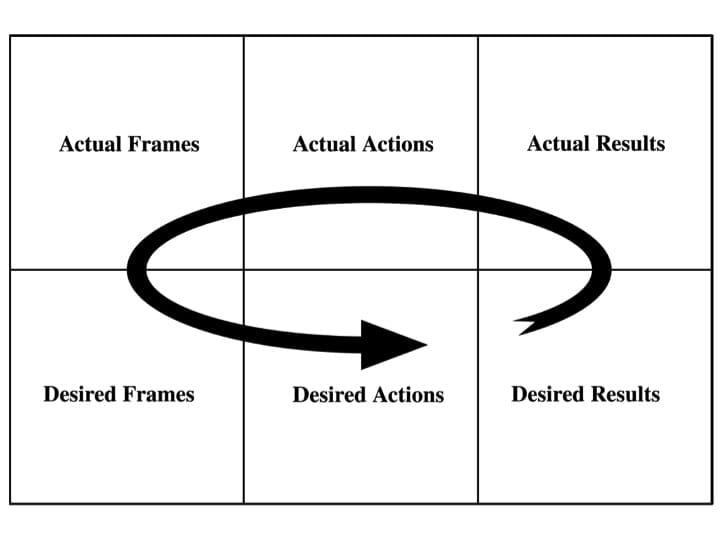
Being a learner in a medical simulation case can be tough. But equally challenging, is the role of the Debriefer. This person has to balance the important task of debriefing the small group, provide feedback, and still maintain a positive and open learning environment. A 2013 paper by Rudolph et al attempts to show methods how to balance these demands while improving as a Debriefer through the use of 2 Column Case Analysis and Learning Pathway Grid. [+]