



Welcome new ALiEM-EMRA fellow Scott Kobner
We are excited to announce our inaugural 2014-15 ALiEM-EMRA Fellow for Social Media and Digital Scholarship, Scott Kobner, who is a second-year medical student at New York University School of Medicine. Scott brings a unique perspective to ALiEM and the FOAM community. He has worn many hats in the past, which will serve him well towards being a more versatile and mature clinician. He has been an EMT and EMT trainer, a scribe, a child-life volunteer, and New York Free Clinic patient educator. His focus recently has been on improving patient education especially in the Emergency Department. [+]

Welcome new ALiEM-CORD Fellow Dr. Sameed Shaikh
It is with great pleasure that announce our inaugural 2014-15 ALiEM-CORD Fellow for Social Media and Digital Scholarship, Dr. Sameed Shaikh, from Sinai-Grace Emergency Medicine Residency Program/Detroit Medical Center. As a PGY-2, he already has an impressive multimedia skill set, including website design, video editing, photography, and electronic music composition. He is currently using his skills for good rather than evil at his residency program to match medical education and medicine in general with currently available technological solutions. [+]
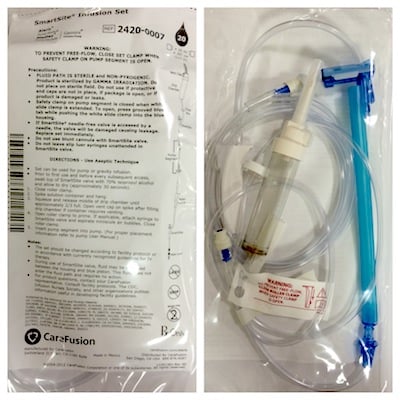
tPA Administration: Don’t Forget the Leftover Volume in the Pump Tubing
Whether alteplase (tPA) is given for ischemic stroke, pulmonary embolism, or STEMI, there is an important practical issue to be aware of during administration. Dr. Charles Bruen (@resusreview) published a great step-by-step pictorial tPA Mixing Tutorial. Once the tPA is mixed, it will invariably be infused via a smart pump through its corresponding tubing. At my institution we use Alaris® CareFusion smart pumps, through the principle applies irrespective of which brand pump is used. [+]
ALiEM Hiatus
We are undergoing some server upgrades before our two fellowships begin on July 1. Let's all cross our fingers and toes that we can move the 1,000+ posts and database safely over to a faster and more reliable server! Will hopefully be back in a week.

PV Card: Local anesthetic toxicity calculations
Local anesthetics (LAs) are widely employed to achieve tissue infiltration, peripheral and regional anesthesia, and neuraxial blockades. Despite their well-established toxic dose limits, these agents continue to pose a substantial risk of morbidity and mortality due to local anesthetic toxicity and overdose. For example, LAs and epinephrine account for a large proportion of medication errors resulting in adverse patient outcomes due to drug dosing miscalculations or errors converting between units. Dosage calculations vary by patient weight as well as by pharmacokinetics and pharmacodynamics of individual LA formulations. Further, non-standard units, additives (epinephrine), and varying concentrations among LAs complicate correct dosage [+]

AC Joint Separations: Overview of diagnosis and treatment
Separation of the acromioclavicular (AC) joint is a common injury encountered in the emergency department. Keys to optimal outcome and return of function in these patients include knowledge of injury mechanism, diagnosis and classification, and initial treatment. [+]


High risk back pain: Cauda Equina Syndrome (EREM)
Cauda equina syndrome (CES), which occurs due to compression of the distal lumbar and sacral nerve roots, is a potentially devastating cause of back pain. CES is often missed on the patient’s initial visit which can lead to significant neurologic compromise in a matter of hours [1]. To improve patient outcomes and minimize medicolegal risk, providers need to understand the limitations of the history and physical and carefully consider the diagnosis of CES in any patient with back pain. [+]

MEdIC Series: The Case of the Exasperated Educator – Expert Review and Curated Commentary
The Case of the Exasperated Educator presented an attending at the end of a difficult shift with a learner that just didn’t seem to “get it.” As the new attending coming on shift, how can we help our colleague and his student? How can we avoid getting ourselves into a similar situation? No matter patient we are, odds are that we will all find ourselves in these roles at some point or another. Check out the ALiEM community’s discussion of the case. [+]

Research Figures Demystified: Bland-Altman Plot
While working your shift in a small community ED, you overhear that EMS is on their way to you with a five-year-old child in respiratory distress after eating a peanut butter sandwich. Anticipating the patient to be in anaphylactic shock, you and the senior resident begin planning the course of action. The resident asks, “how much do you think a five-year-old weighs?” While you begin fumbling for your Broselow tape, a nurse seated near you confidently responds, “That’s easy, just count your fingers! One, three, five. Ten, fifteen, twenty! The child weighs approximately twenty kilograms!”. [+]
Atrial Fibrillation Rate Control in the ED: Calcium Channel Blockers or Beta Blockers?
Rate control with IV medications is recommended for atrial fibrillation in the acute setting in patients without preexcitation. This was a Class 1 recommendation (Level of Evidence B) per the 2014 AHA/ACC/HRS Guideline for the Management of Patients With Atrial Fibrillation [1]. What does the evidence say? Are calcium channel blockers or beta blockers better? [+]