



Basics of Blogging at 2014 CORD Academic Assembly
Turns out New Orleans is a fantastic city, not just for the food and culture, but also as a setting for the 25th anniversary year of the Council of Residency Directors Academic Assembly conference (CORD). The ALiEM crew was on hand to help teach a pre-conference workshop called #DontGetLeftBehind: FOAMed and Social Media for EM Educators, dedicated to learning tricks of the trade of the different modalities of social media for medical education. Naturally we focused our section on blogging. Rather than let all that information go to waste, we have shared our work in this post in the true spirit of [+]

Beware of fluoroquinolones: You, your patient, and the FDA
Fluoroquinolones are a widely used class of antibiotic that are effective in treating a wide variety of infections. Despite their popularity there is increasing concern regarding to the potential complications associated with these agents. In 2008, the U.S. Food and Drug Administration (FDA) issued a black box warning involving fluoroquinolone use and an increased risk of tendon rupture. More recently in 2013 the FDA released another warning regarding the risk of peripheral neuropathy and required additional warnings to be added to the drug labels [1]. [+]

MEdIC Series: The Case of the Humorous Humerus – Expert Review and Curated Commentary
The Case of the Not-So-Humorous Humerus presented an attending faced with a patient complaint about a resident. This is a situation that all of us will almost certainly be faced with at one point or another and there is no easy way to address it. This month we asked you to tell us how you would approach this difficult conversation to successfully determine what the problem was and how it should be addressed. [+]
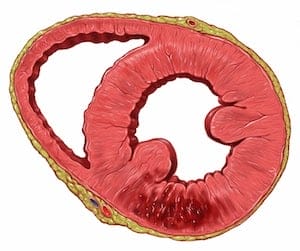
High Sensitivity Troponin T and Acute Myocardial Infarction: One and Done?
There has been a lot of publicity about evaluation of chest pain patients in the emergency department (ED) with high sensitivity troponin testing. In the past with older troponin assays, clinicians would evaluate patients, get an ECG, and an initial set of cardiac biomarkers. The subsequent set of biomarkers would be performed at 6-8 hours later before determination of disposition. In the past few years, several studies have been published evaluating point of care troponins, sensitive troponins, and high sensitivity troponins which have changed our practice and evaluation of these patients. An early version of a study was recently released [+]

Uncomplicated Urinary Tract Infections in Older Adults: Diagnosis and Treatment (Part 2)
It seems like a simple enough question: How do you diagnose and treat uncomplicated urinary tract infections (UTIs) in older adults? The answer is: It depends. In Part 1 of this post we discussed the diagnosis of UTIs in cognitively intact older adults and those with underlying cognitive impairment. This post will discuss treatment options. UTIs are the most common bacterial infection diagnosed in older adults (age 65 and over).1 They are the most common reason for antibiotic use and account for 5% of ED visits in this population.2 Remember from part 1 that asymptomatic bacteriuria is very common in older adults, and does [+]
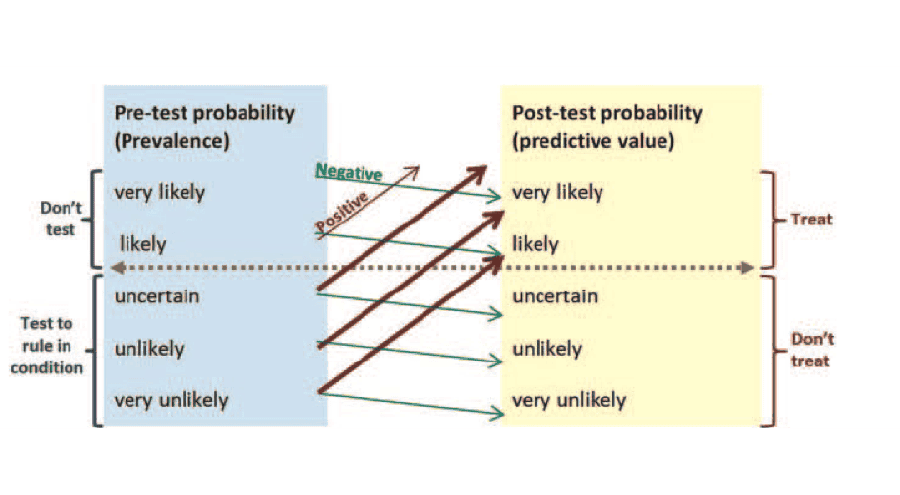
Cellulitis: Do Not Get Blood Cultures
You are treating a patient with left lower leg cellulitis. The nurse is going to establish IV access, draw blood work, and give analgesia and antibiotics. Before walking into the room, the nurse asks, “Do you need me to grab a set of blood cultures?” Additionally the hospitalist had asked you to order a “set of cultures” on your most recent cellulitis admission. Should you proceed? [+]
Conference Tweeting: Do not start tweet with @ symbol
In the last two years, live tweeting from medical and education conferences has become mainstream. What better way to stay up-to-date with what is being taught around the globe! Pioneers like Dr. David Marcus (@EMIMDoc) even archive all of the conferences with hashtags, Twitter handles, and topic focus on his EM IM Doc blog. [+]

Hands Up For Health: Simulation Extending to Community Education
Medical simulation is not just for the clinical learner. Rather, it can have far reaching impact and can contribute meaningfully to the community. In this post, Dr. Beth Thomas describes the work of Hands Up For Health which uses the power of simulation to reach young people. [+]

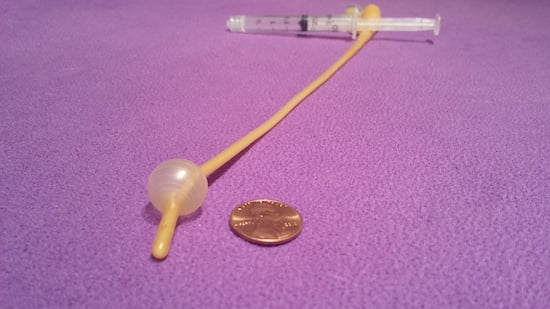
Trick of the Trade: Nasal foreign body removal using foley catheter
A healthy 4 year-old boy is brought in by mom for a plastic bead up his nose. The mom states, “The last time the other doctors had to be called, and it took forever. Oh, and I have to pick up his brother from school in 30 minutes. Can you get it out, doc?” The patient is squirming even as you take a quick peek at his nose, but you catch a glimmer of the bead up his right nare. [+]

MEdIC Series: Case of the Not So Humorous Humerus
Unprofessionalism. It is notoriously hard to define and dependent upon the eye of the beholder. And yet, as medical educators, we often are asked to intervene when it occurs. Join our discussion on how to handle a case where a patient discloses to you, the supervising physician, that a resident has been less-than-professional. What would you do? [+]