


Simulation: A tool for non-clinicians
Thought simulation is only for doctors and nurses? Think again! More and more, people are reconsidering the notion that medical simulation has only application in the clinical setting. By rethinking the narrow mind set, educators are learning that simulation can be used almost anywhere for anyone! Even to teach sexual health to teenagers! [+]

MEdIC Series: The Case of the Terrible Teammate
Workplace conflict can take place in many forms. Both clinical and administrative work can result in interpersonal conflict that causes frustrations which lead to a downward spiral of increasingly intense and adversarial working environments. This month in the MEdIC Series, we present the case of Sarah, a co-chief resident who is having a disagreement with her colleague David over an administrative issue. We invite you to share your thoughts and advice below. [+]

Head injury in pediatric patients: To CT or not to CT?
Intracranial injury is the leading cause of death and disability in children. It can arise after severe, moderate, or minor head injury. Children with minor head injury present the greatest diagnostic dilemma for emergency physicians, as they appear well but a small number will develop intracranial injuries. The question that often arises in the ED is: To CT or not to CT? [+]

ALiEM-Annals of EM Journal Club: Clinical Decision Rule for Subarachnoid Hemorrhage
We are very excited this month to bring you our second Global Journal Club, co-hosted by the team here at ALiEM and the editorial board at the Annals of Emergency Medicine. This month, we are changing things up! We will be providing you, our readers, with a clinical vignette and related journal club questions today at the beginning of the week.The discussion will be held asynchronously starting today through Thursday (for 4 days). Respond by blog comment below or tweet (#ALiEMJC). On Wednesday, January 22, 2014 at 11 am PST (2 pm EST), we will be hosting a 30-minute live Google Hangout [+]

Should We Admit All Patients with Sternal Fractures?
The detection rate of sternal fractures following motor vehicle collisions and blunt trauma to the chest and abdomen has increased over the past decade. The reason for this increase is most likely from the use of seat belts and better imaging modalities such as computed tomography (CT) in trauma patients. I can recall as a resident being told that any patient with a sternal fracture should be admitted to trauma because of the high likelihood of blunt cardiac injury and high mortality rate associated with this injury, but is this always true? [+]

Child Whisperer Series: Breaking Bad News
The weekend after Thanksgiving, I received the following text from one of my friends: “Bella’s in the hospital. Her legs were hurting, they did tests… It’s leukemia.” Bella is one of my 8 year old daughter’s good friends. All of a sudden my professional world and personal world were colliding. As I looked up from my phone and at my daughter, one of my first thoughts was, how am I going to explain this to my daughter so that she isn’t terrified and understands leukemia? [+]
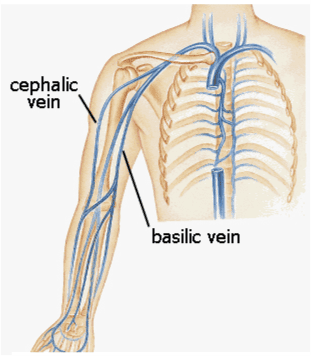
Approach to Difficult Vascular Access
Intravenous (IV) access is a basic and invaluable skill for emergency physicians. For patients requiring rapid fluid resuscitation, airway management, or medication administration, the placement of one or more IV lines is absolutely essential. Most patients do well with a simple, landmark-based, blind placement of a superficial peripheral IV. However, we often encounter situations where this may be difficult or impossible to achieve, and so we all should have a repertoire of other sites and techniques to employ. [+]
Applying to EM-Critical Care Medicine Fellowships: What you need to know
Emergency physicians (EPs) have been successfully training in and practicing critical care in the ICU for decades, though until recently board certification remained closed to EPs. In the last few years, however, we have seen monumental changes in training opportunities for EPs, including national standardization of training programs, and most importantly, the establishment of three distinct pathways to board certification. Though the details of some of these pathways are still being worked out, much more concrete arrangements have been reached in the last 6 months. If you are an EM resident interested in applying to critical care fellowships, this is [+]

The proper way to go Against Medical Advice (AMA): 8 Elements to Address
Case Example: 42 y/o male presents with right lower quadrant abdominal pain and has significant tenderness at McBurney’s point on exam. While waiting for a CT scan to evaluate for possible appendicitis the patient rips out his IV and tells the nurse “I’m leaving, I don’t want to sit here all night, and you can’t make me stay.” The nurse pulls you out of another room and hands you the standard against medical advice (AMA) paperwork. [+]
Back to the Basics in Medical Simulation: 11 Programmatic Factors
Let us start 2014 with renewed vigor and interest in simulation! To do that, I am going to take it way back and review the basics of simulation with a 2007 article that I consider landmark for understanding medical simulation and the role it plays in education by one of the leaders in the field, Dr. David Gaba. [+]