


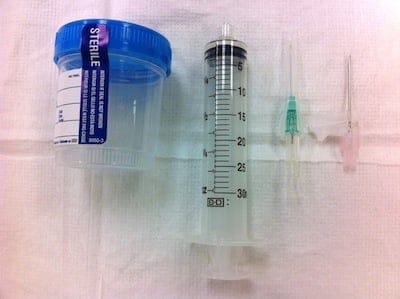
Trick of the Trade: Irrigation fluid is key – but not in your eye!
High pressure irrigation of wounds is critical in reducing the rate of wound infection. There are a variety of commercial irrigation kits which include splash guards. If you are irrigating correctly and generating at least 8 PSI of pressure, some irrigation fluid should splash up and out of the wound. Be careful not to splash irrigation fluid in your eyes. What if you don’t have a commercial irrigation setup? [+]

Paucis Verbis: Continuous Infusions
I have always been envious of the residents who carry around the Continuous Infusions cheat-sheet card, which was created by the UCSF Critical Care Units as part of a campaign for Safe Medication Prescriptions. I want one! So I finally managed to wrangle one away for a few minutes and xerox copy it. Here is the abbreviated card, after paring down the list to just ED-focused medications. PV Card: Continuous Infusions Go to ALiEM (PV) Cards for more resources.
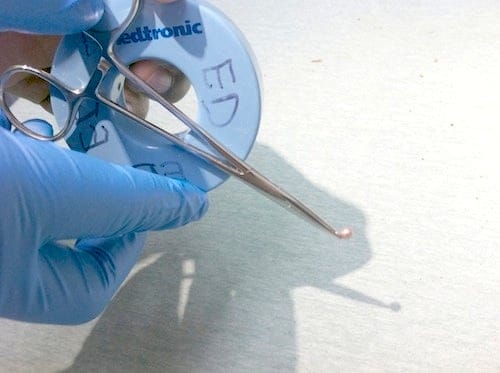
Trick of the Trade: Another magnet trick for metallic FB removal
Last week, I talked about the use of Rare Earth Magnets for removing metallic foreign bodies. Sometimes a straight magnet though isn’t quite strong enough to grab a metallic foreign body. If only you had a small magnetic hemostat. This week Dr. Catherine Perry (Culpepper Memorial Hospital) and Dr. Kolapo DaSilva (PGY-2 at UVA) emailed me with a creative solution. They encountered a patient with a BB pellet lodged deeply in the soft tissue. Small mosquito clamps couldn’t get around the BB. A cardiac magnet alone caused the BB to tent the skin up. [+]
Trick of the Trade: Rare earth magnets for metallic FB removal
A child presents to your Emergency Department with a small button battery up her nose. Your usual tricks fail: Occluding the other nostril and having the mother blow in the patient’s mouth forcefully. Using a small curette or forceps to scoop or pull it out. [+]
Video: Crash course on Prezi
https://www.youtube.com/watch?v=5sDdyk-HHYQ Dr. Rob Rogers has started a great series of videos which highlight resources and tools which medical educators may find useful and innovative. This video takes you on a guided tour through making a Prezi presentation. Although I am still torn about using Prezi as a delivery tool because of the excessive motion-based transitions, I do like such features as: Really professional looking templates The presentations can live online and/or on your desktop Ability to easily embed videos Ability to see your entire presentation on the canvas Allows more flexibility in content delivery It just looks cool. You can [+]
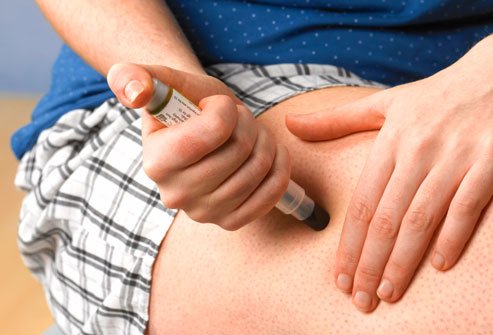
Paucis Verbis: Anaphylaxis
Anaphylaxis is one of the most under-appreciated and under-treated conditions in the Emergency Department. A common misperception is that you need hypotension to diagnose it. Below is a brief summary of the diagnostic criteria and ED treatment protocol. Immediate administration of IM epinephrine is critical. A major challenge is deciding which patients can go home and which need to be admitted, because of the risk of "rebound" or a biphasic anaphylactic response. This may occur as late as 72 hours later, but typically occur within the first 24 hours. There isn't a good answer for this. What's your practice in [+]
Live-blogging: UCSF High Risk EM Hawaii conference
Today is the pre-day for our department’s 2nd annual High Risk Emergency Medicine conference in Hawaii. The day’s focus is on ultrasonography. Keep a lookout below as I try to live-blog some of the clinical pearls that I glean from the day (using Google Docs). [+]

Article review: New assessment method for medical students – A Script Concordance Test
What different ways can we assess learners? This fascinating study assesses a new tool – Script Concordance Test (SCT). Assessing clinical reasoning skills in scenarios of uncertainty: Convergent validity for a Script Concordance Test in an Emergency Medicine clerkship and residency [+]

Paucis Verbis: Pediatric fever without a source (3 mo-3 yr)
In part 3 of this "Pediatric Fever Without a Source" Paucis Verbis cards, we now cover febrile infants 3 months to 3 years old (PV cards for birth-28 days and 29 days-3 months old). Notes: The algorithm below is a guideline for NON-toxic patients. More ill-appearing children require a more broad workup. For the under-immunized (<2 PCV immunizations) and temperature ≥39.5C, blood cultures may be falling out of favor in the near future, because the incidence of blood culture contaminants is close to exceeding the true incidence of occult bacteremia. PV Card: Pediatric Fever Without a Source (3 Months-3 Years) Go [+]

Blog incubation project: New 2 winners!
And the winners of the first ever EM Blog Incubator competition are… Dr. Jim Campagna (Emergency physician at St Joseph’s Hospital Health Center in Syracuse, NY) and Dr. Timothy Peck (Beth Israel Deaconess EM resident in Boston, MA) [+]

Director of [+]