


Paucis Verbis: An approach to persistent tachycardia
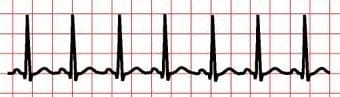
Tachycardia is a common clinical occurrence in the ED. Most of the time the etiology can be discerned through the history and physical exam, but sometimes it cannot. This is problematic especially when we are about to discharge a patient home but his/her heart rate is still 115 beat/min. We can't send this patient home yet. Do we then have to admit them for work-up of persistent tachycardia? Attached is a list of common causes of tachycardia in the ED, as well as potential diagnostic and therapeutic considerations. Rather than a shot-gun approach, a limited and thoughtful method works best. [+]
Trick of the Trade: Using a funnel for NG tubes
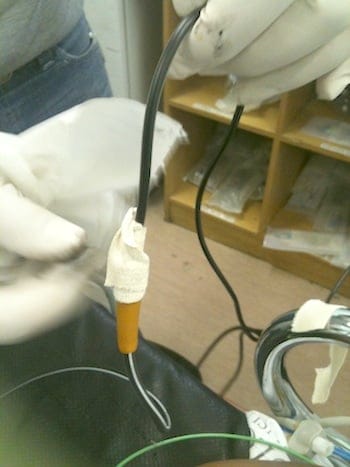
One of the indications for nasogastric (NG) tube placement is to instill fluids or medications. This may be saline or water for NG lavages or charcoal. You can manually push fluids into the NG tube via a 60 cc syringe, but this may take a long time for large volumes. [+]

The future of the ALiEM blog
It has been over 2 years now that my guest bloggers and I write blog posts 5 days a week. The process of writing, maintaining, and collaborating on ideas for the blog has completely changed my career. It has opened new doors, introduced me to new colleagues and friends worldwide, and clarified the direction of my career. Now as I find myself involved with more projects, I need to re-structure my time (unless someone can find me an extra hour a day to work). It was a good run though. Honestly, I’m surprised that I maintained this pace for [+]
TED Video: A lesson from spaghetti sauce on appreciating diversity
One size does not fit all. This is the crux of Malcolm Gladwell’s 18-minute talk. He gave this talk just before his book “Blink” went huge. He makes an eloquent argument for the nature of choice and happiness. There is no one perfect spaghetti sauce that fits everyone. There is no one perfect Pepsi which everyone likes. [+]
Trick of the Trade: Splinting the ear
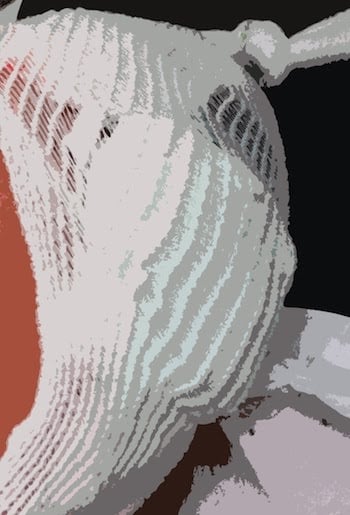
One of the hardest bandages to apply well is one for auricular hematomas. After drainage, how would you apply a bandage to prevent the re-accumulation of blood in the perichondrial space? Traditionally, one can wedge xeroform gauze or a moistened ribbon (used for I&D’s) in the antihelical fold. Behind the ear, insert several layers of gauze, which have been slit half way to allow for easier molding around the ear. Anterior to the ear, apply several layers of gauze to complete the “ear sandwich”. Finally, secure the sandwich in place with an ACE wrap, which ends up being quite challenging [+]

EM-RAP Educator’s Podcast: How to get promoted in academic EM
Dr. Amal Mattu gives a great 47-minute lecture on “How to Get Promoted in Academic Emergency Medicine”. Catch the podcast from the talk in July’s EM-RAP Educator’s Edition. He pulls many of the lessons from his son’s kindergarten teacher. Getting promoted in academic EM can often be a challenge and a mysterious process. Why is it some are getting promoted faster than others? What can I do to make sure I’m on track for promotion? [+]
Advice for the new EM interns, part II
As a followup to a previous post on “The 10 Commandments in Emergency Medicine”, we would like to pay tribute to our pediatric friends. More than a decade after it was initially published, Timothy Givens (also from Vanderbilt but the pediatric side) published “The 10 commandments of pediatric Emergency Medicine”. Although the original commandments still hold true, the pediatric commandments augment them nicely and are geared towards our littler patients. [+]
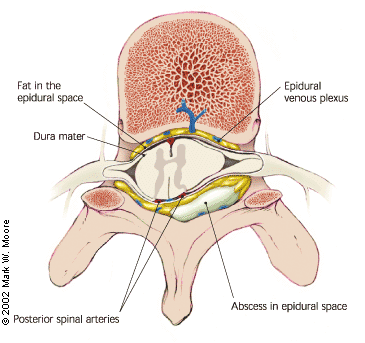
Paucis Verbis: Spinal epidural abscess
One of the most challenging diagnoses to make is that of a spinal epidural abscess (SEA), especially if you work in an Emergency Department which cares for many IV drug users and HIV patients. There's never before been a published diagnostic guideline or algorithm which helps you with risk-stratification. In the Journal of Neurosurgical Spine, a diagnostic guideline was prospectively evaluated on a small population (n=31) as compared to historical controls (n=55). They found that an ESR test had a sensitivity of 100% if a patient had at least 1 risk factor for SEA. A CRP test was much less [+]

Faculty hero: Dr. Jim Adams (part 2)
Continuing from the Part 1 (Aug 2, 2011 post), here is the rest of my conversation with Dr. Jim Adams: What cool things are you working on right now? The big projects that I am working on include: [+]


Trick of the Trade: Balloon animals in the ED
Back in July 2010, I wrote about using the Candleflame app to encourage pediatric patients to take deep breaths for a pulmonary exam. This app has also been useful in helping me roughly gauge the patient’s peak flow. [+]