


Calling all med students: SAEM Ambassador opportunity
Are you a medical student interested in EM? Want to get your registration costs waived at a national meeting? Want to come say hi to me? Here is an announcement from the SAEM website (deadline Feb 1, 2012): [+]

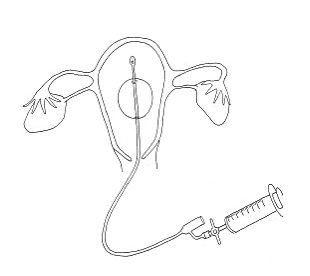
Trick of the trade: Foley catheter for DUB
Your next patient has heavy dysfunctional uterine bleeding (DUB). She is tachycardic and pre-syncopal. While you establish an IV, resuscitate her, and wait for the gynaecology team to arrive, is there any trick you can use to stem the bleeding? [+]
Video: Dr. Eric Mazur on peer teaching
“My lecturing was ineffective, despite the high evaluations.” “The traditional approach to teaching reduces education to a transfer of information.” – Dr. Eric Mazur Dr. Eric Mazur is a Harvard Professor of Physics and Applied Physics who talks about his “confessions of a converted lecturer”. He focuses on the power of peer teaching and the ineffectiveness of the traditional lecture format in a classroom. This talk is 72 minutes long. Take some time to listen and learn. Dr. Mazur is such an engaging talk that I couldn’t stop watching. Maybe it’s because he looks a little like the comedian Steve [+]

Paucis Verbis: Methotrexate for ectopic pregnancy
Ectopic pregnancies account for as many as 18% of patients who present with first-trimester bleeding or abdominal pain in the Emergency Department. This Paucis Verbis card summarizes the 2008 American College of Obstetricians and Gynecologists (ACOG) guidelines on the use of methotrexate (MTX) for ectopic pregnancies. Not all ectopic pregnancies require operative management. What are the indications and contraindications to MTX? When should they follow up with their obstetrician? Answer: In 4 days for a repeat b-HCG and possible second dose of MTX Note that one of the eligibility criteria is that the patient must have an "unruptured ectopic pregnancy". Many [+]

Trick of the Trade: Ultrasound-guided injection for shoulder dislocation
Who loves relocating shoulder dislocations as much as I do? I know you do. Often patients undergo procedural sedation in order to achieve adequate pain control and muscle relaxation. Alternatively or adjunctively, you can inject the shoulder joint with an anesthetic. Personally, I have had variable effectiveness with this technique. In cases of inadequate pain control, I always wonder if I was actually in the joint. How can you improve your success rate in injecting into glenohumeral joint injection? [+]

Article review: Evaluating your written evaluation of a learner
As a new faculty, one of the first challenges that I encountered was completing evaluation forms for medical students and residents. In our department, a Daily Evaluation Card (DEC) is to be completed at the end of every shift for each learner. These DEC’s are then collated by the program directors to yield a summative final rotation evaluation. What I wondered was: how can I best use these DEC’s to help learners progress as medical professionals and at the same time provide critical information for the PD’s? [+]

Paucis Verbis: Acetaminophen toxicity
Did you know that the American Association of Poison Control Centers reports that 10% of poison center calls are related to acetaminophen ingestions? That's a lot. This Paucis Verbis card reviews the basics of acetaminophen toxicity. I included the Rumack Matthew nomogram to help you plot out the patient's risk for hepatotoxicity. In the Emergency Department, we often screen for acetaminophen toxicity for patients who may have ingested substances as a suicide attempt. We check the serum acetaminophen level 4 hours post-ingestion. Occasionally, we are surprised by a toxic level because in the first 24 hours, because symptoms are can [+]
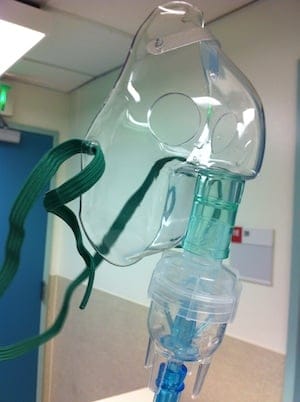
Trick of the trade: Nebulized naloxone
Overdoses of long-acting opiates, such as oxycodone and methadone, are challenging to manage, especially if these patients are chronically on opiates. On the one hand, you want to reverse some of the sedative effectives with naloxone so that they aren’t near-apneic and hypoxic. You also want to be able to take a history from them. On the other hand, you don’t want to abruptly withdraw them with naloxone such that they become violent and agitated. It is a fine balancing act. Long-acting opiates present a separate challenging because naloxone wears off fairly quickly in 30-45 minutes. [+]

Paucis Verbis: Influenza – To treat or not to treat?
Influenza season typically peaks in the United States during the Jan-Feb months and can start as early as October. You can read about the 2011-12 seasonal flu data on the CDC website. Should you give a patient with influenza an antiviral agent or just provide supportive therapy? This Paucis Verbis card summaries the CDC's Advisory Committee on Immunization Practices (ACIP) recommendations for this upcoming 2011-12 flu season. I also let patients with uncomplicated influenza who are going to be managed as outpatients know that a 5-day course of osteltamivir or zanamivir will cost them about $50-80. Often that sways them [+]

G-Advising: Using Google Hangout to advise medical students
Get an advisor. Don’t try to navigate medical school and residency on your own. This is key especially during medical school as you try to get through and around the mounds of reading, paperwork, options, and pitfalls. If you are interested in Emergency Medicine (EM) as a career, that means getting one or several great EM advisors. Don’t rely on non-EM faculty to give you any insight into EM. Inevitably, I have found that they give incomplete or slightly skewed perspectives about the pros and cons of EM. [+]