



Trick of the Trade: Pediatric ear exam
Performing a physical exam on frightened pediatric patients can often be challenging. I am always thrilled to add more child-whisperer techniques to my arsenal of tricks. I have written in the past about: Balloonimals iPhone app to grossly assess peak flow Candleflame iPhone app to grossly assess peak flow Eye Handbook iPhone app with pediatric fixation animation targets Casting/splinting your buddy bear What’s your trick on performing an otoscope exam of the ears? [+]
Paucis Verbis: Legionella pneumonia
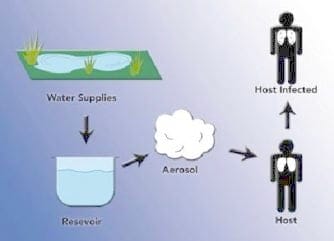
Did you know that there was an unexplained spike in Legionnaire's disease (pneumonia caused by Legionella pneumophila) during the 2009 H1N1 flu pandemic? Since the flu season is rapidly approaching, I thought I would review what Legionnaire's disease looks like. Yes, they will have a fever, cough, and pneumonia on CXR. These patients are generally pretty sick and almost always need hospitalization. What makes it unique? The trick is to look for extrapulmonary findings, which help to distinguish it from other atypical pneumonias. Relative bradycardia is a sure tip. Why do we want to differentiate it from other pneumonias? Legionnaire's [+]
Trick of the Trade: Synovial lactate in septic arthritis
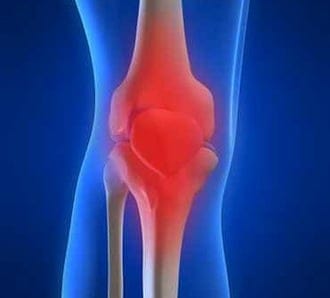
A 55 year old woman presents with rheumatoid arthritis presents with monoarticular joint pain in her left knee for the past 3 days. She has a low-grade fever of 100.2 F and a significantly warm and tender knee. “It feels different than my RA flare.” Does this patient have a septic joint? [+]

Paucis Verbis: Distracting injuries in c-spine injuries
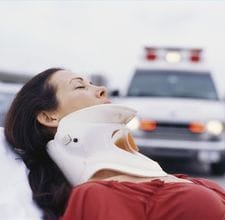
"Distracting injury" is a frequent cited reason for imaging the cervical spine in blunt trauma patients, per the NEXUS study. In the Journal of Trauma in 2005 and 2011, studies aimed to narrow the definition of "distracting injury". Although both are studies at different sites, both conclude the same: Chest injuries may be considered "distracting injuries" because of their proximity to the cervical spine. Example So let's say you are caring for a non-intoxicated motor vehicle crash patient with an isolated tibia fracture (i.e. a "long bone fracture"), no chest injuries, and no neck pain/tenderness. Per the NEXUS criteria, you might [+]

Brief survey: Need your help with my promotions!
With all of the advances in technology and social media, the “old school” world of traditional academia doesn’t know what to do with medical professionals who incorporate technologies into their educational practices. To justify these past 2 years of blogging during my free time, I wanted to collect data on who my readers are and the impact of my blog (if any). I could sure use a few minutes of your time and input to help with my promotions process. Let’s push traditional academia to change with the times. Thanks a bunch. [+]
Trick of the Trade: Epley maneuver
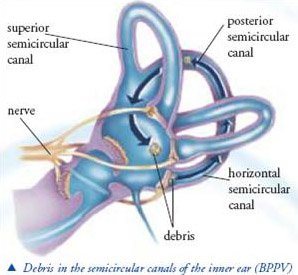
You diagnose a patient with benign paroxysmal positional vertigo (BPPV) based on the Dix-Hallpike maneuver. This is caused by otoliths and debris in the posterior semicircular canal. Now what? The patient still feels miserably nauseous and vertiginous. Is your first-line treatment meclizine or benzodiazepines? [+]

Paucis Verbis: Antibiotics for Cystitis and Pyelonephritis in Women
You diagnose a 35 years old woman with uncomplicated cystitis. She is not diabetic and not pregnant. Which antibiotics should you give? What if she had pyelonephritis? Answer: It depends on your local antibiogram. San Francisco General Hospital 2010 Antibiogram Today, go find out about your hospital's local resistance rates for uropathogens to various antibiotics. For San Francisco General Hospital, I found our antibiogram publicly posted online. Urine isolates of E. coli demonstrate relatively high resistance rates to trimethoprim-sulfamethoxazole and ciprofloxacin: Trimethoprim-sulfamethoxazole resistance rate = 33% Cefazolin or Cephalexin resistance rate = 12% Ciprofloxacin resistance rate = 16% So based on the [+]

Trick of the Trade: Dix-Hallpike maneuver variation
The Dix-Hallpike maneuver is used to help diagnose benign paroxysmal positional vertigo (BPPV). Place the gurney's head of the bed down flat. Reposition the patient so that s/he is sitting another 12 inches or so closer towards the head of the flat gurney. Rotate patient's head 45 degrees. Help the patient lie down backwards quickly. The patient's head should be hanging off of the gurney edge in about 20 degrees extension. Observe for rotational nystagmus after a 5-10 second latency period, which confirms BPPV. I find 2 things challenging in this maneuver. The patient often does not like to be [+]
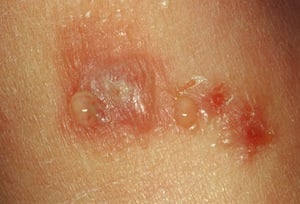
Paucis Verbis: Approach to rashes
Contact dermatitis from poison oak We see a variety of rashes in the Emergency Department. The first step is to accurately describe the rash. Is this a macule or nodule? Is this a vesicle or bulla? The next step is to quickly "profile" it to see if it fits any classic pattern by patient age, lesion distribution, or presence of hypotension. And finally, if you are still stumped, use an algorithm based on the rash type. These figures are from March 2010's Emergency Medicine Magazine. It's not meant to be a comprehensive article on rashes but it sure does [+]
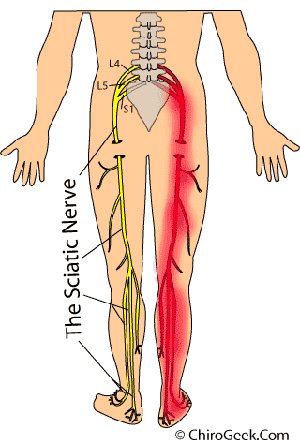
Trick of the Trade: Crossed straight leg raise test
A 35 year old man presents with low back pain which radiates down his right leg to the level of the knee. Is this sciatica? Low back pain is one of the most common chief complaints that we see in the Emergency Department. In addition to the examination of the back and distal neurovascular function, we also need to test for evidence of a radiculopathy (compression or inflammation of a nerve root typically from a herniated disk). Because most disk herniations occur at the L4-L5 and L5-S1 level, you should test for irritation of the L4-S1 nerve roots. This is [+]