



Paucis Verbis card: The Shoulder Exam
How many times have you had to look up the shoulder exam maneuvers for patients with acute shoulder pain? I don't know why I just can't seem to remember these. This Paucis Verbis card is a quick reference card to remind you of the most common techniques. Thanks to Jenny for the idea. PV Card: Shoulder Exam Go to ALiEM (PV) Cards for more resources.

Article Review: Online curriculum for non-EM residents in the ED
In many academic Emergency Departments, there are “off-service” or non-EM residents rotating in the department. They are sometimes invited to the EM residency conference series for the month. Often times though, they have too many departmental didactic events and obligations of their own that they don’t have time to attend formal EM didactics. [+]
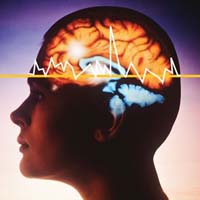
Paucis Verbis card: Generalized Convulsive Status Epilepticus
How do you manage patients who present in status epilepticus, knowing that "time is CNS function"? The longer patients remain seizing, the greater their morbidity and mortality. Did you know that one study showed that 48% of their patients who presented in generalized convulsive status epilepticus (GCSE) had subtle persistent GCSE on EEG, despite no clinical evidence of overt seizure activity? That's scary. Do you send off a serum tricyclic toxicology screen for all your patients with GCSE? Because of the prevalence of TCA overdoses locally, our Neurology consultants definitely order it. We are picking up a surprising number of [+]

VIPER video: How to give effective feedback
A few years ago, Dr. Esther Choo and I created a fun 15-minute instructional video on called Giving Effective Feedback: Beyond “Great Job”. We had a blast recording sample feedback scenarios with our faculty and medical students. For every 1 minute of published footage, there were at least 9 minutes of bloopers and laughter! We definitely should keep our day job. [+]
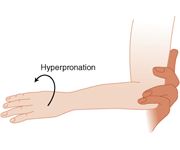
Tricks of the Trade: Nursemaid elbow reduction
We’ve all seen it before while working in the ED. A parent brings in their child because they pulled on their arm, and now the child is not using it. Parents are thoroughly convinced that the child’s arm is either broken or dislocated. We all recognize this as radial head subluxation or “nursemaid’s elbow” and immediately attempt to reduce it. The provider takes the injured arm, supinates at the wrist and flexes at the elbow. Does the child scream? What if nothing happens? Is there an alternative technique to reducing a nursemaid elbow? [+]
Article review: Academic professional bankruptcy
In academia, faculty are expected to do it all– clinical care, bedside teaching, formal didactics, scholarly work, and administrative projects. Asking for protected time, or release time from clinical work, from your department chair is often a difficult negotiation process, especially for junior faculty. Fresh out of residency and fellowship training, junior faculty are just excited to get started as an academic faculty member. A downpour of exciting opportunities descends upon you, and you just can’t say no to them! A year later passes, and you realize that you are overwhelmed. [+]
Paucis Verbis card: Workup for first-time seizure
How do you workup adult patients who present with a new-onset seizure and now neurologically back to normal? There unfortunately is very little recent literature about the best workup approach. In 1994, the American College of Emergency Physicians (ACEP) published a Clinical Policy based on expert consensus. The EM Clinics of North America series also just published a review on the topic. The bottom-line is that there are two types of workup approaches. For the uncomplicated cases (age less than 40 years, afebrile, no comorbidities, no neurologic deficits), the workup is fairly minimal, which includes: Glucose and electrolytes Urine pregnancy test, [+]

Need your help! Favorite medical apps
So, I volunteered to give a talk for the UCSF Office of Graduate Medical Education WAAAAY back in early 2010 on “There’s an App for That: Key Smart Phone Applications for Surviving Residency”. Somehow the lecture date has snuck up on me and it’s next Tuesday! I thought it was a small gathering, but it turns out it’s not. Plus, I keep getting school-wide emails reminding all the residents and fellows to attending! [+]
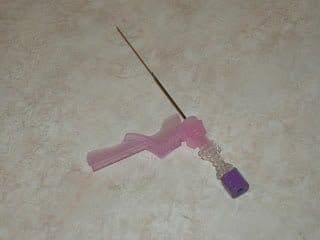
Trick of the Trade: Reducing post-LP headache risk
We often do lumbar puncture in the ED. Patients get warned about the potential of a post LP headache. What is the prevalence of a post-LP headache? The literature reports 15% of ED patients have a post LP headache. [+]


Hot off the press: A summary of EM content in social media
The ever-creative and ambitious masterminds at Life in the Fast Lane has just launched a new feature called LITFL Review. This weekly review will highlight all-things EM in the social media world. Do they ever sleep over there in Australia?! Do they somehow have 25 hours in their day? [+]