


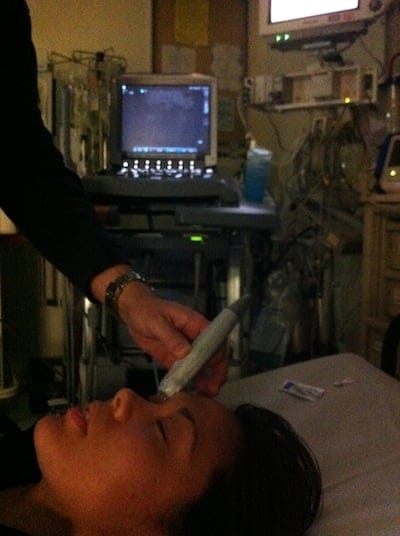
Trick of the Trade: Check pupillary constriction with ultrasound
In some trauma patients with head and face trauma, you will need to check their pupillary response to light. Severe periorbital and eyelid swelling, however, make this difficult. You want to minimize multiple attempts to retract the eyelids because of the risk of a ruptured globe. What’s a minimally painful and traumatic way to check for pupillary constriction? [+]

Paucis Verbis: Post-exposure prophylaxis (non-occupational)
You know how chief complaints present to the ED in multiples? In one week, I had several cases where patients were asking for post-exposure prophylaxis treatment NOT in the content of a sexual assault. I haven't had to manage such cases in a long time and so needed to look up the recent guidelines from the CDC.1 The trick is not to forget about all the co-existing problems and infections beyond just HIV. Specifically, don't forget about gonorrhea, chlamydia, and trichomonas. PV Card: Post-Exposure Prophylaxis for Non-Occupational Contact Adapted from [2] Go to ALiEM (PV) Cards for more resources. [+]
What’s your perfect idea for a medical app?
The American Medical Association (AMA) is harnassing the innovative power of the people in its “AMA App Challenge”. What do you think would be the perfect app for medical students, residents, and/or practicing physicians in their day-to-day life? This challenge is the perfect opportunity for all those with great app ideas but are too busy (or lazy) to do the technical, legal, and business groundwork to make the idea a reality. The down side is that once you submit the idea, AMA has full proprietary ownership of it. [+]
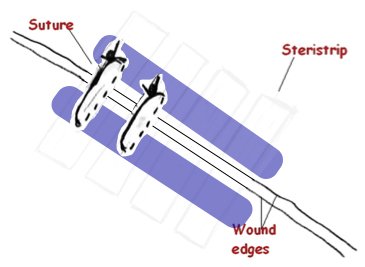
Trick of the Trade: Steristrip-suture combo for thin skin lacerations
Lacerations of elderly patients or chronic corticosteroid users can be a challenge because they often have very thin skin. Sutures can tear through the fragile skin. Tissue adhesives may not adequately close the typically irregularly-edged laceration. How do you repair these lacerations? Do you just slap a band-aid on it? [+]
Nancy Duarte at TedxEast: The anatomy of a great speech
Nancy Duarte, the author of “Resonate — Present Visual Stories that Transform Audiences” and CEO of Duarte Design, recently gave a talk at TedxEast. The title was: You Can Change The World [+]

Director of Growth, Strategic [+]

Article Review: Role of instructional technologies in medical education
A conference called "A 2020 Vision of Faculty Development Across the Medical Education Continuum" was held at Baylor College of Medicine in 2010. At this conference, experts convened to discuss the changing role of technologies in medical education. Their conclusions were summarized in this Academic Medicine article, which discusses 5 trends and 5 recommendations. Trends Explosion of new information: It has been postulated that the world's body of knowledge will double every 35 days by 2015. We are in an age of information explosion. Physicians will have to be able to process an ongoing onslaught of information throughout their career. Learning how [+]

Paucis Verbis: Chemical sedation for severe agitation
Haldol, Ativan, and Versed... oh my. In the Emergency Department, some patients present very acutely and aggressively agitated. This is usually the result of illicit drug use or a schizophrenic who hasn't been taking medications (or both!). Fortunately, we have an arsenal of medications to help sedate the patient. One study looked to answer the question of what single IM sedation agent is most effective, as measured by the shortest time to sedation and time to arousal. PV Card: Chemical Sedation for Agitation Adapted from [1] Go to ALiEM (PV) Cards for more resources. Reference Nobay F, Simon BC, [+]
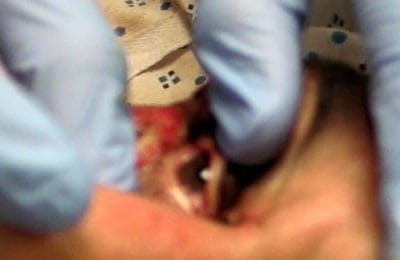
Trick of the Trade: Benzoin for opening traumatic, swollen eyelids
Patients who sustain facial trauma often have swollen eyelids. They may be so swollen that it is impossible to pull back the eyelids for an ocular exam. You use one of our “Tricks of the Trade”ideas and attempt to “roll” the upper eyelid using the Q-tip trick (above).Fresh blood on the face, however, makes the Q-tip a little slippery along the upper eyelid, preventing an adequate view of the eye itself. [+]

Article Review: Barriers to effective teaching
I think there is no better or more rewarding job than being an educator, especially in the field of Medicine. There are, however, significant financial, societal, curricular, and environmental barriers which prevent optimally effective teaching in Medicine. In a commentary piece in Academic Medicine, the authors review the barriers and some forward-thinking recommendations for our leaders in medical academia. While the focus of the article is on undergraduate medical education, many concepts apply to graduate medical education as well. [+]
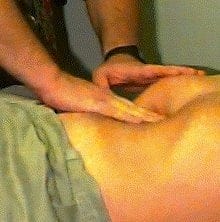
Paucis Verbis: Strength of diagnostic tests for cholecystitis
You have a 40 year-old man who presents to the ED for persistent right upper quadrant abdominal pain for 12 hours after eating a fatty meal. He has no fevers, nausea, flank pain, or dysuria. His physical exam shows no fever and only moderate tenderness in the RUQ without guarding. He has a Murphy's sign which is improved after a total of 8 mg of IV morphine. His laboratory results, which include a WBC, liver function tests, lipase, and urinalysis, are normal. Can you safely say that the patient doesn't have cholecystitis? Can you discharge him for outpatient ultrasonography to [+]