


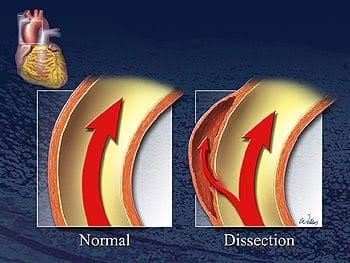
Paucis Verbis: International Registry on Aortic Dissection (IRAD)
What do these 3 people have in common? Lucille Ball (comedienne) Jonathan Larson (wrote the musical "Rent") John Ritter (comedian) They all died from an aortic dissection. We commonly consider this diagnosis for Emergency Department patients presenting with severe chest pain. There is an International Registry on Aortic Dissection which published a retrospective, descriptive study of 464 patients with dissections. I find this list helpful, because it illustrates the fact that the classic signs and symptoms aren't actually very common. Here are some scary examples: A pulse deficit in the carotid, brachial, and femoral arteries is only present 15% of [+]
Poster resource: Better posters blog
I am in the midst of generating posters for the Canadian Association of Emergency Physicians (CAEP) conference. My residents and I came across this resourceful site about making them. Better Posters http://betterposters.blogspot.com/ [+]

Director of Growth, [+]

Trick of the trade: Improve your ability to detect a cerebellar lesion
The finger-to-nose exam is typically used to detect a cerebellar lesion. In subtle cases though, this can be be difficult to detect. How can you improve your sensitivity of this exam? Trick of the trade: Elbows up! [+]

Article review: Clinician attitudes about commercial support of CME
Did you know that a cup of coffee can cost over $9… when planning a CME conference? In an interesting survey-based publication by Dr. Tabas (one of my colleagues) that just came out in Archives of Internal Medicine, we learn more about the ins and outs of CME activities. The authors set out to determine the audience members’ opinions about: Commercial/ pharmaceutical support and its impact on bias Their willingness to pay extra conference registration fees to eliminate outside support [+]

Paucis Verbis: Head CT clinical decision rules in trauma
The ideal clinical decision tool has a sensitivity and specificity of 100%. You need a high sensitivity to be sure that your negative result indeed predicts a true negative. That means if your clinical decision tool suggests that you don't need to get a head CT, then your head CT would have been normal. On the flip side, this realistically means there is a low-moderate specificity. That means a clinical decision tool with at least 1 positive criterion does not always mean that there will be an abnormal finding on head CT. There are 3 major clinical decision rules that I've [+]
Videos: The EM Eye Exam
Thanks to Dr. David Duong and Dr. Najm Haqu (UCSF) for letting me cross-post their amazing instructional video on the “EM Eye Exam”. These videos were made for the purpose of teaching senior medical students on their UCSF-SFGH EM clerkship. I thought it’d be great to share these tutorials, since the eye exam is typically a daunting task for many medical students (and residents). [+]

Tricks of the Trade: Ultrasound workshop setup
Have you ever been to an ultrasound workshop where each small group of attendees huddles around the small ultrasound display? Personally I think the 3 people closest to the display really see the images well. This tends to exclude the other participants. Last week, I hosted (my first!) ultrasound workshop for the UCSF Alumni CME Conference where I showed peri-retired UCSF alumni from various specialties about the future of bedside ultrasonography. I equated it to the 21st century stethoscope. Thanks to my star team of ultrasonographers: Dr. Asaravala, Flores, Miss, Lenaghan, and Wilson. [+]

Paucis Verbis: Brugada syndrome
You always hear about it when working up syncope and sudden cardiac arrest in young patients, but it's so easy to forget what it looks like on ECG. We so rarely see it... or DO we?! This Paucis Verbis card on Brugada Syndrome is to help emblazon these ECG tracings in our mind, so that we don't miss the subtle findings which place a patient at risk for sudden cardiac death. Pay special attention to Type 1, which is most specific for Brugada Syndrome. PV Card: Brugada Syndrome * Update 8/2/18: Only Type 1 and Type 2 are recognized for [+]
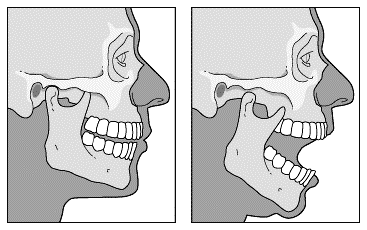
Trick of the Trade: Temperomandibular (TMJ) dislocation
Mandible, or TMJ, dislocations occur when the patient excessively opens the mouth, such as in a yawn. They are typically bilateral and are difficult to relocate because of masseter and medial pterygoid muscle spasm. You can relocate the condyles back into the TMJ space with gentle but firm intraoral pressure inferiorly and posteriorly. Often it requires some sedation to help relax the muscles of mastication. [+]
Article review: Teaching learners about ‘difficult’ patients
Your capable resident comes to you, looking frustrated. He says, ‘What a difficult patient. I think you need to get involved.’ This article provides a framework for teachers to allow learners to appreciate these encounters in the Family Medicine. Their points are highly relevant to Emergency Medicine. Strategies include: [+]