



5 rules for creating great Powerpoint presentations
As much as people talk about “Death by Powerpoint”, many of us still use Powerpoint despite its many shortcomings. So how can we make our Powerpoint talks better? This video reviews 5 great rules to live by. Interestingly, this dynamic video was built using Powerpoint by Nancy Duarte from Duarte Design. Of note, Duarte Design was the company behind the stunning slides which Al Gore used to present his compelling talk on An Inconvenient Truth. [+]
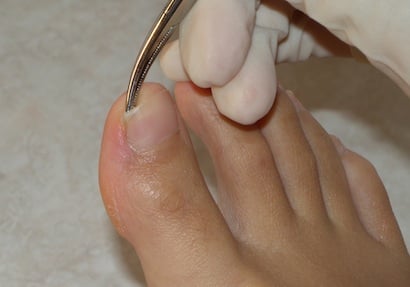
Trick of the Trade: Toenail splinting for ingrown toenails
It is 4 a.m. You pick up a chart. Toe pain. Thinking this could be an easy injury, you walk over to the patient, only to discover: bilateral ingrown toenails. Your heart sinks. In your head, you are thinking: Lateral nail resection? Nail removal? This could take a while. Is there a less invasive method for treating an ingrown toenail? [+]

New guest blogger: Dr. Stella Yiu!
Welcome to our new superstar, educator-extraordinaire, guest blogger, Dr. Stella Yiu. Today's post is her first (of hopefully many). After graduating residency from the University of Ottawa, Stella has been working as a staff physician at University Health Network in Toronto. She is involved in curriculum design in undergraduate emergency medicine clerkship at the University of Toronto. Welcome, Stella!

What is "contextualizing" patient care?
Medicine is as much about Science as it is about Art. This is no better illustrated than an educational intervention study about “contextualizing” patient care, published in JAMA. What is contextualization? It is the “process of identifying individual patient circumstances (their context) and, if necessary, modifying the plan of care to accommodate those circumstances”. In other words, this is care beyond the evidence-based guidelines, beyond standardized quality measures, and beyond the checklists. [+]
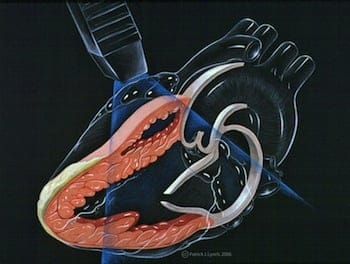
Paucis Verbis card: When murmurs need echo evaluation
Have you been in a situation where you are the first to detect a cardiac murmur in a patient? If you are hearing it in a busy, loud Emergency Department, I find that it's at least a grade III. Should you order an echocardiogram for further outpatient evaluation? It depends on the grade and characteristic of the murmur, in addition to the patient's symptoms. For instance, all diastolic murmurs require an echo. There is a useful ACC/AHA algorithm which helps you decide. PV Card: When Murmurs Need Echocardiography Evaluation Adapted from [1] Go to ALiEM (PV) Cards for more resources. Thanks [+]

Trick of the trade: I got ultrasound gel in my eye!
Bedside ultrasonography is increasingly being used in the ED to examine the eye. For instance, it can be used to detect a retinal detachment, vitreous hemorrhage, and high intracranial pressure. The technique involves applying ultrasound gel on the patient’s closed eyelid. A generous amount of gel should be used to minimize the amount of direct pressure applied on the patient’s eye by the ultrasound probe. Sometimes, however, no matter how careful you and the patient are, some gel accidentally contacts the eye itself. [+]

Do you belong to a listserv? My favorites
An email mailing list (or listserv) is a great way to communicate with a large group of people. Once you subscribe to a mailing list, an email sent to a single, common email address will be distributed to everyone who is subscribed to the list. You can find lists for nearly everything and anything! There are a multitude of lists for various medical specialties. These lists unite people from all over the country (and world) from various practice backgrounds such as academic/community medical centers to rural hospitals/clinics. We are all connected by the power of the internet. The lists are [+]

New guest blogger: Fred Wu!
Welcome to our new superstar guest blogger, Fred Wu. Today’s post is his first (of hopefully many). Fred is the Lead PA in the Department of Emergency Medicine at Kaweah Delta Medical Center in Visalia, CA. After graduating in 2004, he has been practicing community emergency medicine in Central California. His interests include prehospital care and wilderness medicine, with an education emphasis in both. He also coordinates PA/NP training in the department as well as an EM lecture series, which hosts guest speakers from across the country. [+]
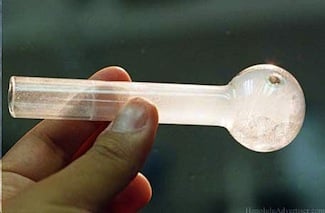
Trick of the Trade: Burned fingertips as a clinical clue
A patient presents to your Emergency Department with altered mental status and somnolence. You don’t smell alcohol on breath and you don’t see needle track marks. What clinical clue points you towards cocaine or methamphetamine ingestion? [+]

New favorite blog: Wishful thinking in medical education
Wishful Thinking in Medical Education I recently came upon this great blog by Dr. Anne Marie Cunningham, a general practitioner and Clinical Lecturer at Wales, UK. She has some really insightful posts about education, its future, and the use of new technologies. This blog has been in existence since 2008. Just as interesting are the tons of comments that she gets from a spectrum of readers. Check it out! She is also extremely active on Twitter with over 2,000 followers (@amcunningham).