



Pros and Cons of Social Media Use in Medicine
The American Medical Association (AMA) just released a policy on Social Media and Medical Professionalism. It focuses more on the negative aspects of social media, and much can be averted by just using common sense: [+]

Director [+]
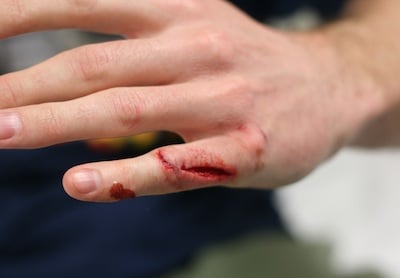
Trick of the Trade: Hemostasis of bleeding finger laceration using a glove
Lacerations of the finger can bleed quite profusely because of digital vascularity. This obscures the provider’s ability to perform a careful exam and can make suturing quite difficult. Simple direct pressure over the laceration often controls the bleeding. What if this doesn’t work? [+]
Article review: Coaching in emergency medicine
After a chaotic shift, you and your learner sit down to complete the daily evaluation card. There are no significant issues with the learner. Is there anything else to write except ‘great shift’ or ‘read more’? Can we learn from excellent motivators such as sports coaches? This article by LeBlanc and Sherbino outlines coaching as a teaching technique in the ED. [+]
Paucis Verbis: Identifying toxidromes by vital signs
A middle-age woman presents to the Emergency Department with altered mental status after having ingested a drug. Is it an opioid? Is it an antihistamine? The key is to pay close attention to the vital signs. They are often the clue to the mystery. I found this great table from EM Clinics of North America by Dr. Timothy Erickson from 2007. I can't imagine how long it took for him to create all these mnemonics. I'll never remember these mnemonics, but they're fun to read nonetheless. PV Card: Toxidromes by Vital Signs Go to ALiEM (PV) Cards for more resources.

New 2010 ACLS guidelines from the AHA, ERC, and ILCOR
Last month the AHA, ERC, and ILCOR released the 2010 Resuscitation Guidelines. They build on the 2005 and previous guidelines and continue the trend towards more, higher quality, uninterrupted CPR. The complete summary and recommendations are published in Circulation and are available for free. Here is my summary for you! [+]
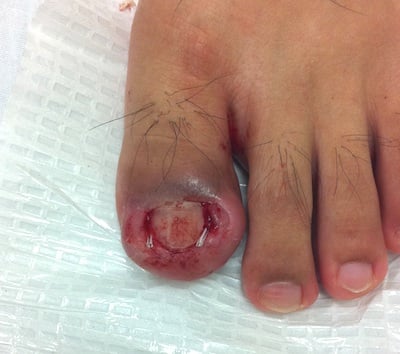
Trick of the Trade: Toe paronychia splinting
Ingrown toenails, or paronychias, are usually exquisitely painful and a bit gnarly when they present to you in the Emergency Department. Dr. Stella Yiu described toenail splinting techniques using steristrips or dental floss. The purpose of splinting is to prevent the toenail from growing back into the lateral nail fold. This assumes a relatively mild-to-moderate case. Often simple elevation of the nail out of the lateral nail fold (under digital block anesthesia) is all that is needed to treat a paronychia. Pus is often released with this maneuver. What do you do for more severe cases when you have to [+]
Article review: Pitfalls in writing test questions
Which is the best answer? A. Yes B. No C. Maybe D. 2 of the 3 above E. None of the above Wait, what?! What a terribly written test question! [+]
Director of Growth, Strategic Alliance Initiative, [+]
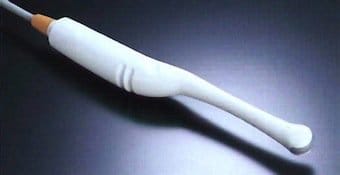
Trick of the Trade: Ultrasound-guided supraclavicular central line
Emergency physicians are procedural experts in central venous access. The subclavian vein is the best site for such access, because it has been shown to have the lowest rate of iatrogenic infections and deep venous clots Bedside ultrasonography has really revolutionized how we obtain vascular access over the past 10 years. Identifying the subclavian vein using ultrasonography, however, is still technically challenging. The vein is located just posterior to the clavicle, which often gets in the way of the linear transducer. [+]
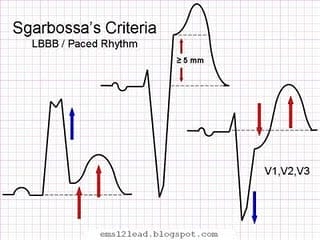
Paucis Verbis: Sgarbossa’s Criteria with LBBB
It is difficult to determine if a patient with a left bundle branch block (LBBB) has an acute myocardial infarction (AMI) because ST segments are "appropriately discordant" with the terminal portion of the QRS. That means if the QRS complex is negative (or downgoing), the ST segment normally will be positive (or elevated). Similarly if the QRS complex is positive (or upgoing), the ST segment will be negative (or depressed). PV Card: Sgarbossa's Criteria In 1996, Sgarbossa et al looked through the GUSTO-1 trial patients with LBBB and AMI. They derived 3 criteria which may help diagnose the "hidden" AMI. [+]

Residency interview season: Pitfalls
I often get asked by my advisees: “In my residency interview, what should I talk about or do to make myself more competitive?” To help you demystify the interview process, I wanted to share with you some insights. Overall, the interview day itself helps the program put a person and personality with your online ERAS application. Similarly, you quickly get a sense of the program’s personality. In EM, the residency interview day is generally pretty laid back. Not too many crazy questions. Programs just want to get to know you. Both you and the program should be asking each other– Is [+]