


Retinal detachment on ultrasound
I just wanted to revisit the Trick of using bedside ultrasonography to diagnose retinal detachments. Be sure to use plenty of ultrasound gel and use the linear tranducer. [+]

Director of Growth, Strategic Alliance Initiative, Center for Innovation [+]
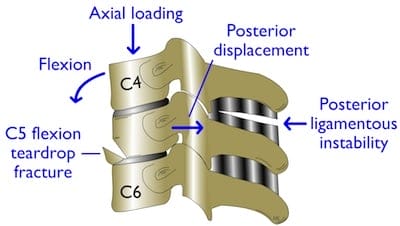
Paucis Verbis card: C3-C7 spinal fractures
This is the second Paucis Verbis card on cervical spine fractures. Part 1 covered C1 and C2 fractures. This card covers the lower cervical spine fractures. These two tables are part of my chapter on "Spine and Spinal Cord Injury" in the textbook Emergency Medicine by Dr. Jim Adams (Northwestern EM Chair). PV Card: C3-C7 Fractures and Injuries Go to ALiEM (PV) Cards for more resources.
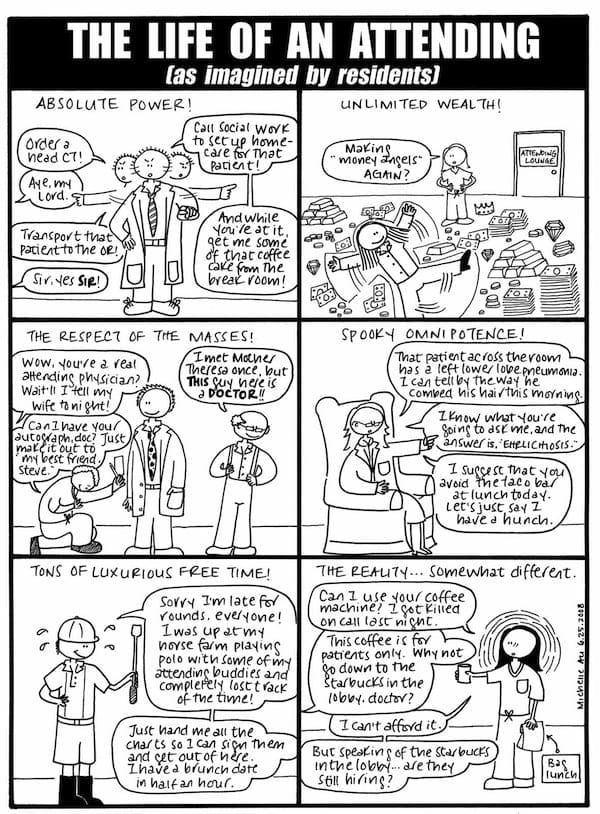
Life of an Attending: Is this or will this be you?
Thanks to one of our residents, Hangyul, I just recently learned about a hilarious comic strip series called Scutmonkey Comics in the blog The Underwear Drawer. It is side-splitting funny. [+]
Director of Growth, Strategic Alliance Initiative, Center for Innovation [+]

Trick of the trade: Discounted medications at pharmacies
Many times, patients who we deem as “noncompliant” with medications may actually be financially unable to afford medications that we prescribe them. Thanks to Amy Kinard, I just learned about this great new website where you can find pharmacies with amazing discounts for common medications. [+]
EMS officially recognized as an EM subspecialty
EMS was officially recognized as an EM subspecialty by the American Board of Medical Specialities on September 23, 2010! Residency programs have already implemented EMS Fellowship Training Programs to provide physicians with specialty training in prehospital care, medical direction, and research in the prehospital arena. The development of this new subspecialty was a collaborative effort between the National Association of EMS Physicians, the American College of Emergency Physicians, the Society of Academic Emergency Medicine, and the American Board of Emergency Medicine. The first certification exam is tentatively scheduled to be administered in 2013. Click here to see the announcement. [+]

Article review: Importance of first clinical clerkship
What was your first clinical clerkship rotation? Oddly, I started my third year with a sub-internship rotation on the Burn/Plastics service as my first rotation. Not sure how that happened… I managed my own patients like a 4th year student, did lots of wound care, and even got to harvest a few skin grafts. It was trial by fire.In a recent JAMA article, 3rd year medical students who started their clinical experiences in an Internal Medicine rotation overall did better on overall clerkship grades, when compared those who started their rotations on the Ob/Gyn, Psychiatry, or Family Medicine service. [+]

Paucis Verbis card: C1-C2 injuries
I'm starting to work on co-authoring the next edition of my chapter on "Spine and Spinal Cord Injury" within the textbook "Emergency Medicine" by Dr. Jim Adams (Northwestern EM Chair). There are some useful tables that I created that I thought you might find helpful. This is the first installment covering C1-C2 fractures. The next PV card will cover the lower cervical fractures. I always forget which are stable and unstable. For instance, the above extension teardrop fracture looks innocuous but is an unstable fracture because the anterior longitudinal ligament is ruptured. PV Card: C1 and C2 Fractures and Injuries [+]
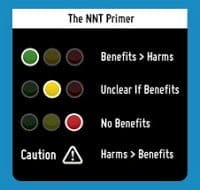
What’s on my mind: EBM Resource
Keeping up with the EM literature is difficult, particularly when we’re also trying to stay ahead of the curve in our own subspecialties (Healthcare Simulation and Medical Education in my case). Last week I was listening to Scott Weingart’s EMCRIT Podcast and at the very end of the show he mentioned a new EBM resource: TheNNT. [+]
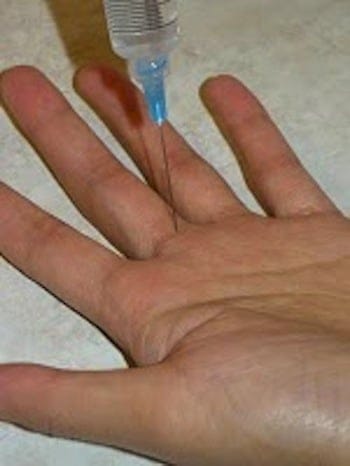
Trick of the trade: Single digital block
Your next ED chart: Finger injury The finger needs to be anesthetized. Patient: “I have had this freezing before. The needles really hurt! Is there anything else less painful? ” [+]
Director of Growth, Strategic Alliance Initiative, [+]

Tips to building authenticity into your talk
For lecturers, much focus is placed on improving the visual display and factual content of your talk. Keep slides simple Add relevant, non-extraneous images Avoid cramming too much information into your talk [+]
Director of Growth, Strategic [+]