



Paucis Verbis card: Croup
The most common cause of stridor in pediatric patients is croup, or laryngotracheobronchitis. The distinct high-pitched, seal-like,"barky" cough can be heard from outside the patient's room often. https://www.youtube.com/watch?v=0lepci-YheI Check out the YouTube clip above. Go to the 1:15 mark (near the end) to hear the barking cough. Poor but cute kid. What is the current treatment regimen? Did you know that the traditional treatment with cool mist or humidified air have shown to be of no added benefit? PV Card: Croup Go to ALiEM (PV) Cards for more resources.

Incorporating debriefing into clinical practice
I’m in the middle of an intense weeklong course on debriefing for medical simulation here in Cambridge, MA. One of the goals many of the participants share is our desire to improve our skills in the art of debriefing after clinical simulations. Although the course focuses on “Debriefing with Good Judgement” 1 today the faculty also offered a simple tool to structure a brief debrief when time is very limited. [+]
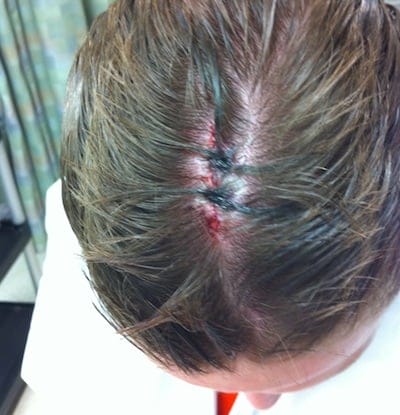
Trick of the Trade: Modified HAT trick revisited
I finally tried the Modified HAT (Hair Apposition Technique) trick for the closure of scalp lacerations. I have used the traditional HAT trick multiple times but not the modified technique. What's the difference? Instead of using your fingers, the modified approach involves the use of two instrument clamps to help twist and pull the hair strands taut. It turns out that this makes a huge difference, especially for short hairs. The clamps allow you to grab the hair strands so much more securely, before instilling a tissue adhesive at the twisting points. The nice added benefit was that my chubby [+]

Paucis Verbis card: Acute limb ischemia
Acute limb ischemia (ALI) is a true vascular emergency. It doesn't occur as frequently as the more high-profile conditions as cerebrovascular accidents and acute myocardial infarcts, but it portends similarly high morbidity and mortality risk. How do you stage a patient with ALI, based on the Rutherford classification system? What is the ED treatment plan? Should this patient go to Interventional Radiology or the Operating Room for more definitive management? PV Card: Acute Limb Ischemia with Rutherford Classification Go to ALiEM (PV) Cards for more resources.
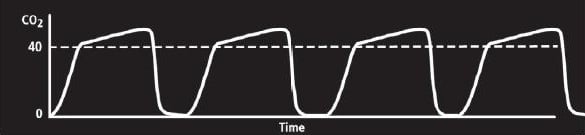
Paucis Verbis card: Procedural sedation and analgesia
From time to time, our patients need moderated and deep sedation in order to tolerate painful procedures such as joint reductions or incision and drainage procedures. There are many medications available to us including some newer ones such as Ketofol and Dexmedetomidine. This week's Paucis Verbis is a reference card to remind us of the importance of Airway Assessment and help us calculate the medication doses. If you want to learn more about these medications and some strategies for different types of patients and procedures I recommend the EMCRIT Podcast PSA Lectures 1 and 2. PV Card: Procedural Sedation and Analgesia Adapted [+]
Trick of the Trade: Prescribing opiates
As emergency physicians, we are experts in pain control. We frequently write opiate prescriptions for patients being discharged home. Unfortunately, an occasional patient tries to forge my prescription. At times, I get a call from pharmacy for prescriptions that were suspiciously written. For instance several years ago, I had someone try to forge 100 tablets of “Mophine”. [+]

YouTube increases limit to 15 minutes
I have slowly been building my video database of instructional media on YouTube under my YouTube Channel called “ITIMEinEM”. It stands for Innovative Technologies In Medical Education in Emergency Medicine. All of the videos have been used in this blog. [+]
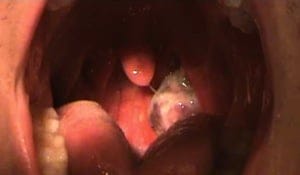
Paucis Verbis card: Strep pharyngitis
Have you heard of the Modified Centor Score for strep pharyngitis? Interestingly, it has been validated in adults and children. The methodology builds on the traditional Centor Score by incorporating the patient’s age, because this disease is more prevalent in kids than adults. In fact, you actually lose a scoring point if you are older than 44 years old. [+]

Brain Slides: My new favorite blog
I just encountered a new blog called Brain Slides: Presentation Design for Educators, written by Nathan Cashion. This blog eloquently teaches how Powerpoint should and, more importantly, shouldn’t be used. [+]

Director of Growth, Strategic Alliance Initiative, [+]
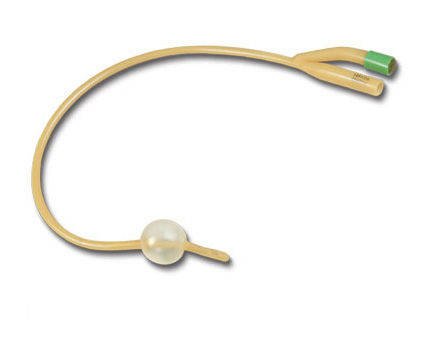
Trick of the Trade: Foley balloon be gone!
An urethral Foley catheter can sometimes become retained in the bladder, because of its balloon being unable to deflate. A malfunctioning inflation valve or obstructed channel along the length of the catheter is the cause. How can you deflate the balloon so that the Foley catheter can be removed? [+]