


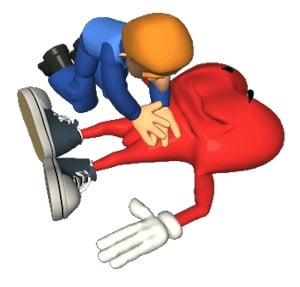
Article Review: Impact of family presence in a code
Family presence in the ED resuscitation of a dying patient is a controversial topic. Some surveys suggest that families favor this practice and would repeat it again in a similar situation. An article in Critical Care Medicine examines the impact of family presence on the ED personnel’s actions, rather than the impact on the families themselves. Second and third-year EM residents were randomized into paired teams in simulation exercises. All resuscitations involved a cardiac arrest patient. Each team was exposed to one of three types of resuscitation groups: No family witness Non-obstructive family witness (quiet person) – quiet crying and [+]
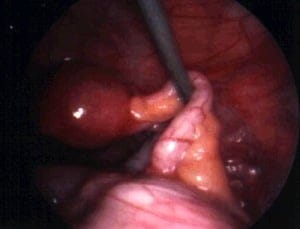
Paucis Verbis card: Appendicitis – ACEP Clinical Policy
Appendicitis is a common presentation in the Emergency Department. Dilemmas arise when deciding whether to image patients with equivocal symptoms and WBC lab results. Given the risk of ionizing radiation with CT scans, we should ideally minimize the number of CT scans ordered in these patients without mistakenly sending patients home with an early appendicitis. A perforated appendix places the patient at risk for bowel obstruction, infertility (in women), and sepsis. Where does the American College of Emergency Physicians (ACEP) stand on the critical issues surrounding the evaluation of appendicitis? This installment of the Paucis Verbis (In a Few Words) [+]

Trick of the Trade: Double staple gun
How do you approach the repair of scalp lacerations in a child? What factors are you considering? Is the wound suspicious for child abuse? Procedural sedation versus local anesthesia of the wound Staples versus hair apposition technique (HAT trick) for wound closure This trick of the trade pearl addresses the stapling technique for scalp laceration repair. Perhaps the child’s hair is too short for the HAT trick. [+]

Sketchcasting on What Drives Us
I recently came across a new means of online teaching and information delivery called sketchcasting. The premise isn’t new. It combines a podcast (someone speaking) with visuals (images). In sketchcasting, the images are instead someone drawing on a virtual whiteboard in real-time to convey information. I recently found a sketchcast with stop-motion and speed-up effects, which really made the presentation dynamic and super-engaging. This sketchcast by Dan Pink (Author of “Drive: The Surprising Truth About What Motivates Us”) was created by the Royal Society for the Arts, Manufactures and Commerce (RSA). [+]
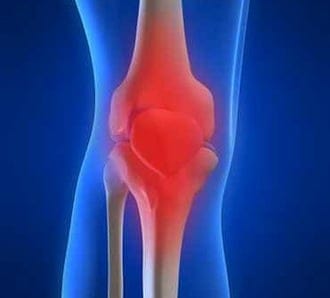
Paucis Verbis card: Septic Arthritis
In the workup of monoarticular arthritis, the question that emergency physicians constantly struggle over is whether the patient has a nongonococcal septic arthritis. This joint infection alarmingly damages and erodes cartilage within only a few days. This installment of the Paucis Verbis (In a Few Words) e-card series reviews the JAMA Rational Clinical Examination article which asks "Does this patient have septic arthritis?" Pooled sensitivities and likelihood ratios were calculated. These statistics are always helpful when trying to figure out the patients probability of having a septic joint. I was surprised to learn that only about 50% of patients with [+]
Trick of the Trade: Finding the femoral vein by V-technique
I rarely access the femoral vein for central venous catheterization… except in medical or trauma resuscitations. Oftentimes in these resuscitations, there are too many people near the IJ or subclavian vein site. People are intubating, performing CPR, trying to get peripheral vein access, etc. [+]


Article Review: Conceptual Model on Learner Reflection
Reflective journals and electronic portfolios are becoming increasingly popular within undergraduate and graduate medical education. I’m starting to be a believer in this learning approach, which teaches learners about professional development and life-long learning principles. Academic Medicine just published a great qualitative paper proposing a conceptual model for reflection. [+]
SAEM 2010 (June 2-6, 2010)
The Society of Academic Emergency Medicine’s (SAEM) annual meeting starts this week. Instead of my regular posts, I thought I’d try using the Twitter widget to post real-time, first-hand accounts and photos from the conference. SAEM is a very dynamic and productive conference, where academicians in Emergency Medicine meet to pow-wow about the future of our specialty. [+]
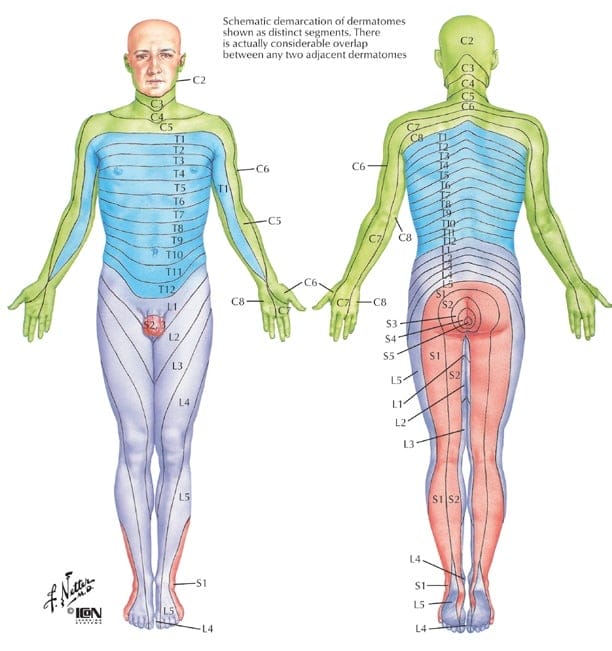
PV Card: Dermatomal and Myotomal Maps
There are some things in life which I just can't memorize and dermatomal/myotomal maps are one of them. Weird cases of peripheral neurologic symptoms have presented to the ED in the setting of trauma and no trauma. So purely for selfish reasons, I'm making my own map to have on file. This installment of the Paucis Verbis (In a Few Words) e-card series reviews Sensory and Motor Function Testing by Levels. PV Card: Dermatomal and Myotomal Maps Go to ALiEM (PV) Cards for more resources.

Trick of the trade: Endotracheal tube lubrication
Does your endotracheal tube get caught up on a swollen or floppy epiglottis during insertion? Trick of the Trade: Endotracheal tube lubrication Occasionally the endotracheal tube may become “caught up” along the epiglottis. Because it is difficult to predict when this may happen, pre-lubricate the endotracheal tube cuff and tip with a thin layer of water-soluble lubricant, such as K-Y jelly. This lubricant can also minimize the degree of surface trauma to the trachea and tracheal rings as the tube passes the vocal cords.