


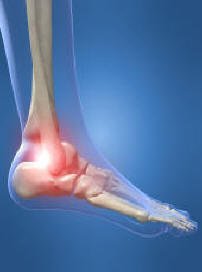
Paucis Verbis card: Ottawa knee, ankle, and foot rules
Often times, I get called to triage to help decide whether a patient should be sent to Radiology for an initial x-ray after injuring their knee, ankle, and/or foot. After teaching one of the nurses about the Ottawa rules, she taped a list of these rules on the triage wall. This installment of the Paucis Verbis (In a Few Words) e-card series reviews Ottawa Knee, Ankle, and Foot Rules. [+]

Creating and delivering the stellar lecture
I recently re-read a book “Made to Stick” by Chip Heath and Dan Heath which discusses why some ideas stick and others are completely forgettable. The concepts discussed have helped me design lectures. Here’s something that I have incorporated into my talks: Memorable ideas share common attributes, which can be summarized by the acronym SUCCESs. [+]
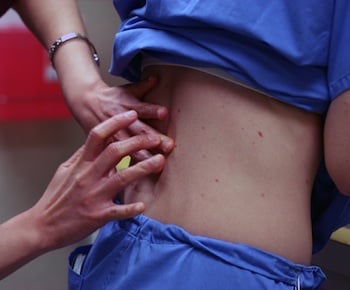
Trick of the trade: Percuss the spine in low back pain
Many patients present to the Emergency Department for low back pain. Determining whether these patients have a red-flag diagnosis can be difficult. Red flag diagnoses include: Fracture Cauda equina syndrome/ spinal cord compression Spinal infection Vertebral malignancy Almost all patients presenting with back pain, whether it be a muscle spasm or a spinal epidural abscess, will have back tenderness to some extent. So, how can you better differentiate benign from dangerous etiologies? [+]
Poll: How do you recover from a night shift?
There are so many amazing things that we get to see and do as emergency physicians. We see sick, undifferentiated patients who need our help acutely. We have cool toys, such as ultrasounds. We get to do great procedures. We work on a shift-based schedule. We work in team-based fashion with fun nurses, technicians, and staff. However, one major down side is that almost all of us work some night shifts. [+]

Article review: Mentoring in EM
This article in the Canadian Journal of Emergency Medical Care reviews the EM literature on mentoring. The authors specifically do a great job summarizing practical tips. What is a mentor? It is a person who supports and guides a junior colleague (junior faculty member, residents, or medical student) in his/her professional development. [+]

Paucis Verbis card: Vasopressors and Inotropes for Shock
The treatment of shock should focus on correcting the underlying pathophysiology. With persistent hemodynamic instability, a vasopressor and/or inotrope should be selected. Reviewing receptor physiology can help you select the best-fit agent for the patient's clinical condition. There is an especially useful table on medication selection in the reviewed 2008 EM Clinics of North America article. This installment of the Paucis Verbis (In a Few Words) e-card series reviews Vasopressors and Inotropes for the Treatment of Shock. PV Card: Vasopressors and Inotropes in Shock Adapted from [1] Go to ALiEM (PV) Cards for more resources. Edit 3/28/14: Dopamine removed as [+]
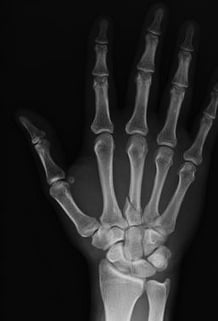
Trick of the Trade: Radial Gutter Splint
How do you splint 2nd or 3rd metacarpal fractures? A short arm volar splint is usually applied, because a fracture should be immobilized one joint distal and proximal to the injury. This splint, however, unnecessarily immobilizes the 4th and 5th fingers. It makes gripping things with your hand difficult. [+]
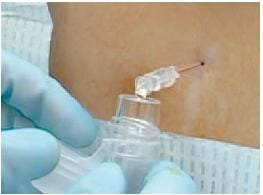
Paucis Verbis card: Skipping the CT prior to LP for meningitis
With increasing awareness of CT’s irradiation risk, I thought I would review a classic 2001 article from the New England Journal of Medicine. Head CT’s previously were commonly performed prior to all lumbar punctures (LP) to rule-out meningitis. When can you safely go straight to an LP without imaging? Caveat: This review only applies to those patients in whom you suspect meningitis. This does not apply to those being worked up for subarachnoid hemorrhage. [+]
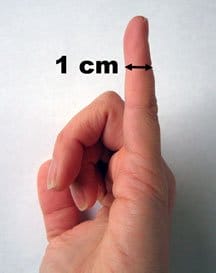
Trick of the Trade: A "handy" ruler
How long is this neck laceration? In the Emergency Department, it is important to be able to accurately estimate the length of wounds, abscesses, and cellulitis. Additionally, billing for wound closure is directly related to the length of the laceration. [+]
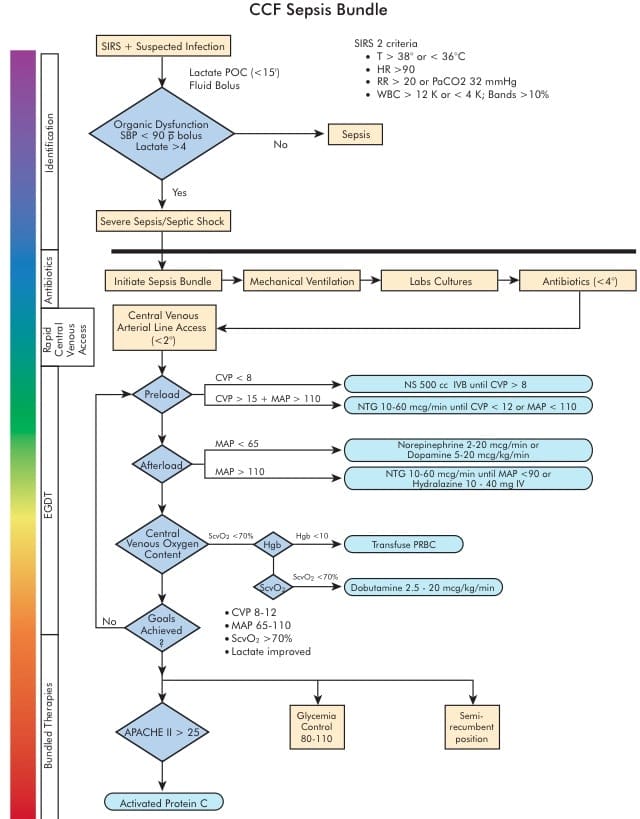
Paucis Verbis card: Early goal directed therapy
One of the landmark studies in sepsis was conducted by Dr. Emanuel Rivers (Henry Ford) and published in the New England Journal of Medicine in 2001. By managing patients with severe sepsis and septic shock with an "early goal directed therapy" approach, there was an absolute risk reduction of 16%. Furthermore, the number needed to treat to save a life was 6 patients! This installment of the Paucis Verbis (In a Few Words) e-card series reviews Early Goal Directed Therapy algorithm. The layout is borrowed from a Cleveland Clinic Foundation (CCF) flowchart. Adapted from [1] Go to ALiEM (PV) Cards [+]