


Trick of the Trade: Increasing students responses to the differential diagnosis
Anyone who teaches medicine asks students to list their differential diagnosis when discussing a new clinical case. It’s also part of several models for education including the One-Minute Preceptor and SNAPPS. For the most part, students are good at coming up with answers to the differential, but what do you do when they strike out? Or what if the answer is always the same, i.e. chest pain = myocardial infarction? [+]
Paucis Verbis card: Croup
The most common cause of stridor in pediatric patients is croup, or laryngotracheobronchitis. The distinct high-pitched, seal-like,"barky" cough can be heard from outside the patient's room often. https://www.youtube.com/watch?v=0lepci-YheI Check out the YouTube clip above. Go to the 1:15 mark (near the end) to hear the barking cough. Poor but cute kid. What is the current treatment regimen? Did you know that the traditional treatment with cool mist or humidified air have shown to be of no added benefit? PV Card: Croup Go to ALiEM (PV) Cards for more resources.
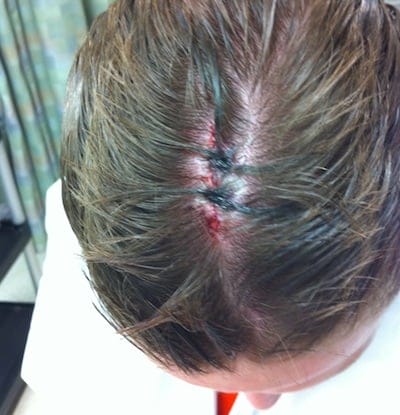
Trick of the Trade: Modified HAT trick revisited
I finally tried the Modified HAT (Hair Apposition Technique) trick for the closure of scalp lacerations. I have used the traditional HAT trick multiple times but not the modified technique. What's the difference? Instead of using your fingers, the modified approach involves the use of two instrument clamps to help twist and pull the hair strands taut. It turns out that this makes a huge difference, especially for short hairs. The clamps allow you to grab the hair strands so much more securely, before instilling a tissue adhesive at the twisting points. The nice added benefit was that my chubby [+]

Paucis Verbis card: Acute limb ischemia
Acute limb ischemia (ALI) is a true vascular emergency. It doesn't occur as frequently as the more high-profile conditions as cerebrovascular accidents and acute myocardial infarcts, but it portends similarly high morbidity and mortality risk. How do you stage a patient with ALI, based on the Rutherford classification system? What is the ED treatment plan? Should this patient go to Interventional Radiology or the Operating Room for more definitive management? PV Card: Acute Limb Ischemia with Rutherford Classification Go to ALiEM (PV) Cards for more resources.
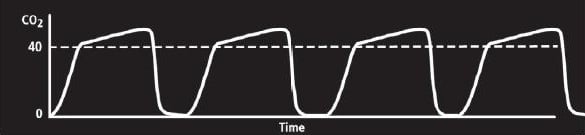
Paucis Verbis card: Procedural sedation and analgesia
From time to time, our patients need moderated and deep sedation in order to tolerate painful procedures such as joint reductions or incision and drainage procedures. There are many medications available to us including some newer ones such as Ketofol and Dexmedetomidine. This week's Paucis Verbis is a reference card to remind us of the importance of Airway Assessment and help us calculate the medication doses. If you want to learn more about these medications and some strategies for different types of patients and procedures I recommend the EMCRIT Podcast PSA Lectures 1 and 2. PV Card: Procedural Sedation and Analgesia Adapted [+]
Trick of the Trade: Prescribing opiates
As emergency physicians, we are experts in pain control. We frequently write opiate prescriptions for patients being discharged home. Unfortunately, an occasional patient tries to forge my prescription. At times, I get a call from pharmacy for prescriptions that were suspiciously written. For instance several years ago, I had someone try to forge 100 tablets of “Mophine”. [+]
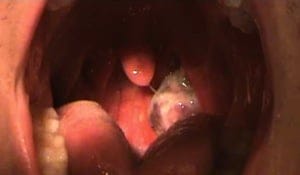
Paucis Verbis card: Strep pharyngitis
Have you heard of the Modified Centor Score for strep pharyngitis? Interestingly, it has been validated in adults and children. The methodology builds on the traditional Centor Score by incorporating the patient’s age, because this disease is more prevalent in kids than adults. In fact, you actually lose a scoring point if you are older than 44 years old. [+]
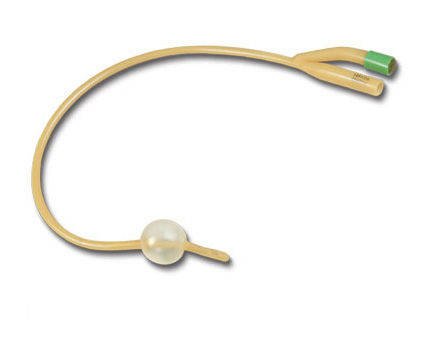
Trick of the Trade: Foley balloon be gone!
An urethral Foley catheter can sometimes become retained in the bladder, because of its balloon being unable to deflate. A malfunctioning inflation valve or obstructed channel along the length of the catheter is the cause. How can you deflate the balloon so that the Foley catheter can be removed? [+]
Paucis Verbis card: Urine Toxicology Screen
In the Emergency Department, we often order urine toxicology screens for patients with altered mental status without an obvious cause. I find that patients are often rather forthcoming about their drug use, if they are alert enough to talk. In those cases, ordering a urine toxicology screen is unnecessary. When you do order a tox screen, however, how do you interpret the information? While the result is a binary answer (positive vs negative), there are some nuances to interpretation. For instance, how long does a patient with urine toxicology remain positive for the drugs? Are there any medications that can [+]
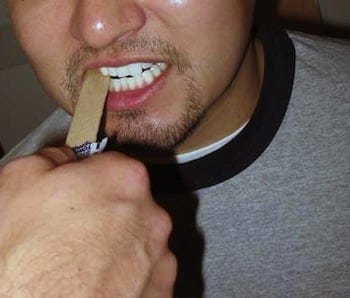
Trick of the Trade: A tongue blade is as mighty as an xray
Patients often present to the Emergency Department for mandibular blunt trauma. Usually these patients have soft tissue swelling at the point of impact. In mandibular body fractures, the fracture line often extends to the alevolar ridge. This may cause a gap between a pair of lower teeth. In patients with jaw pain, mild swelling, and normal dentition, is there a way to avoid imaging these patients to rule-out a mandible fracture? [+]

Director of Growth, Strategic Alliance Initiative, Center for Innovation and Digital Health
Massachusetts General Hospital;
Chief Scientific Officer, Conductscience.com
Latest posts by Shuhan He, MD (see all)
- The Discharge Severity Index: Early Research on ED Readmission Risk Assessment - August 14, 2025
- Suboxone and the Emergency Physician: Get Waivered Training - August 12, 2022
- A Tale of Two Epidemics: COVID-19 and the Opioid Crisis - April 23, 2020