



ALiEM AIR Series | Endocrine 2021 Module
Welcome to the AIR Endocrine Module! After carefully reviewing all relevant posts from the top 50 sites of the Social Media Index, the ALiEM AIR Team is proud to present the highest quality online content related to endocrine emergencies in the Emergency Department. 7 blog posts met our standard of online excellence and were curated and approved for residency training by the AIR Series Board. We identified 4 AIR and 3 Honorable Mentions. We recommend programs give 3.5 hours (about 30 minutes per article) of III credit for this module. AIR Stamp of Approval and Honorable Mentions In an [+]
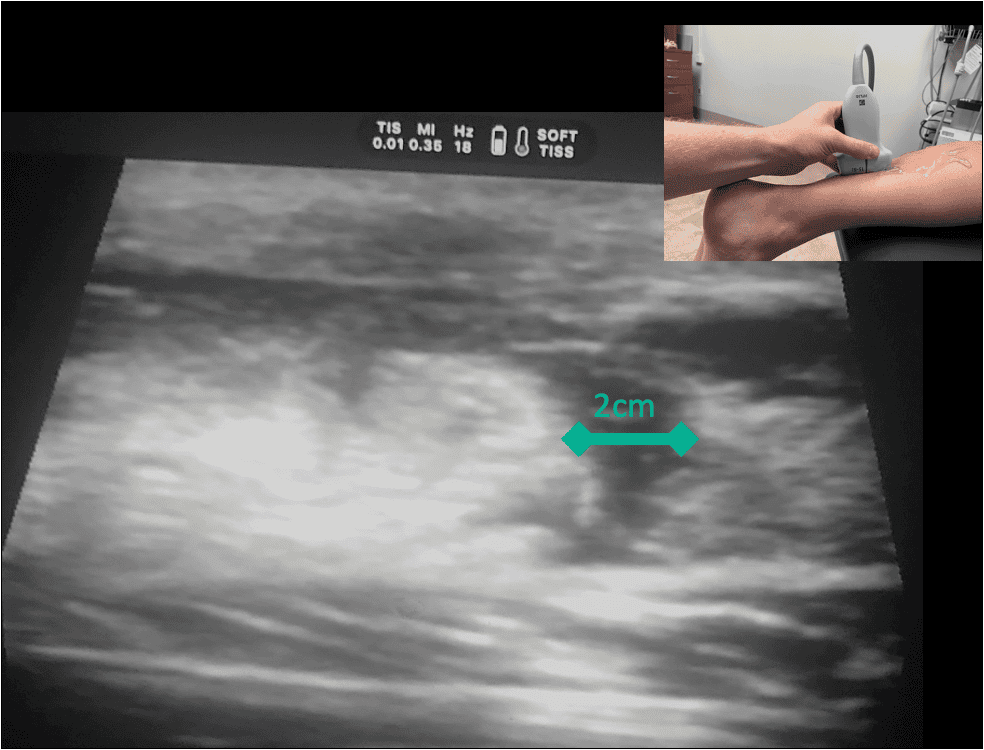
SplintER Series: My Foot Doesn’t Work Right
A 35-year-old male felt a painful “pop” in his posterior left lower leg while playing football. Afterward, his “foot didn’t work right anymore.” X-ray of the left ankle and tib/fib was normal but he was unable to ambulate. You plan an ultrasound over the area of maximal tenderness and discover the above image (Image 1.Ultrasound of the left posterior ankle 11cm proximal to the calcaneal insertion of the Achilles tendon. Case courtesy of Robert Lystrup.) [+]

SAEM Clinical Image Series: Sudden Onset of Facial Petechiae in Kindergartener
A 6-year-old boy with no past medical history presented when his parents noticed facial petechiae after picking him up from school. He had a series of four recent upper respiratory infections within four months since starting public kindergarten. He occasionally also complains of leg pain. General: Non-toxic, cooperative child Skin: Petechial rash in periorbital and infra-auricular areas HEENT: Normal; no lymphadenopathy Musculoskeletal: Normal strength and range of motion Hemoglobin: 12.6 g/dL White blood cell (WBC) count: 6.7x10³/mL Platelets: 352,000/mL Increased pressure in the dermis from actions such as extended Valsalva maneuver, vomiting, [+]

SplintER Series: Fracture After a Fall From a Bunk Bed
A 6-year-old male presents to the ED after a fall from his 5 foot high bunk bed causing elbow trauma. On exam, there is significant focal swelling, ecchymosis, and tenderness at the lateral left elbow. The forearm, wrist, hand and shoulder are nontender. He is neurovascularly intact. You suspect a fracture and obtain x-rays (Figures 1 and 2). Figure 1: Initial radiographs in the ED with the elbow slightly flexed. Figure 2: AP and lateral radiographs of the elbow. [+]
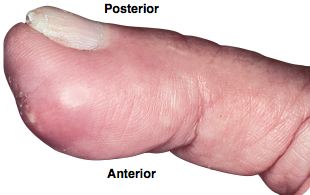
SplintER Series: Case of the Swollen Finger
An 18-year-old male presents with a painful and swollen left thumb. He removed a splinter from his finger a few days ago however, 2 days after removal, he began to experience edema and pain that has progressively gotten worse. An image of his finger is shown above (Image 1. Picture courtesy of Rosh Review [1]). [+]

Kayla Prokopakis, DO

SAEM Clinical Image Series: Facial Edema
A 44-year-old female presents to the emergency department after noticing swelling of her tongue and face, specifically the cheeks and periorbital area. She states the swelling began two weeks ago and has progressively worsened. She also complains of redness. Vitals: T 38.6°C; BP 135/78; HR 90; RR 18 General: Lying in bed, somewhat anxious appearing HEENT: Significant edema of bilateral cheeks and periorbital areas Thinning of hair along scalp and lateral aspect of eyebrows Mild macroglossia Skin: Yellow tinge to patient’s skin Horizontal scar noted on the anterior aspect of the neck TSH: 31.27 mU/L Free [+]

Succinylcholine and the Risk of Hyperkalemia
Background Succinylcholine is frequently used in the ED to facilitate intubation, but it may be avoided in some cases due to the risk of hyperkalemia. The underlying physiology of this effect appears to be directly related to its therapeutic mechanism of action. When succinylcholine binds to and activates acetylcholine receptors, it leads to an influx of sodium and calcium and and an efflux of potassium into the extracellular space [1]. Additionally, when these acetylcholine receptors are immature or denervated, it seems that these channels may stay open significantly longer, allowing for an increased amount of potassium to exit the cell, [+]

High-Dose Nitroglycerin for Sympathetic Crashing Acute Pulmonary Edema
Background Nitroglycerin (NTG) is an important intervention to consider for patients with Sympathetic Crashing Acute Pulmonary Edema (SCAPE) as it significantly reduces preload, and even modestly reduces afterload with high doses. For acute pulmonary edema in the ED, NTG is often administered as an IV infusion and/or sublingual tablet. Starting the infusion at ≥ 100 mcg/min produces rapid effects in many patients and can be titrated higher as tolerated, with doses reaching 400 mcg/min or greater. Combined with noninvasive positive pressure ventilation (NIPPV) and in some cases IV enalaprilat, patients often turn around quickly, from the precipice of intubation to [+]

SplintER Series: One Big Bounce
A 5-year-old boy presents with right leg pain and a limp. His parents report it started after he was bouncing on the trampoline with his older sibling but they did not notice any specific trauma. He has tenderness over his proximal shin with no obvious injury. You suspect a fracture and obtain x-rays of the right knee (Figure 1). Figure 1. AP and Lateral x-rays of the right knee. Case courtesy of Dr Andrew Dixon, Radiopaedia.org, rID: 16139 [+]

Beta-Blockers for Inhalant-Induced Ventricular Dysrhythmias
Background There are a few unique scenarios when beta-blockers may be indicated for patients in cardiac arrest. Use of esmolol for refractory ventricular fibrillation was summarized in a 2016 PharmERToxGuy post with an accompanying infographic. Another potential use for beta-blockers is in the rare case of a patient with inhalant-induced ventricular dysrhythmias. The term ‘sudden sniffing death’ refers to acute cardiotoxicity associated with inhaling hydrocarbons. Check out this ACMT Toxicology Visual Pearl for more information about the background and diagnosis of inhalant abuse. It is thought that inhalants causes myocardial sensitization via changes in various cardiac channels (e.g., sodium channels, [+]

Director of Growth, Strategic Alliance Initiative, Center for Innovation and Digital Health
Massachusetts General Hospital;
Chief Scientific Officer, Conductscience.com
Latest posts by Shuhan He, MD (see all)
- The Discharge Severity Index: Early Research on ED Readmission Risk Assessment - August 14, 2025
- Suboxone and the Emergency Physician: Get Waivered Training - August 12, 2022
- A Tale of Two Epidemics: COVID-19 and the Opioid Crisis - April 23, 2020