



Tricks of Trade: Benign paroxysmal positional vertigo | Beyond the Basics
Clinical Case A 63-year old female presents to your ED with positional dizziness since rising out of bed from a nap this afternoon. She says she had a similar episode in the past and reports, “they took the stones out of my ear by making me lay down and move my head a few times.” Based on your assessment of the patient’s history and physical exam you determine she has peripheral vertigo, likely BPPV. However, despite multiple attempts with the Epley Maneuver, the patient is still symptomatic. What next steps could you consider? Benign paroxysmal positional vertigo: The basics Benign [+]
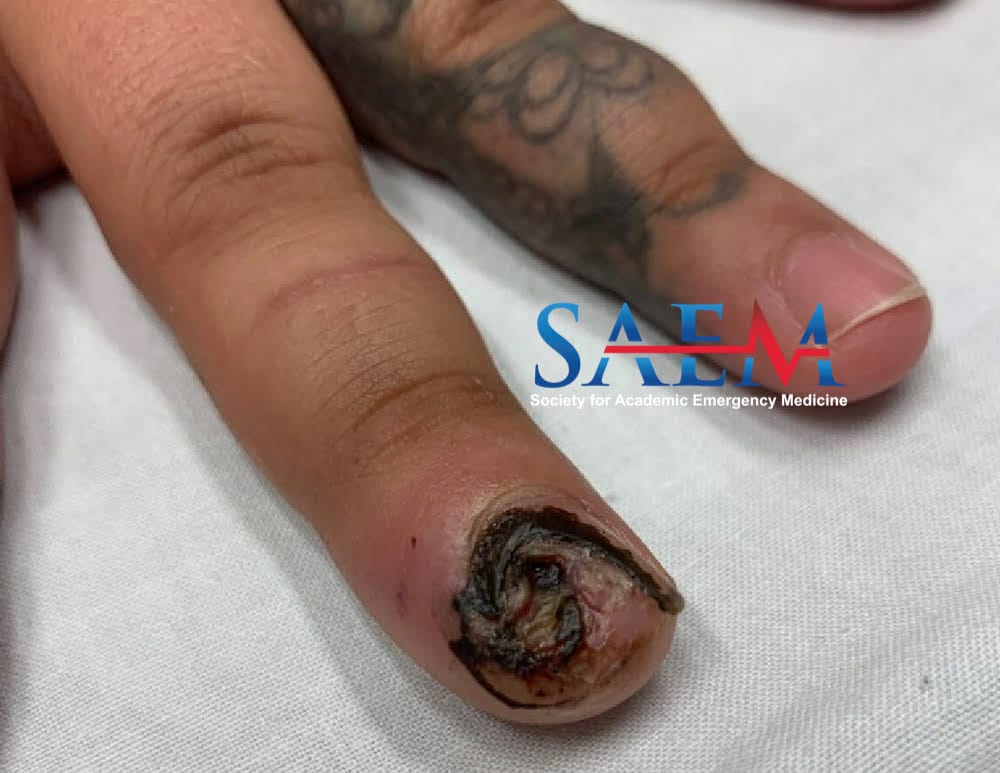
SAEM Clinical Image Series: Finger Pain
The patient is a 24-year-old female who presents to the emergency department for left middle finger pain and swelling. She is right hand dominant and works in a kitchen. The patient states that ten days ago she avulsed the distal tip of the left middle finger, including the majority of the nail. At that time, the patient was evaluated at an outside hospital where the wound was cauterized with silver nitrate due to soft tissue bleeding. Since then, the patient states that she has had swelling over the dorsal distal phalanx. [+]
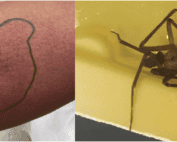
ACMT Toxicology Visual Pearls – Necrotic Spider Bite
A patient bitten by the pictured creature with the pictured lesion should be screened for which pathology? Acute liver failure Ascending paralysis Hemolysis Meningitis Myocarditis [+]

Michael Simpson, MD
Vanderbilt University Medical Center
Latest posts by Michael Simpson, MD (see all)

Geriatric EM: Falls Can Be Sentinel Events
A 72-year-old woman is brought to your Emergency Department (ED) after falling while rushing to the toilet. She has no visible deformity on examination and is discharged with pain medications. Two weeks later, EMS transports her to the ED after a loss of consciousness. Computed tomography (CT) of the head at that time shows a subdural hematoma. Unfortunately, this scenario is common. Given time constraints in the ED, management plans often miss opportunities to assess a patient’s risk for falling and may not be compliant with recommendations [1, 2]. However, falling can be a sentinel event for older adult [+]
IDEA Series: Handheld Ultrasound for Emergency Medicine Residents Rotating on Cardiology Services
Point-of-care ultrasound (PoCUS) has become an essential skill that emergency medicine (EM) residents learn during their training [1]. Accordingly, most EM programs schedule a block early in residency dedicated to obtaining and interpreting high-quality PoCUS images. Likewise, the ability to efficiently diagnose and manage acute cardiovascular pathologies is a critical aspect of EM, and most EM residents also rotate on a cardiology service to develop these skills. Despite evidence that PoCUS improves the ability of both cardiologists and non-cardiologists to quickly diagnose cardiac disease at the bedside, integration of this relatively novel technology on cardiology services is often limited by [+]
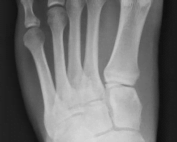
SplintER Series: A Stressful Step – Midfoot Pain in a Female Runner
A 17 year-old female who recently started training for a marathon presents with progressively severe pain over her midfoot, notable for point tenderness over the 2nd metatarsal shaft. The above image was obtained (Image 1. X-ray of the left foot. Image courtesy of Matthew Negaard, MD). [+]

Matthew Negaard, MD

SAEM Clinical Image Series: Edema Got Your Tongue?
A 57-year-old male presented to the emergency department with a swollen mouth for three hours. He reported never having experienced this before and denied starting any new medications. The patient endorsed a feeling that his mouth was swollen and had difficulty swallowing. The edema had been increasing in size since its onset. He had been drooling for the past hour and endorsed mild pain around the area. He denied any shortness of breath, rash, nausea, vomiting, or other areas of edema. His past medical history included hypertension, diabetes, and allergies, with no known drug allergies. [+]

SAEM Clinical Image Series: Sun-burnt Hands and Lips
A 44-year-old Caucasian male with a past medical history of hepatitis C presents with a complaint of pain, swelling, and skin blistering of his hands. He also notes skin sores on his nose, lower lip, and the tops of his ears. The patient claims that these have become progressively worse since starting work a month ago in outdoor construction. The patient denies the use of medications or illicit drugs and denies any medical allergies. He admits to tobacco use and daily alcohol use. The patient denies any other symptoms. [+]

Colchicine Toxicity: A New Threat from COVID-19 Treatments
In the continued fight against COVID-19, a January 22, 2021 press release from the Montreal Heart Institute touted the potential of colchicine, citing results from the COLCORONA trial [1, 2]. We’ve learned to be especially skeptical of any study results reported only via press release before undergoing full peer-review and publication. Nevertheless, the authors claim a non-significant (p=0.08) relative risk reduction of 19% (absolute risk reduction 1.1%) in hospitalizations, mechanical ventilation, and death. Note that the pre-print of the study has still not been peer-reviewed [3]. This study comes on the heels of the much smaller GRECCO-19 study published in [+]

PEM Pearls: To Scan or Not to Scan? CT Abdomen in Children with Blunt Torso Trauma
An 18-month-old female with no past medical history is brought in by ambulance after a motor vehicle collision (MVC) at highway speed, restrained in an appropriate car seat. Mom was also brought in after delayed extrication with an obvious femur deformity. EMS reports that the patient had emesis on the scene, was fearful but calm, and has been moving all extremities. Vitals per EMS: HR 120, BP 100/60, RR 30, SpO2 99%, Temp 36.5 C Initial Exam: General: crying Neuro: Glasgow Coma Scale (GCS) of 13 (eyes shut unless talked to, crying spontaneously, moving all extremities) MSK: atraumatic chest, [+]

Director of Growth, Strategic Alliance Initiative, Center for Innovation and Digital Health
Massachusetts General Hospital;
Chief Scientific Officer, Conductscience.com
Latest posts by Shuhan He, MD (see all)
- The Discharge Severity Index: Early Research on ED Readmission Risk Assessment - August 14, 2025
- Suboxone and the Emergency Physician: Get Waivered Training - August 12, 2022
- A Tale of Two Epidemics: COVID-19 and the Opioid Crisis - April 23, 2020