



EMRad: Radiologic Approach to the Pediatric Traumatic Elbow X-ray
This is EMRad, a series aimed at providing “just in time” approaches to commonly ordered radiology studies in the emergency department [1]. When applicable, it will provide pertinent measurements specific to management, and offer a framework for when to get an additional view, if appropriate. We recently covered the adult elbow, here we will cover the approach to the pediatric elbow. Learning Objectives Interpret traumatic pediatric elbow x-rays using a standard approach Identify clinical scenarios in which an additional view might improve pathology diagnosis Why the pediatric elbow matters and the radiology rule of 2’s The Pediatric Elbow 10% of [+]
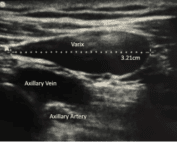
SplintER Series: Venous Thoracic Outlet Syndrome
A 29-year-old male presents with right shoulder pain, throbbing, and swelling. He states that a bulge has appeared over his right anterior shoulder recently (Image 1). While he was doing pushups today, he began to have numbness, tingling, and weakness in his right arm. While in the waiting room, his symptoms have completely resolved. Image 1: Bedside ultrasound of the anterior shoulder at the site of the bulge. AA=axillary artery. AV=axillary vein. Author’s image. [+]

Does the Combination of Parenteral Olanzapine with Benzodiazepines for Agitation in the ED Increase the Risk of Adverse Events?
A previous EM Pharm Pearl focused on the adverse events associated with the use of IV olanzapine for agitation. This pearl addresses concerns around using parenteral (IV or IM) olanzapine with parenteral benzodiazepines. Background Olanzapine has two FDA boxed warnings, one for increased mortality when used long-term in older adults with dementia-related psychosis and another pertaining to adverse effects of extended release IM olanzapine. However, there exists a potential risk of excess sedation and respiratory depression when IM/IV olanzapine is administered with parenteral benzodiazepines for agitation. The European Medicines Agency recommends separating the administration of IM/IV olanzapine and parenteral benzodiazepines [+]
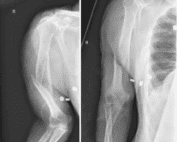
SplintER Series: A Case of Arm Pain
An 80-year-old male presents with severe right arm pain after he tripped and fell down 2 steps. Examination shows deformity and swelling to his right upper arm. You obtain AP and lateral humerus x-rays as above. [+]
Computerized Adaptive Screen for Suicidal Youth (CASSY) study
Adolescent suicide rates in the United States, partly augmented by the COVID-19 pandemic, are steadily increasing [1, 2]. A commonly used screening tool is the 4-question Ask Suicide-Screening Questions (ASQ) instrument, which has a sensitivity and specificity of 60% and 92.7%, respectively, in predicting suicide-related events within 3 months. This was derived from a retrospective study of 15,003 pediatric patients (age 10-18 years) [3]. Given the morbidity and mortality associated with suicide attempts, is there a better screening tool with a higher sensitivity than 60%, while also maintaining adequate specificity? A higher sensitivity rate ensures that we have fewer misses. [+]
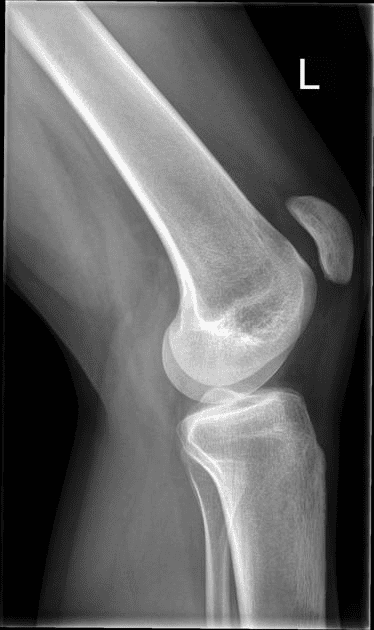
SplintER Series: Keep Your Knees Up
A 27-year-old female presents with left knee pain after a low-speed motor vehicle collision in which her knee hit the dashboard. She is tender over the patella without significant effusion and has an intact extensor mechanism. The above x-ray was obtained (Image 1. X-ray left knee. Case courtesy of Dr. M. Mourits, Radiopaedia.org, rID: 14476). [+]
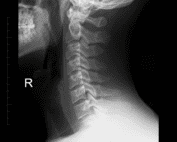
SplintER Series: A Temporary Pain in the Neck
An 18-year-old football player presents to the Emergency Department after an episode of transient numbness, tingling, and inability to move his right upper extremity after making a tackle. He continued playing without recurrence. The above imaging was obtained (Figure 1. Lateral cervical spine x-ray. Case courtesy of Dr Andrew Dixon, Radiopaedia.org, rID: 32505). [+]

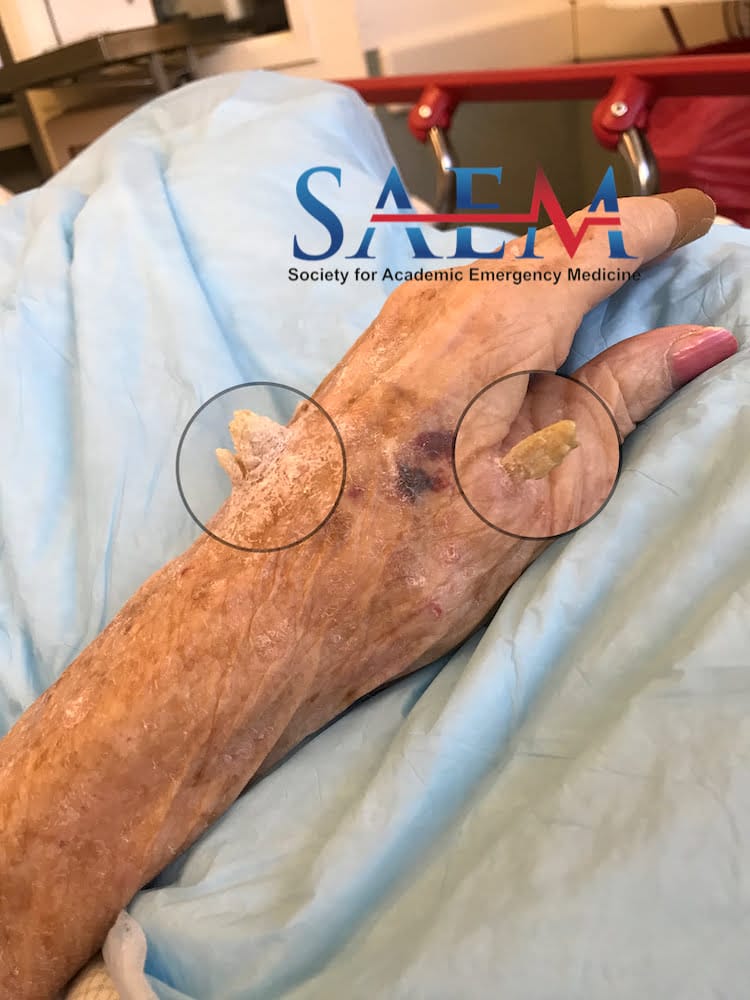
SAEM Clinical Image Series: What’s This Thing on My Face?
A 91-year-old female patient presented with her family after concern for multiple new lesions on her face and hands. The patient thinks the lesions grew over the course of a few months. There is no pain at the sites, no erythema, and no pruritis. She has caught the lesions on clothing and bedding, which has irritated the lesions on occasion, and the family is concerned/embarrassed by the growths on her face, which are harder to conceal than those on her hand. [+]
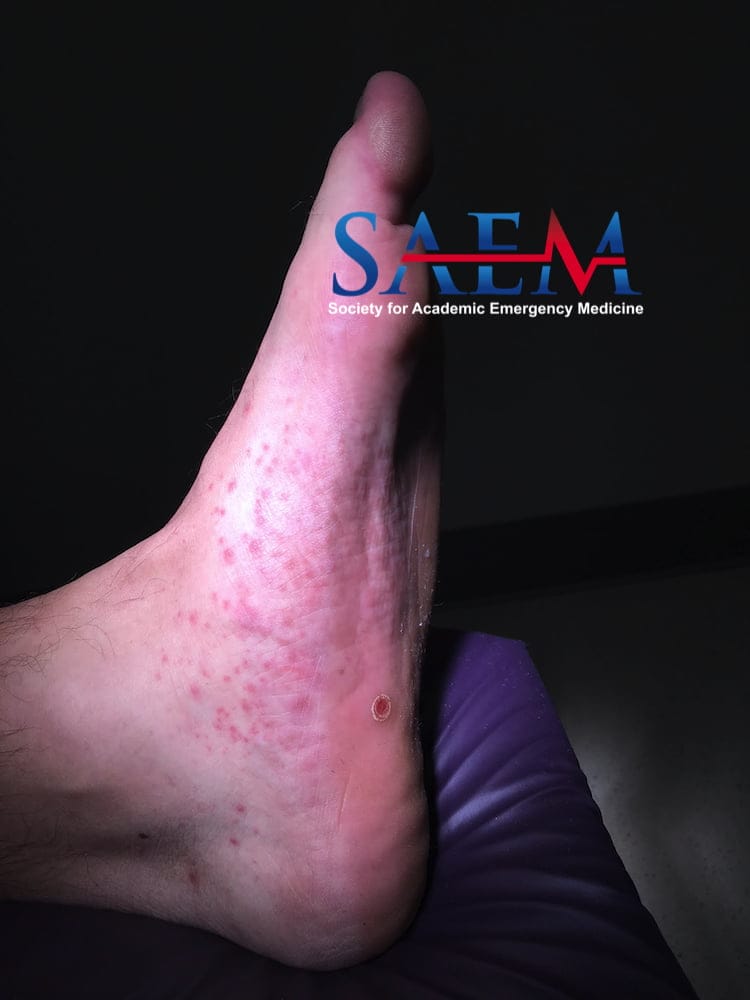
SAEM Clinical Image Series: Guess Who’s Back?
A 27-year-old male with no significant past medical history presented to the emergency department with one week of progressively worsening, non-pruritic, and intermittently painful rash to his bilateral dorsal and plantar feet. The patient also described lesions to his left inguinal region and scrotal sac. There was no fever, chills, nausea, vomiting, chest pain, or shortness of breath. The patient was sexually active with men and women, with inconsistent condom use. [+]

Adverse Events from IV Olanzapine for Agitation in the ED
The ability to safely and effectively sedate agitated patients in the emergency department (ED) is paramount to provide prompt medical care and protect ED staff. Intravenous (IV) antipsychotics are frequently utilized, instead of other routes, given their more rapid onset of action. Similar to haloperidol, olanzapine can be used safely via the IV route despite both being FDA-approved for intramuscular (IM) administration only. What is the adverse event profile for IV olanzapine when administered for agitation in the ED? The table below summarizes the primary data evaluating IV olanzapine in the ED [1-5]. While IV olanzapine is a safe option [+]

Director of Growth, Strategic Alliance Initiative, Center for Innovation and Digital Health
Massachusetts General Hospital;
Chief Scientific Officer, Conductscience.com
Latest posts by Shuhan He, MD (see all)
- The Discharge Severity Index: Early Research on ED Readmission Risk Assessment - August 14, 2025
- Suboxone and the Emergency Physician: Get Waivered Training - August 12, 2022
- A Tale of Two Epidemics: COVID-19 and the Opioid Crisis - April 23, 2020