



Poll : How do you use the PV cards?
In our effort to take the Paucis verbis (PV) card series to the next level, we are interested in knowing how YOU use the cards. We would appreciate your answers to the following 4 questions. Also if you have any comments/suggestions regarding the PV cards and how we can make them better please, use the Comments section. [+]
![Catherine Patocka, MD [+]</p></body></html>](https://www.aliem.com/wp-content/uploads/CPatocka.jpg)
EMS Fellowship: 10 Questions I Wish Applicants Would Ask the Fellowship Director
Well, it is EMS fellowship interview season again, and every year after the lovely encounter with very well qualified candidates, I am left wondering if they have achieved a good return on their investment of time and money coming to visit us. Did they really get a good idea of the important aspects of our program, or will they just have to make an educated guess about whether they would be happy spending a year or more with us? [+]

Considering a Medical Toxicology Fellowship?
Every year, EM residents ponder whether to do a fellowship. In the ALiEM Chief Resident Incubator, a handful are very interested in a medical toxicology fellowship, but I woefully am unqualified to provide any advice. So in a “phone a friend” moment, I boldly sent out an email requesting advice and insights. I received two amazing replies from Dr. Lewis Nelson (NYU) from a fellowship director’s perspective and Dr. Annie Arens (UCSF) from a fellow’s perspective. [+]

Trick of the Trade: Squeeze test for confirmation of IO placement
Venipuncture is the most common invasive procedure performed in the emergency department 1 , likely due to the fact that the vast majority of our laboratory evaluations require blood and many of our life saving interventions require access to the patient’s systemic circulation. Most of the time emergency department staff are able to perform this procedure easily, but occasionally you find that your patient is the dreaded “difficult stick”. Literature suggests that the landmark technique is successful on the initial venipuncture 74-77% of the time. 2–5 Success rates rise after multiple attempts, but what happens when you don’t have the luxury [+]
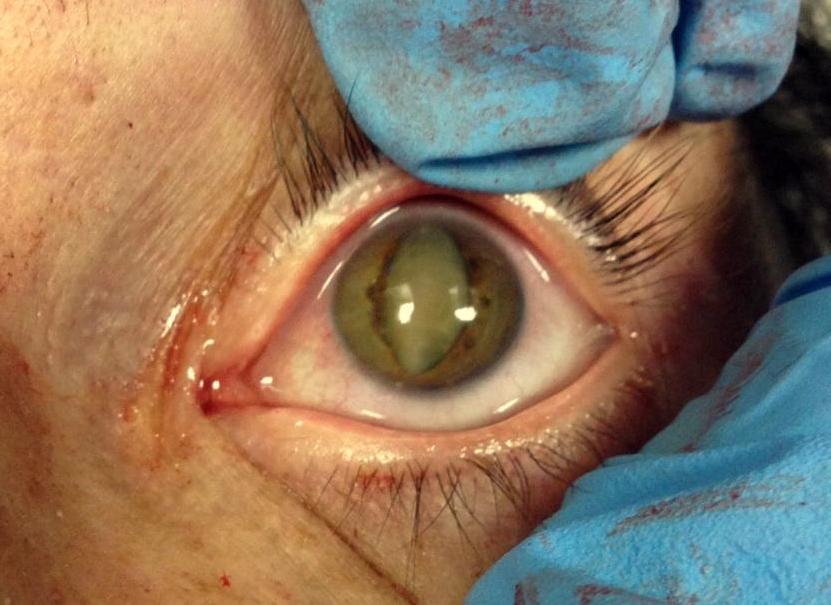
Diagnose on Sight: Traumatic Vision Loss
Case: A 60 year old male presents after being hit by an automobile while riding his bicycle. He has significant blunt head trauma. His left eye is pictured here. What is the diagnosis? [+]

Director of Growth, [+]

Trick of the Trade: Lactated Ringers for Sepsis Complicated by Hyponatremia
An 82-year-old female is brought into the Emergency Department by family for a several day history of progressive altered mental status. You initiate a broad workup. However, soon after initial evaluation, you are called back into the room. The patient’s vitals are as follows and concerning for septic shock and an alarming serum sodium level. [+]
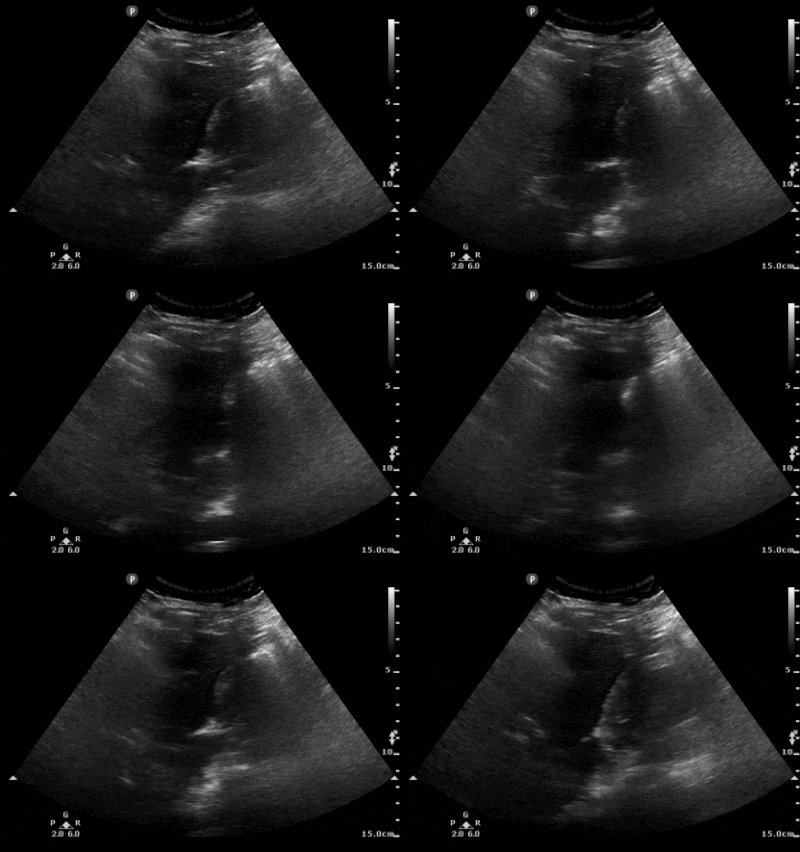
Ultrasound For the Win! Case: 38-year-old pregnant woman with acute right-sided abdominal pain #US4TW
Welcome to another ultrasound-based case, part of the “Ultrasound For The Win!” (#US4TW) Case Series. In this peer-reviewed case series, we focus on real clinical cases where bedside ultrasound changed management or aided in diagnoses. In this case, a 38-year-old pregnant woman presents with acute right-sided abdominal pain radiating to her flank. [+]
ALiEMU School Doors Open – Featuring the CAPSULES Series
Our virtual school doors are open starting today to ALiEM University (ALiEMU), which can best be thought of as our open-access, on-demand, online school of e-courses for anyone practicing Emergency Medicine worldwide. This ambitious venture was made possible by a tremendous team, but primarily led by Chris Gaafary, MD (@CGaafary), ALiEMU’s Chief of Design and Development and an EM chief resident in his free time at the University of Tennessee. Today we are incredibly excited to launch our inaugural longitudinal e-course the ALiEM Capsules Series: A Practical Pharmacology for the EM Practitioner, created and led by Bryan Hayes, PharmD, FAACT (@PharmERToxGuy). [+]
Trick of the Trade: DIY Circulating Water Bath for Frostbite Treatment
A 26-year-old woman presented to an urban Detroit emergency department complaining of bilateral foot pain after walking outside in the snow for 30 minutes without shoes or socks. She was unable to ambulate secondary to the pain and swelling. Physical examination revealed bilateral pallor, doughy texture, and coolness to the touch. There was generalized tenderness to palpation throughout the digits. The overlying skin was edematous, although without signs of breakdown. [+]
![Ciara Barclay-Buchanan, [+]</p></body></html>](https://www.aliem.com/wp-content/uploads/ciara.barclay-buchanan.jpg)
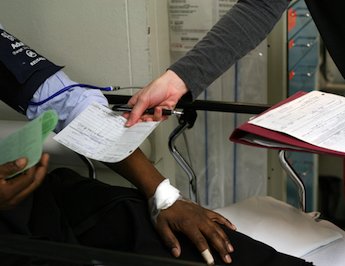
EREM: Pitfalls and Perils of Emergency Department Discharge Instructions
In the emergency department (ED), failure to comply with discharge instructions has been associated with an increased rate of adverse outcomes for patients. 1,2 There is tremendous variability in the information that is provided to patients in discharge paperwork. In some EDs, a simple handwritten discharge note is given to the patient, while in others, extensive, diagnosis specific pre-created instructions are provided to patients at time of discharge. To improve patient outcomes and reduce their medicolegal risk, providers must recognize pitfalls associated with discharge instructions and include two key elements as a part of all discharge paperwork. [+]
Director of Growth, Strategic Alliance Initiative, Center for Innovation and Digital Health
Massachusetts General Hospital;
Chief Scientific Officer, Conductscience.com
Latest posts by Shuhan He, MD (see all)
- The Discharge Severity Index: Early Research on ED Readmission Risk Assessment - August 14, 2025
- Suboxone and the Emergency Physician: Get Waivered Training - August 12, 2022
- A Tale of Two Epidemics: COVID-19 and the Opioid Crisis - April 23, 2020