


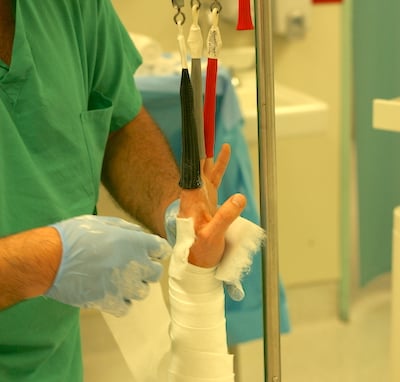
Trick of the Trade: DIY Finger Traps
Distal radius fractures are among the most commonly encountered fractures in the emergency department (ED). They have been reported to account for around 25% of pediatric fractures and up to 18% of fractures in the elderly.1 Reducing minimally displaced distal radius fractures is a procedure that can be greatly facilitated by the presence of finger traps, which help hold traction while you reduce the fracture.2 Often While working in small 5-bed, free-standing emergency department (ED), I found myself needing to perform this vital procedure and finger traps were unavailable. [+]
Blast From the Past: Occult Sepsis, Lactic Acid, and Mortality
Severe sepsis and septic shock affect millions of patients worldwide and have high rates of morbidity and mortality as well as high resource utilization. The way we manage sepsis has changed quite a bit since the Rivers et al randomized controlled trial of early goal-directed therapy (EGDT) 1 , which had an absolute decrease in mortality from 46% with “usual care” to 31% with EGDT. What we now know is that a proactive approach to septic patients will result in lower mortality rates and better outcomes (i.e. early identification, early intravenous fluids, and early antibiotics). Patients with sepsis are still [+]

Introducing the New ALiEMU Capsules Series
We are excited and proud to introduce a new series as part of the recently announced ALiEMU: Capsules: Practical Pharmacology for the EM Practitioner. The Capsules series’ primary focus is bringing Emergency Medicine pharmacology education to the bedside. Our expert team distills complex pharmacology principles into easy-to-apply concepts. It’s our version of what-you-need-to-know as an EM practitioner. We hope you enjoy it. [+]

AIR Series: Respiratory Part 1 (2015)
We found an enormous amount of posts on respiratory topics and thus have divided the content into two modules. This first module will focus on general respiratory issues with airway and pulmonary embolism covered in the second module. Below we have listed our selection of the 15 highest quality blog posts within the past 12 months (current as of April 2015) related to respiratory, curated and approved for residency training by the AIR Series Board. In this module we have 4 AIRs and 11 Honorable Mentions. We strive for comprehensiveness by selecting from a broad spectrum of blogs from the top 50 listing per the Social Media Index. [+]

Salicylate Toxicity PV card v2: Lessons in post-publication review
I was recently the author of a PV card for management of Salicylate Toxicity, which had some discrepancy with expert opinion. The point of contention was in regards to measurement of urine pH vs serum pH for alkalinization. In preparing the first version of the card, I began with notes from a recent toxicology rotation, and expanded by examining textbooks and review articles. Although there was mention of serum pH measurement, numerous sources emphasized urine alkalinization as the primary endpoint for the treatment of aspirin toxicity. Therefore I choose to include this on the size-limited PV card. Despite review by numerous peers [+]

Tricks of the Trade: Fluorescein application techniques for the eye
Application of fluorescein is a vital part of the workup of ocular complaints. Despite some studies showing questionable support, the typical cited clinical concern for stored fluorescein solutions is contimination with Pseudomonas and risk for iatrogenic infection with associated ulcer formation. 1–4 Subsequently, single dose sterile strips have become the standard agent stocked in most EDs. Many patients, especially children, can be apprehensive of the application of the physical strip directly to the eye, and are more comfortable with the concept of eye drops. In this post, we review multiple technique to create fluorescein solutions and additional tips for utilization [+]
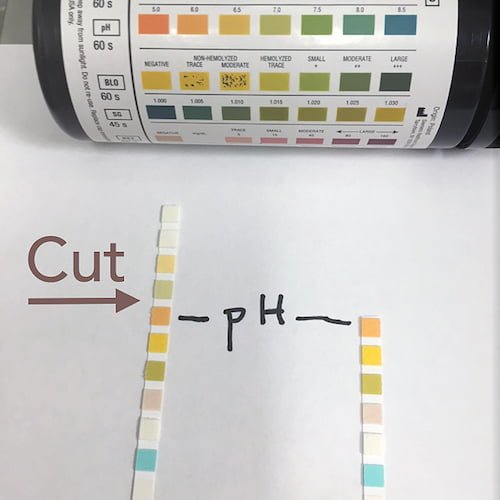
Trick of the Trade: Eye pH
Your patient presents with an ocular burn after accidentally splashing an industrial acid on his face. You, however, can not seem to find the ever elusive eye pH paper to track her initial and serial pH’s during copious ocular irrigation. Now what? [+]
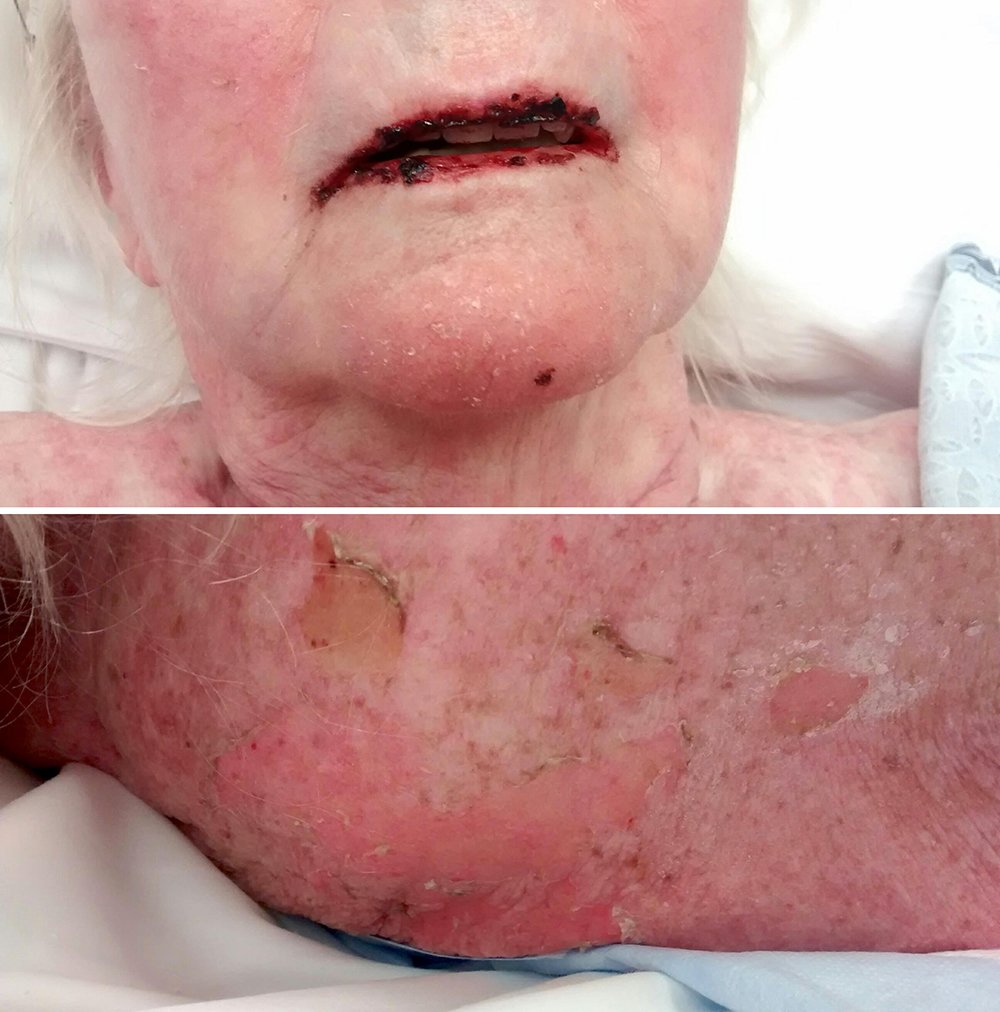
Diagnose on Sight: Diffuse Desquamating Dermatitis
Case: An 84 year old female presents with five days of a diffuse rash. She had a seizure and was started on phenytoin 2 weeks ago. Her mouth, labia, and medial canthi are involved. There are scattered areas of desquamation comprising less than a tenth of her total body surface area. She is tachycardic and febrile. Her complete blood count differential is normal. What is the diagnosis? [+]
Methemoglobinemia: Not the Usual Blue Man With Low SpO2
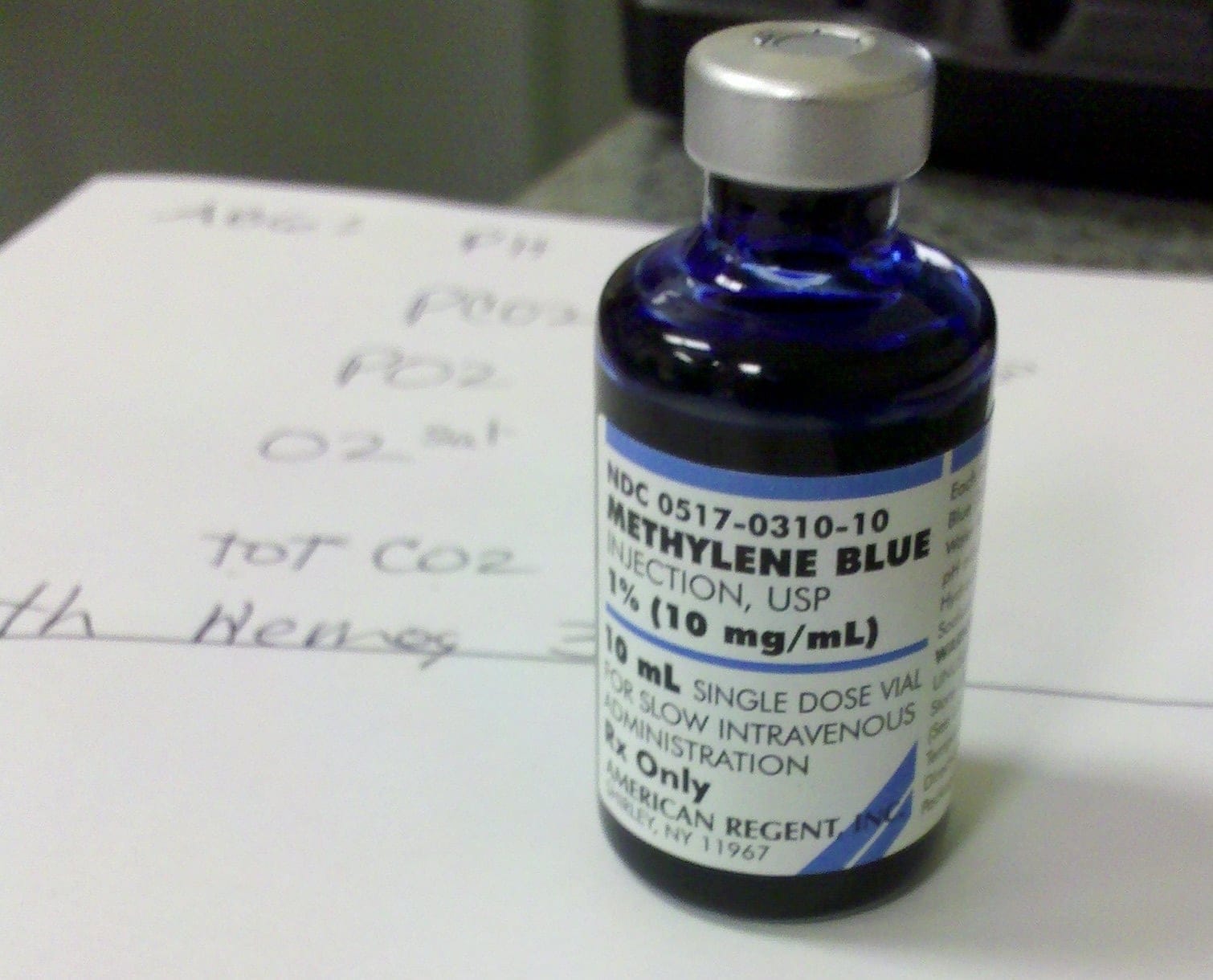
On a Friday night shift, an ambulance brings you a 52 year-old man who had an episode of syncope at a local club. EMS found him confused and hypoxic with poor skin color. The patient was placed on oxygen via face mask en route to your ED without clinical improvement. On exam, you note a blue discoloration of his extremities, and his chest x-ray and ECG are unremarkable. You draw blood, which appears very dark, and an ABG demonstrates pH 7.39, PCO2 41, and PO2 176. Figure 1. Blue foot Figure 2. Dark arterial blood You suspect [+]
Rib Fractures in Older Adults – What’s the Big Deal?
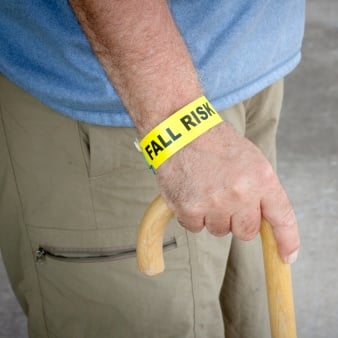
Blunt chest trauma from falls or motor vehicle collisions are a common reason for ED visits and a common source of rib fractures. While many patients with rib fractures can be discharged home with oral analgesics and an incentive spirometer, certain patients are at much higher risk for morbidity and mortality. This post will look at which patients are at risk, what factors predict increased mortality, and inpatient interventions that can reduce mortality, with a focus on the risks in older adults. [+]

Director of Growth, Strategic Alliance Initiative, Center for Innovation and Digital Health
Massachusetts General Hospital;
Chief Scientific Officer, Conductscience.com
Latest posts by Shuhan He, MD (see all)
- The Discharge Severity Index: Early Research on ED Readmission Risk Assessment - August 14, 2025
- Suboxone and the Emergency Physician: Get Waivered Training - August 12, 2022
- A Tale of Two Epidemics: COVID-19 and the Opioid Crisis - April 23, 2020