


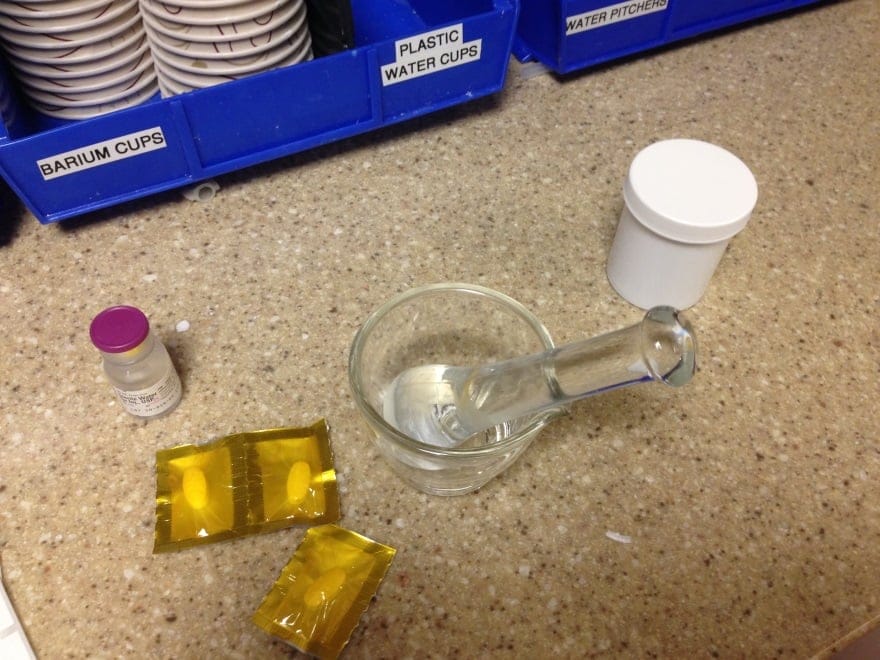
Trick of the Trade: Topical Tranexamic Acid Paste for Hemostasis
Tranexamic acid (TXA) can be used in a wide variety of settings in the Emergency Department for its hemostatic effects. Topical applications of TXA are commonly utilized to control minor bleeding from epistaxis, lacerations, or dental extractions.1–3 More in-depth reviews of topical TXA can be found on R.E.B.E.L EM4 and The Skeptics Guide to Emergency Medicine.5 [+]

Zika Virus: What emergency department providers need to know
The Zika virus outbreak has recently been put on “Level 1” activation status by the Emergency Operations Center at the U.S. Centers for Disease Control and Prevention (CDC). If you haven’t already thought about this affecting your emergency department, you should starting now. A Level 1 status has been triggered only 3 times in the recent years: Ebola (2014), H1N1 (2009), Hurricane Katrina (2005). The following are some key facts and resources. [+]

ALiEM Bookclub: Bouncebacks! Emergency Department Cases: ED Returns
There are many pitfalls the practicing Emergency Medicine practitioner can encounter, but hopefully avoid during their time in the ED. Bounceback patients, the ones who come back the next day, usually worse off than the day before, are definitely dreaded events that most would like to avoid. Of course, the ideal goal would be to never have that happen to you or your patients, but that is just not realistic. That’s why Bouncebacks! can be integral to anyone’s reading list. [+]

ALiEMU CAPSULES Module 5: Procedural Sedation & Analgesia in the ED
We are proud to present CAPSULES module 5: Procedural Sedation & Analgesia in the ED, now published on the Academic Life in EM University (ALiEMU) website. Here is a summary of the key points from this outstanding module by Dr. Zlatan Coralic and Dr. Nadia Awad. [+]

Traumatic Brain Injuries in Older Adults
Older adults are at high risk of poor outcomes from even minor head injuries. We see many older patients in the ED who present after a fall or head injury, and we have good decision rules for which patients need brain imaging.1 However, even patients with mild traumatic brain injuries, who have a negative CT scan, are at risk for mortality and significant long-term sequelae. The CDC has called traumatic brain injuries a ‘silent epidemic’.2,3 The first steps to breaking that silence are awareness and recognition. Case A 75 year old male who is not on any anticoagulants presents to [+]

Must-Know EM Pharmacotherapy Articles of 2015
There is so much literature to sift through each year, it becomes nearly impossible to stay abreast of it. Here is a quick summary of the 10 must-know Emergency Medicine pharmacotherapy articles from 2015, in my humble opinion. [+]

PV Card: Adult scaphoid fracture
What is the most commonly fractured carpal bone in adults? It's the scaphoid bone. As a bonus it has the dreaded complication of avascular necrosis. So how good are the physical exam and imaging modalities in diagnosing a fracture? What is the likelihood ratio (LR) that snuffbox tenderness predicts a fracture? Bottom lines: The exam is highly sensitive but poorly specific, such that one can only confidently state that a NON-tender snuffbox and scaphoid tubercle essentially rule out an acute scaphoid fracture. Also negative x-rays for patients with scaphoid tenderness still yield a fracture post-test probability of 25%. This PV card breaks down all the LRs.1 PV Card: Scaphoid Fracture Adapted from 1 Reference Carpenter C, [+]

AIR-Pro Series: Pediatrics (2016)
Below we have listed our selection of the 14 highest quality blog posts related to 5 advanced level questions on pediatric topics posed, curated, and approved for residency training by the AIR-Pro Series Board. The blogs relate to the following questions: Pediatric arrhythmias Procedural sedation in pediatrics The neonate in distress Toddlers with a limp Pediatric syncope In this module, we have 10 AIR-Pro’s and 4 honorable mentions. To strive for comprehensiveness, we selected from a broad spectrum of blogs identified through FOAMSearch.net. This module we also had two editorial board guests trained in Pediatric Emergency Medicine to increase the strength of our recommendations – Dr. Robert Cloutier and [+]
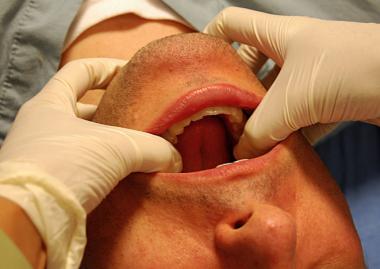
Trick of the Trade: Extra-oral reduction technique of anterior mandible dislocation
Anterior dislocation of the mandible is a clinical scenario that is not infrequently encountered by the ED provider and requires prompt intervention. The classic technique for reduction of the mandible requires the provider to place his/her thumbs or fingers into the patient’s mouth along the lower molars and apply force inferiorly and posteriorly. However, this technique is fraught with difficulties and inefficiencies including the following: [+]
PEM Pearls: Assessing Radiation Risk in Children Getting CT Imaging – Managing Risk and Making Medical Decisions
The Case: A 5 year old girl presents to the ED with approximately 24 hours of suprapubic and RLQ abdominal pain. Vital signs are: Temp 38.2 C, HR 110, RR 19, BP 100/60, Oxygen Sat 100% on room air. She has vomited twice but has not had diarrhea. She had a history of constipation a year ago that has resolved and mother denies any urinary symptoms or history of UTI’s. The patient is quiet but nontoxic appearing. Your abdominal exam notes mild to moderate RLQ tenderness but no rebound and normal bowel sounds. You order a urinalysis, which is negative and a [+]

Director of Growth, Strategic Alliance Initiative, Center for Innovation and Digital Health
Massachusetts General Hospital;
Chief Scientific Officer, Conductscience.com
Latest posts by Shuhan He, MD (see all)
- The Discharge Severity Index: Early Research on ED Readmission Risk Assessment - August 14, 2025
- Suboxone and the Emergency Physician: Get Waivered Training - August 12, 2022
- A Tale of Two Epidemics: COVID-19 and the Opioid Crisis - April 23, 2020