


AIR Series: Cutaneous Module
Welcome to the Cutaneous Module! After carefully reviewing all relevant posts from the top 50 sites of the Social Media Index the ALiEM AIR Team is proud to present the highest quality cutaneous content. Below we have listed our selection of the 4 highest quality blog posts within the past 12 months (as of February 2015) related to dermatology emergencies, curated and approved for residency training by the AIR Series Board. More specifically in this module, we identified 0 AIRs and 4 Honorable Mentions. [+]
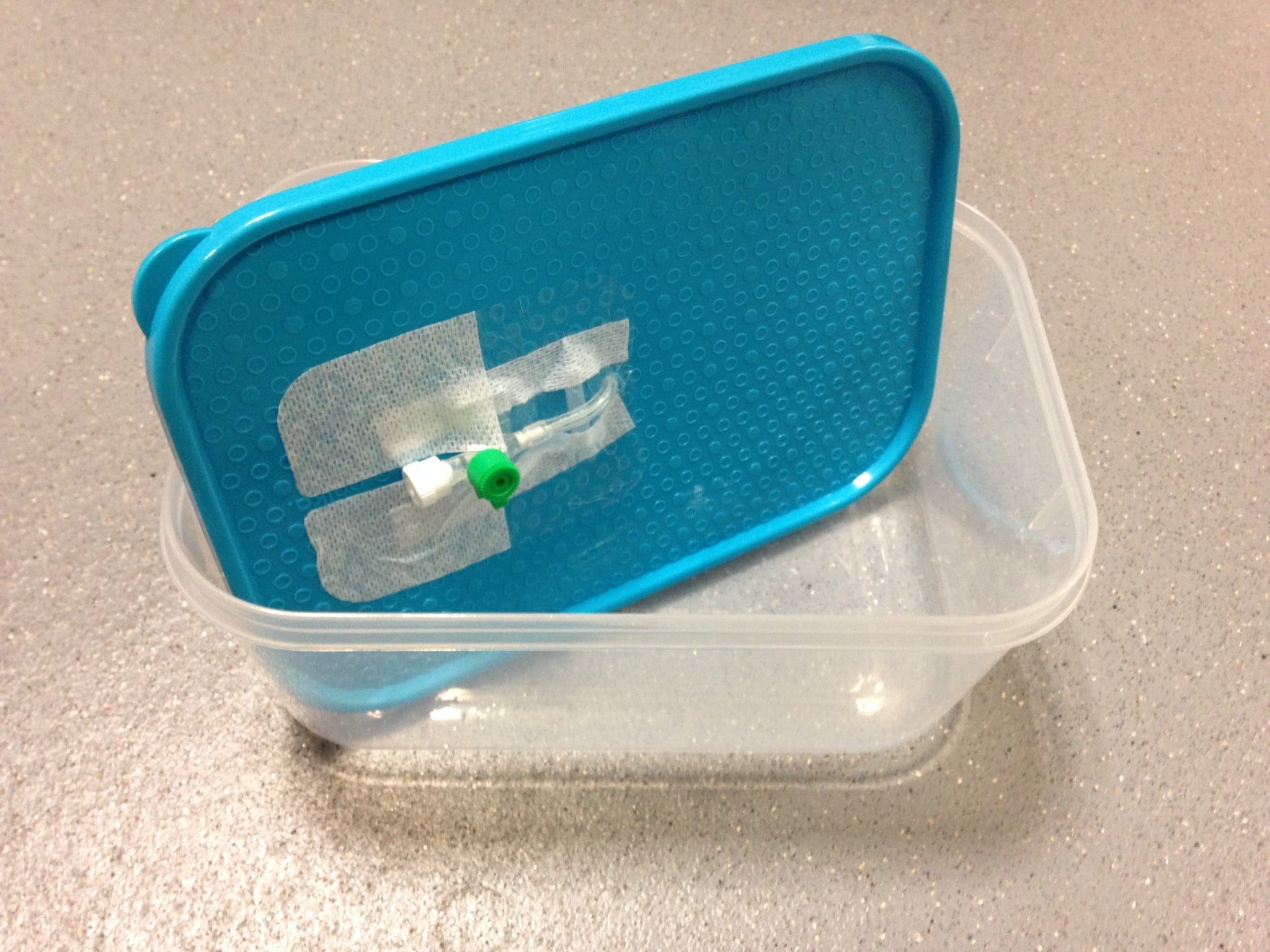
Trick of Trade: Build-it-yourself IV Fluid and Drug Administration Trainer
Simulation equipment can be rather expensive and wanting to practice fluid and drug administration does not always warrant the purchase of specialized equipment. Luckily, a simple administration trainer can be made in less than 10 minutes and only costs a few dollars (or even nothing). This is an ideal option for resuscitation training if you are already using a manikin without IV arms or an IO option. Learners can practice preparing infusions and administering fluid or preparing an injection and administering it via the syringe port. This trainer can have multiple IV cannulas in one lid and can even include an intraosseous [+]

ALiEMU CAPSULES Module 6: Pharmacology of Acute Coronary Syndromes
We are proud to present CAPSULES module 6: Pharmacology of Acute Coronary Syndromes, now published on the Academic Life in EM University (ALiEMU) website. Here is a summary of the key points from this outstanding module by Drs. Paul Takamoto and Glen Oettinger. [+]
AIR Series: Neurology Module 2 – Headaches, Seizures, and Other
Welcome to the Second Neurology Module! After carefully reviewing all relevant posts from the top 50 sites of the Social Media Index the ALiEM AIR Team is proud to present the highest quality neurology content relating to headaches, seizures, and other neurologic emergencies. Below we have listed our selection of the 17 highest quality blog posts within the past 12 months (as of December 2015) related to neurologic emergencies, curated and approved for residency training by the AIR Series Board. More specifically in this module, we identified 9 AIRs and 8 Honorable Mentions. [+]
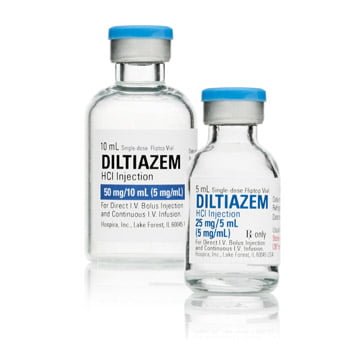
Calcium channel blockers for stable SVT: A first line agent over adenosine?
A 52-year old man presents via EMS with a chief complaint of “racing heartbeat” for one hour. He is placed on a cardiac monitor which shows a heart rate of 185, an ECG reveals supraventricular tachycardia (SVT), and his blood pressure is 143/95 mmHg. As you ask the nurse to procure 6 mg of adenosine, the patient’s eyes grow wide.”Please doc…” he pleads, “anything but that! Last time they gave that to me I thought I was gonna die!”https://www.youtube.com/watch?v=WBQrddqWhzo&feature=youtu.be&t=3m14sYou recently read about using calcium channel blockers (CCBs) for paroxysmal SVT (PSVT), but can’t recall the last time you actually considered using them. After all, it’s [+]
AIR Series: Neurology Module 1 – Bleeds and Strokes
Welcome to the first Neurology Module! After carefully reviewing all relevant posts from the top 50 sites of the Social Media Index the ALiEM AIR Team is proud to present the highest quality neurology content relating to intracranial hemorrhage and stokes. Below we have listed our selection of the 17 highest quality blog posts within the past 12 months (as of November 2015) related to neurologic emergencies, curated and approved for residency training by the AIR Series Board. More specifically in this module, we identified 5 AIRs and 12 Honorable Mentions. [+]

PEM Pearls: Pediatric Concussions
A 9-year boy was hit in the head during a soccer game and was out for a few seconds. He regained consciousness quickly, but was repetitive for EMS. By the time the patient arrived at the ED, he was back to his normal self. Did this patient sustain a concussion? If so, what discharge instructions, anticipatory guidance, and resources do you have for your patient and his family? Here’s a quick 170-second animated video tutorial to sum up some thing for you. [+]

Fentanyl: Adding Fuel to the Fire in the North American Opioid Epidemic
Drug poisoning is now the leading cause of injury death in the United States,1 with opioids accounting for up to 40% of these deaths. In the U.S., prescription opioid death rates have more than quadrupled since 1999, and death rates exceed those due to motor vehicle crashes.2 Similar trends in opioid exposure and death rates in Canada suggest that it is not far behind. Prescriptions for opioid analgesics paralleled a rise in opioid abuse and fatalities between 2002 and 2010, leveling off between 2011 and 2013,3 only to rise again in 2014.4 Among the more frequently misused opioids nationwide are oxycodone and hydrocodone (the most widely [+]

60 Second Soapbox: Bafuma (IV Antibiotics), Favot (Nod and Smile), & Augustine (Medical Travel)
Get ready for another round of 60-Second Soapbox! Each episode, one lucky individual gets exactly 1 minute to present their rant-of-choice to the world. Any topic is on the table – clinical, academic, economic, or whatever else may interest an EM-centric audience. We carefully remix your audio to add an extra splash of drama and excitement. Even more exciting, participants get to challenge 3 of their peers to stand on a soapbox of their own! [+]

ALiEM Chief Resident Incubator Must Read EM Journal Articles – 2016 Edition
In November 2013, the blog post 52 Articles in 52 weeks: Landmark EM Articles for EM interns was published on the ALiEM site. Over the subsequent years, many ground-breaking and practice-changing articles have been published. As part of a multi-institutional initiative launched by the ALiEM Chief Resident Incubator (“The Crincubator”), 9 chief residents from across the country pooled together lists of journal articles thought to be most important for the broad spectrum of EM learners. Additional input was obtained from FOAM leaders across the country including Dr. Ryan Radecki and Dr. Jeffrey Kline. These lists can be used by individuals for further learning or by residency programs [+]

Director of Growth, Strategic Alliance Initiative, Center for Innovation and Digital Health
Massachusetts General Hospital;
Chief Scientific Officer, Conductscience.com
Latest posts by Shuhan He, MD (see all)
- The Discharge Severity Index: Early Research on ED Readmission Risk Assessment - August 14, 2025
- Suboxone and the Emergency Physician: Get Waivered Training - August 12, 2022
- A Tale of Two Epidemics: COVID-19 and the Opioid Crisis - April 23, 2020