



PV Card: Focused Ocular Ultrasound
Ocular injuries and pathology are a common cause for Emergency Department visits. With bedside ultrasonography, many of these conditions can be assessed. Did you know that you can check for a retinal detachment, vitreous hemorrhage, and even a lens dislocation? What do these look like? Check out this great PV card on the focused ultrasound assessment of the eye. PV Card: Ocular Ultrasound Adapted from [1, 2] Go to ALiEM (PV) Cards for more resources. References Blaivas M, Theodoro D, Sierzenski P. A study of bedside ocular ultrasonography in the emergency department. Acad Emerg Med. 2002;9(8):791-799. [PubMed] Kimberly H, [+]

Diagnose on Sight: Traumatic low back pain
Case: An 18 year old female was the restrained passenger in a motor vehicle crash moving at 65 mph. She complained of traumatic low back pain radiating to her abdomen. What is the most likely mechanism of injury, based on this video of CT images? [+]

Anti-NMDA-Receptor Encephalitis
Anti-NMDA-receptor encephalitis is a severe and treatable immune-mediated disorder which presents with a rapid progression of psychiatric and neuropsychiatric symptoms. Although only first reported as a diagnosis in 2007, an exponential number of cases have since been described, suggesting that the disease is not rare but rather under-diagnosed. Emergency physicians play an important role in recognizing this disorder, as prognosis is largely dependent on early treatment with immunotherapy. [+]
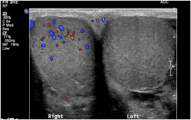
PV Card: Testicular Ultrasound for Torsion and Epididymitis
"Time is testicle." Every minute drags by while you are awaiting your ultrasonographer to arrive to scan your patient to rule out testicular torsion. Why not take a quick look yourself? What are you looking for? This is an excellent PV card by Drs. Matthew Dawson and Mike Stone on the topic of testicular ultrasound, giving the basics about testicular torsion and acute epididymitis. PV Card: Testicular Ultrasound Adapted from [1, 2] Go to ALiEM (PV) Cards for more resources. References Blaivas M, Sierzenski P. Emergency ultrasonography in the evaluation of the acute scrotum. Acad Emerg Med. 2001;8(1):85-89. [PubMed] Blaivas M, Sierzenski P, [+]

Must-Know EM Pharmacotherapy Articles of 2014
There is so much literature to sift through each year, it becomes nearly impossible to stay abreast of it. Here is a quick summary of the 6 must-know Emergency Medicine pharmacotherapy articles from 2014, in my humble opinion. [+]

ALiEM Bookclub: Brain on Fire – My Month of Madness
“Looking back at this time, I see that I’d begun to surrender to the disease, allowing all the aspects of my personality that I value – patience, kindness, and courteousness – to evaporate. I was a slave to the machinations of my aberrant brain. We are, in the end, a sum of our parts, and when the body fails, all the virtues we hold dear go with it.” – Brain on Fire, Susannah Cahalan [+]
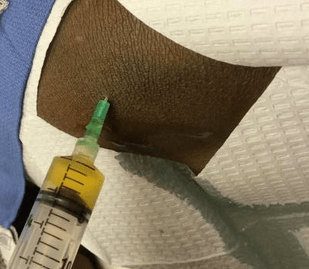
Trick of the Trade: Knee Arthrocentesis
A patient comes into the ED and you suspect septic arthritis to the knee. As you consent the patient for arthrocentesis, you can tell s/he has reservations about a needle being inserted into their knee and left in place while you aspirate. You also think in the back of your mind how tricky it is to sometimes change syringes while keeping the needle in the correct location. Is there another way of tapping the knee without a needle? [+]
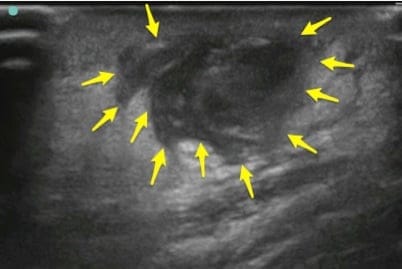
PV Card: Skin and Soft Tissue Ultrasound
We know that ultrasonography can be used to identify soft tissue infections. But what exactly are the distinguishing features between cellulitis and abscess? Is that a foreign body? Should I put a scalpel to this soft tissue infection? This PV card, written by Drs. Alissa Genthon, Patricia Henwood, and Mike Stone, serves as a great reference card for you at the bedside. PV Card: Skin and Soft Tissue Ultrasound Go to ALiEM (PV) Cards for more resources.
Diagnose on Sight: Chronic Unilateral Lower Extremity Swelling
Case: A 55 year old female visiting the United States from southern Mexico presents with 6 months of chronic unilateral lower extremity swelling and 2 days of erythema. What is the most common cause of this chronic disease? Click on image for a larger view. [+]
PV Card: Focused Biliary Assessment Ultrasound
Have trouble finding the common bile duct? What's the normal thickness of the gallbladder wall? What are common pitfalls in imaging the gallbladder? This is a great Paucis Verbis (PV)/ALiEM card on focused biliary assessment using ultrasound, courtesy of Drs. John Eicken and Mike Stone. PV Card: Focused Biliary Assessment Ultrasound Adapted from [1, 2] Go to ALiEM (PV) Cards for more resources. References Blaivas M, Harwood R, Lambert M. Decreasing length of stay with emergency ultrasound examination of the gallbladder. Acad Emerg Med. 1999;6(10):1020-1023. [PubMed Summers S, Scruggs W, Menchine M, et al. A prospective evaluation of emergency department [+]
Director of Growth, Strategic Alliance Initiative, Center for Innovation and Digital Health
Massachusetts General Hospital;
Chief Scientific Officer, Conductscience.com
Latest posts by Shuhan He, MD (see all)
- The Discharge Severity Index: Early Research on ED Readmission Risk Assessment - August 14, 2025
- Suboxone and the Emergency Physician: Get Waivered Training - August 12, 2022
- A Tale of Two Epidemics: COVID-19 and the Opioid Crisis - April 23, 2020