


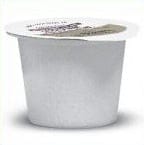
Trick of the Trade: Anesthetizing the nasal tract
One of the most uncomfortable procedures that we do on patients is a nasogastric (NG) tube. The maximal pain comes when the NG tube has to make a right angle turn in the posterior nasopharynx. The same goes for the nasopharyngeal (NP) fiberoptic scope. There are many approaches to topical anesthesia, including using benzocaine sprays, gargling with viscous lidocaine, squirting viscous lidocaine in the nares +/- afrin spray, and nebulizing lidocaine. None, however, really apply an anesthetic directly over the most sensitive area AND test for its effectiveness. [+]
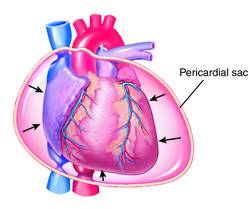
Paucis Verbis: Cardiac tamponade or just an effusion?
What is a cardiac tamponade? It is a clinical state where pericardial fluid causes hemodynamic compromise. With bedside ultrasonography in most Emergency Departments now, it's relatively easy to detect a pericardial effusion. But what we more want to know in the immediate setting is: Is this cardiac tamponade? You can look for RA systolic or RV diastolic collapse. What if it's equivocal? How good is the clinical exam and EKG in ruling out a tamponade? Answer Poor to average, at best. The Beck's triad of hypotension, distended neck veins, and muffled heart sounds are important to remember ... only on [+]
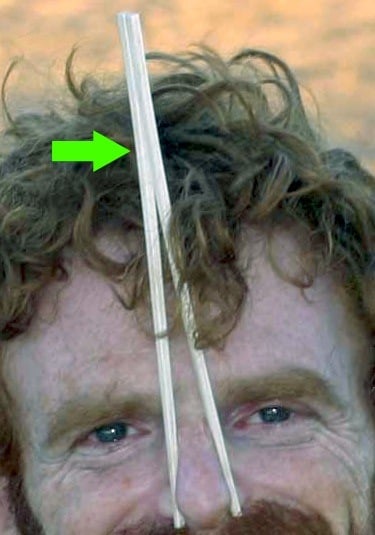
Trick of the Trade: Epistaxis control with tongue blades
For epistaxis, the classic teaching is to pinch the nose to control the bleeding. A persistent nosebleed often is the result of one’s natural inclination to constantly check if there is still bleeding every few seconds. Applying pressure on-and-off makes it difficult for the bleeding to stop. [+]
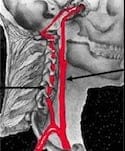
Paucis Verbis: Blunt cerebrovascular injuries
In the setting of blunt trauma, it is easily to overlook a patient's risk for blunt cerebrovascular injuries (BCVI). These are injuries to the carotid and vertebral arteries. Often they are asymptomatic with the initial injury, but the goal is to detect them before they develop a delayed stroke. Who are at risk for these injuries? What kind of imaging should I order to rule these injuries out? Do I really treat these patients with antithrombotic agents even in the setting of trauma to reduce the incidence of CVA? FYI: A simple seat-belt sign along the neck does not warrant [+]
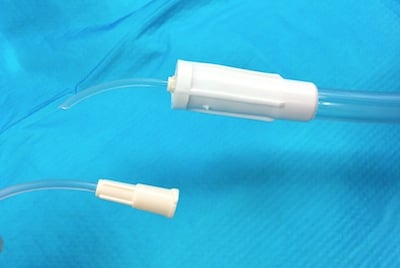
Trick of the Trade: A mini-suction device
You are doing a shift in the pediatric ED and you are evaluating a kid with a small bead in her ear. There are a ton different approaches you can use (eg. tissue adhesive glue on a q-tip stick). If the bead is in too deep, blindly trying to adhere the foreign body to the glue is a bit risky. Sometimes applying gentle irrigation might not be enough to wash out the bead. You want to avoid irrigation if you worry about a tympanic membrane rupture. [+]
Paucis Verbis: Clostridium Difficile
I just finished taking the 2011 LLSA exam to remain eligible for recertification. The only good thing about this test is that it gives me interesting topics for my Paucis Verbis cards. Here's a card on a disease process that is becoming increasingly prevalent -- Clostridium difficile. This is a summary based on the 2010 guidelines by Society for Healthcare Epidemiology of America (SHEA) and the Infectious Diseases Society of America (IDSA). Because healthcare workers are often the culprit for transmitting C. difficile to other patients, be sure you wash your hands with soap and water really well. Wear gloves. Be aware [+]

Trick of the Trade: Cunningham maneuver for shoulder dislocation
We commonly see patients with shoulder dislocations in the Emergency Department. There are a myriad of approaches in relocating the joint, which includes scapular rotation, Snowbird, and Kocher maneuvers. I recently stumbled upon the Cunningham technique after hearing about it from Dr. Graham Walker (of MDCalc fame) on TheCentralLine.org. [+]
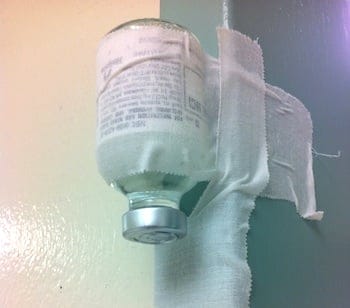
Trick of the Trade: I need more lidocaine but I have sterile gloves on!
How often has this happened to you — You are in the middle of a sterile procedure (chest tube, suturing, central venous line, lumbar puncture) and you realize that you need more lidocaine to provide better topical anesthesia. You don’t have any more in your kit and you are alone in the room with the patient. “Uh, can someone help me out there?” [+]

Paucis Verbis: Lifetime attributable risk of cancer from CT
How great would it be if you could give patients concrete numbers when you are talking about cancer risk and CT? Well, Dr. Hans Rosenberg (Univ of Ottawa) has come up with just such a table. Using this table you can say that the risk is about "one in ..." PV Card: Cancer Risk from CT Adapted from [1] Go to ALiEM (PV) Cards for more resources. Reference Smith-Bindman R. Radiation Dose Associated With Common Computed Tomography Examinations and the Associated Lifetime Attributable Risk of Cancer. Archives of Internal Medicine. 2009;169(22):2078. doi: 10.1001/archinternmed.2009.427
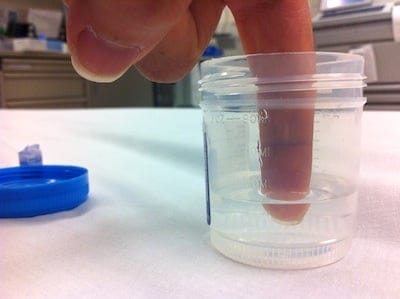
Trick of the Trade: Fingertip injuries
Fingertips can get injured in a variety of ways such as machetes, meat grinders, and broken glass. You name it, and we’ve probably seen it. Some don’t actually need anything invasive done because the skin is basically just torn off. The wound just needs to be irrigated, explored, and then bandaged to allow for secondary wound closure. What do you do if the finger injury keeps oozing and the finger tip is too painful for the patient to apply firm pressure? Poking the finger with 2 needles to perform a digital block seems a bit overkill. [+]

Director of Growth, Strategic Alliance Initiative, Center for Innovation and Digital Health
Massachusetts General Hospital;
Chief Scientific Officer, Conductscience.com
Latest posts by Shuhan He, MD (see all)
- The Discharge Severity Index: Early Research on ED Readmission Risk Assessment - August 14, 2025
- Suboxone and the Emergency Physician: Get Waivered Training - August 12, 2022
- A Tale of Two Epidemics: COVID-19 and the Opioid Crisis - April 23, 2020