



SAEM Clinical Images Series: A Case of Painful Skin Lesions
A 50-year-old Caucasian female with a history of hypertension, coronary artery disease, and insulin-dependent diabetes mellitus presents to the emergency department with a complaint of painful sores on the top of her left foot. She notes that ulcerations have formed over the past two weeks and reports a history of multiple recurrent usually non-tender skin lesions to her lower extremities, forearms, and hands over the past twenty years. She is homeless and medically non-compliant secondary to financial issues. Vitals: T 37.2°C; BP 149/77; HR 94; RR 20 Skin: Multiple yellow-brown and violaceous [+]
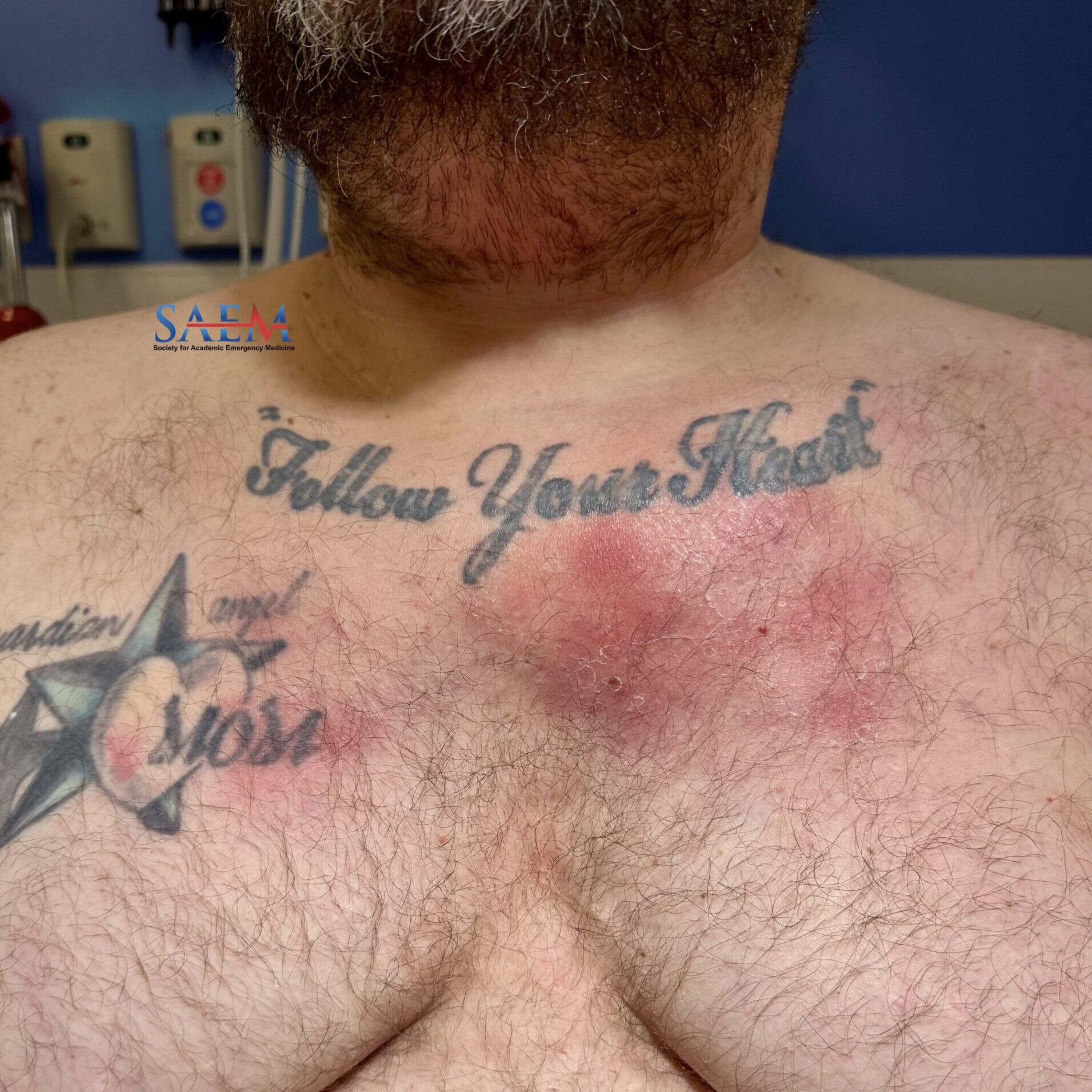
SAEM Clinical Images Series: A Serious Pain in the Neck
An otherwise healthy 34-year-old male presented to the Emergency Department with two weeks of anterior neck pain. Symptoms began with several days of pain in his mandibular molars, progressing to pain and swelling in the neck. In the last several days, the patient developed warmth and redness in the chest wall associated with subjective fever and chills. Additionally, the patient reports difficulty swallowing solid foods secondary to odynophagia associated with intermittent globus sensation. He has no history of immunocompromise and denies any drug or alcohol use. Of note, he has not seen a dentist in [+]

ALiEM AIR Series | Respiratory 2023 Module
Welcome to the AIR Respiratory Module! After carefully reviewing all relevant posts in the past 12 months from the top 50 sites of the Digital Impact Factor [1], the ALiEM AIR Team is proud to present the highest quality online content related to related to respiratory diseases in the Emergency Department. 6 blog posts met our standard of online excellence and were approved for residency training by the AIR Series Board. More specifically, we identified 3 AIR and 3 Honorable Mentions. We recommend programs give 3 hours of III credit for this module. AIR Stamp of Approval and Honorable [+]

ACMT Toxicology Visual Pearls: A Meal Worth Dying For
What is the most common primary cause of death from ingesting the pictured marine animal? Acute liver failure Acute renal failure Coagulopathy and DIC Respiratory failure Status epilepticus [Image from Canstockphoto] [+]

Faith Meyers, MD
Department of Emergency Medicine
Carolinas Medical Center
Latest posts by Faith Meyers, [+]
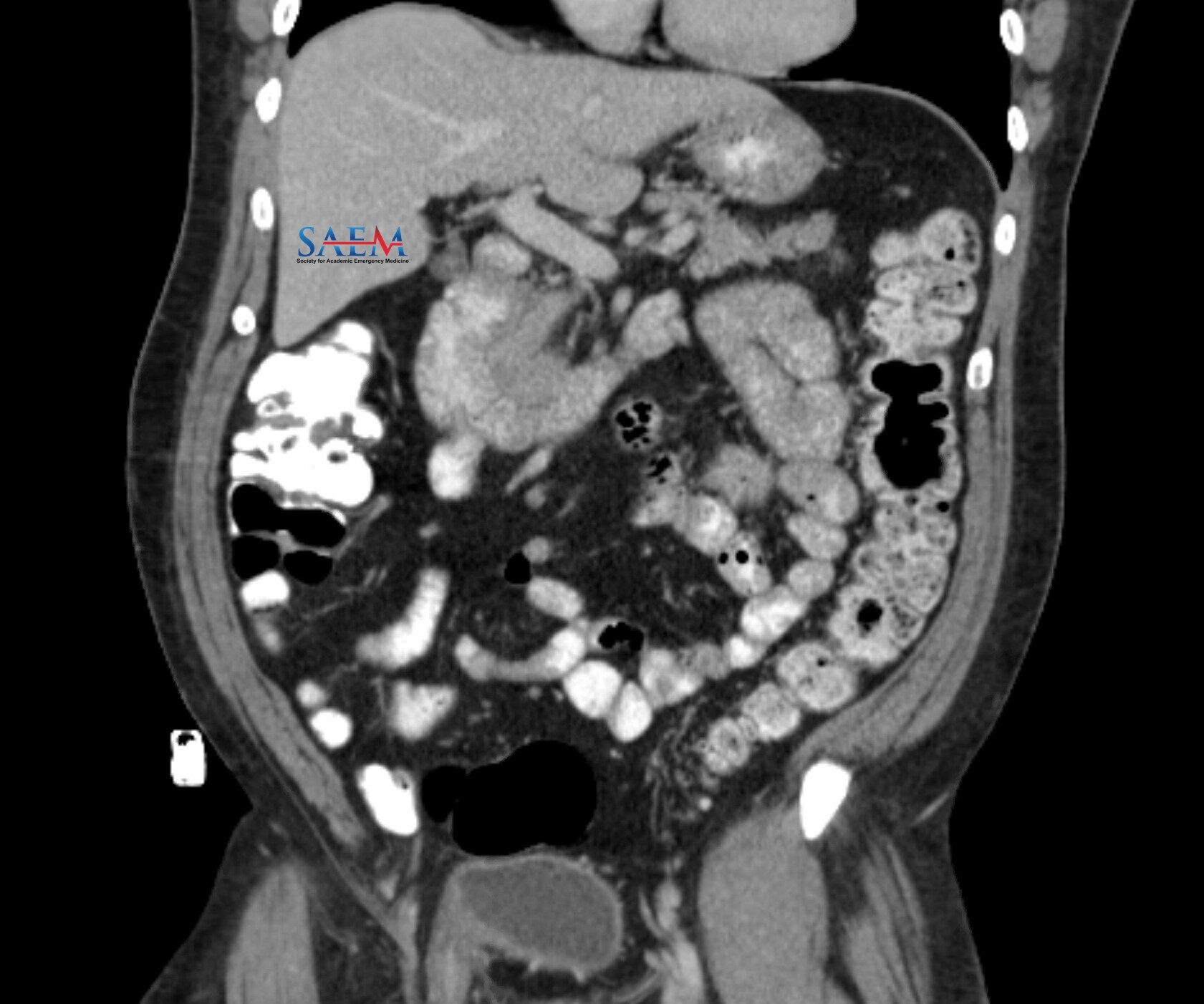
SAEM Clinical Images Series: A Rare Cause of Recurrent UTI
A 52-year-old male presents to the Emergency Department with a chief complaint of right lower abdominal pain with urinary frequency and urgency over the past week. The pain radiates from his right groin with 10/10 severity at times. He reports multiple diagnoses of urinary tract infections over the last year requiring oral antibiotics. He claims intermittent constipation, denies any trauma, and is a truck driver by trade. Vitals: T 97.7 °C; BP 138/75; HR 75; RR 16; O2 sat 96% General: WDWN obese male, A/O x4, in mild distress Abdomen: Soft, nondistended, [+]

ACMT Toxicology Visual Pearls: On the Mark
What potential terrorism agent could be treated with the pictured antidote? Anthrax Botulism Dioxin Ricin Soman [+]

Sofiya Diurba, MD
Department of Emergency Medicine
Carolinas Medical Center
Latest posts by Sofiya Diurba, MD (see all)
- ACMT Toxicology Visual Pearls: On the Mark - October [+]
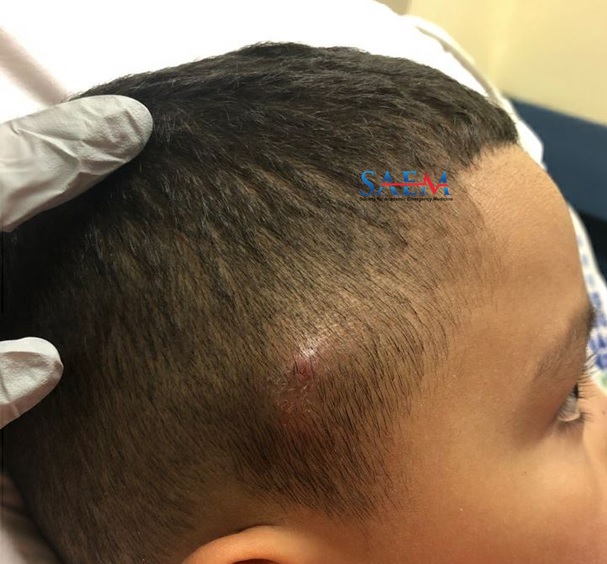
SAEM Clinical Images Series: Unusual Scalp Lesions
A 6-year-old male presented to the pediatric emergency department (PED) for scalp lesions. He was seen by his pediatrician 2 weeks prior and prescribed antibiotics and a delousing shampoo for suspected cellulitis versus lice infestation. Symptoms did not improve despite completion of treatment. An outpatient ultrasound was performed showing “multiple scalp echogenic nodular lesions measuring from 0.5 cm to 1.2 cm in the long axis diameter.” The following differential diagnosis was entertained: lymphadenitis, benign avascular mass, epidermal inclusion cyst, or pilomatricoma, and [+]

SAEM Clinical Images Series: Only a Flesh Wound
A 49-year-old male was triaged to the Fast Track area with complaints of an abrasion to the neck following an assault. The patient was attending a party with his family when "someone started shooting." The patient believes some stucco or stone fragment from a brick wall struck him in the neck during the initial incident, but his primary concern was for his more seriously wounded family members. He now presents requesting "Neosporin." His tetanus status is out of date. General: Well-appearing male in no distress Neck: Hemostatic wound to his left neck. [+]

ACMT Toxicology Visual Pearls: Mushroom Mishap
What well-known adverse reaction results from ingestion of the pictured mushroom? Acute hepatitis Disulfiram-like reaction with ethanol consumption Pneumonitis from inhalation of spores Seizures from glutamate agonist activity [Image from Canstockphoto] [+]

Kylee Brooks, MD
Department of Emergency Medicine
Carolinas Medical Center
Latest posts by Kylee Brooks, [+]

SAEM Clinical Images Series: Blue is Bad
66 year-old-male with a history of type 2 diabetes and hypertension presented as a transfer for rapid progression of lower extremity pain, swelling, and blue-purple discoloration of the entire limb with concern for a possible necrotizing infection. His symptoms began earlier in the day and progressed over just a few hours. He had no known thromboembolic risk factors. MSK: Swollen, tender, and blue/purple-colored right lower extremity Complete Blood Count (CBC): WBC 8.7; Hb 15; Hct 45; Plt 172 Glucose: 472 Severe venous thromboembolism (VTE), also known as Phlegmasia Cerulea Dolens, [+]

Director of Growth, Strategic Alliance Initiative, Center for Innovation and Digital Health
Massachusetts General Hospital;
Chief Scientific Officer, Conductscience.com
Latest posts by Shuhan He, MD (see all)
- The Discharge Severity Index: Early Research on ED Readmission Risk Assessment - August 14, 2025
- Suboxone and the Emergency Physician: Get Waivered Training - August 12, 2022
- A Tale of Two Epidemics: COVID-19 and the Opioid Crisis - April 23, 2020