



SAEM Clinical Images Series: Insidiously Contracted Hand
A 64-year-old Caucasian male with a history of alcohol use disorder and tobacco use disorder presents with painless bilateral hand contractures that have been worsening for the past several months. He denies any recent trauma, fever, chills, or decreased sensation. The patient works as a construction worker. Vitals: BP 143/83 ; HR 94; RR 18; T 98.6°F; O2 saturation 98% on room air Musculoskeletal: He has bilateral palmar contractures proximal to the fourth digits. No tenderness to palpation along digits. Passive extension of the digits is limited bilaterally but does not elicit [+]

SAEM Clinical Images Series: Contact Your Nearest Ophthalmologist
A 29-year-old female with a past medical history of migraine headaches presented to the emergency department (ED) for several hours of bilateral eye pain, redness, and decreased visual acuity. The patient is a contact lens wearer. The night prior to presentation at 18:00, the patient inserted her contacts that she had washed and soaked in a hydrogen peroxide (H2O2) cleaning solution. She removed the contacts five hours later at 23:00, at which time she noted her eyes to feel drier than normal but did not note significant pain with removal, significant trauma, or a partial [+]

SAEM Clinical Images Series: A Dangerous Cause of Abdominal Pain
A 65-year-old male presented with chest and abdominal pain for three weeks. He endorsed a poor appetite and a weight loss of 16 kilograms in the last month. He denied fever, vomiting, diarrhea, and tarry stools and described having his usual bowel movements. Vitals: BP 172/71; HR 127; T 35.9°C; O2 Sat 100% General: In acute distress Cardiovascular: Regular rate and rhythm; no murmur; bilateral upper extremity and lower extremity pulses palpable Gastrointestinal: Soft; generalized tenderness, no abdominal masses, palpable subcutaneous emphysema Complete blood count (CBC): WBC 31 x 10^3/mcl; [+]

SAEM Clinical Images Series: There’s a Stone Under My Tongue
A 44-year-old female presented to the emergency department with the complaint of a "stone under [her] tongue." She reported that the “stone” had been present and painless for two years. The day prior, she began experiencing pain at this site while brushing her teeth. She squeezed the area in an attempt to expel it, but this action only increased her pain. Vitals: BP 156/92; Pulse 80; Temp 98.4°F; Resp 14; SpO2 100% General: Sitting on chair, no acute distress HEENT: Localized swelling to the inferior lingual frenulum at Wharton’s duct with [+]

SAEM Clinical Images Series: A Painful Swollen Digit
A 50-year-old male with a history of polysubstance use disorder and poorly-controlled type 2 diabetes mellitus presents with left hand pain. One week ago, the patient sustained a macerating injury of the left distal middle digit. Since that time he has experienced worsening pain throughout the digit, now associated with diffuse swelling and discoloration. The patient also reports reduction in range [+]
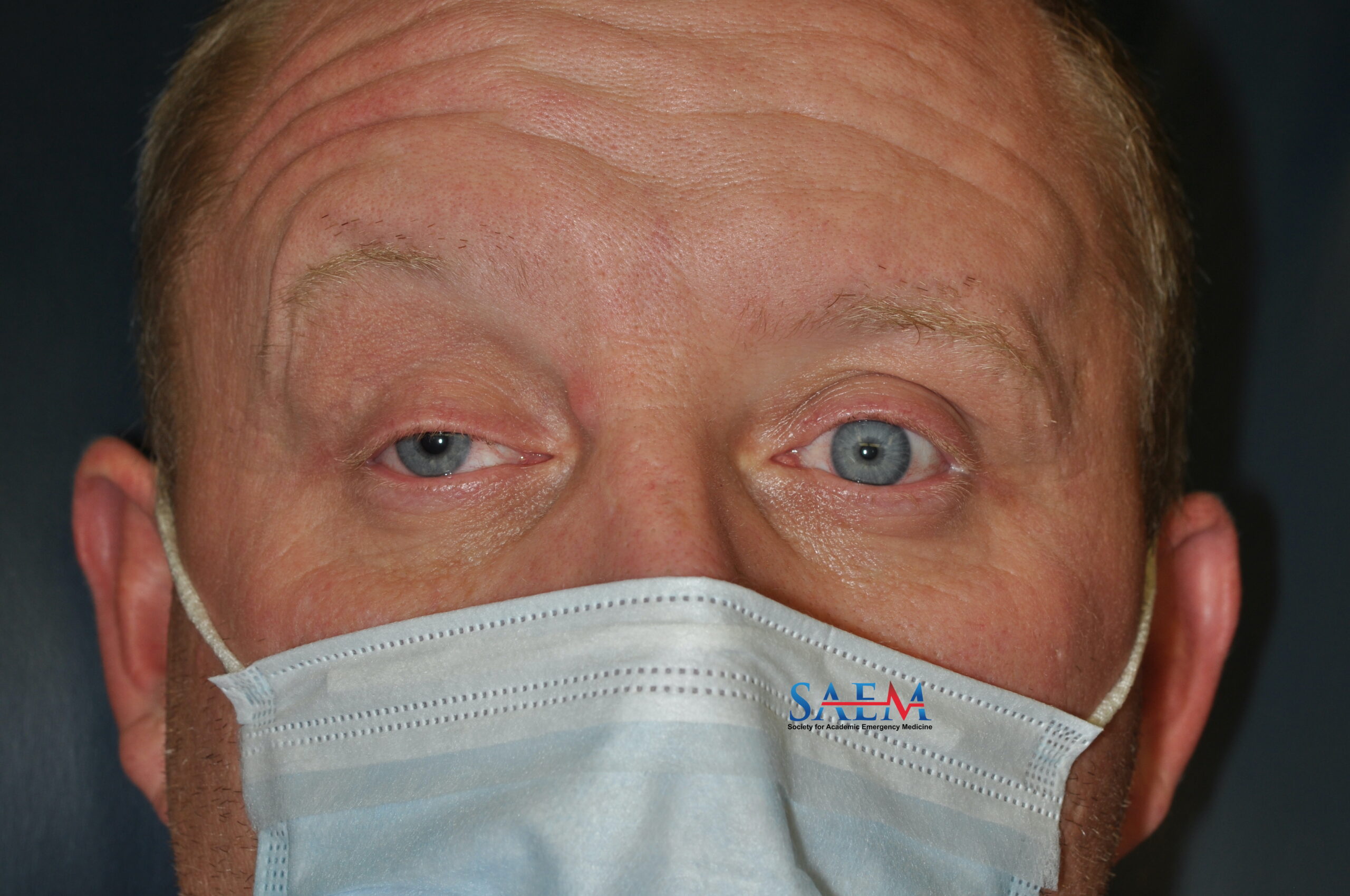
SAEM Clinical Images Series: A Man with Blurry Vision
A middle-aged man with a past medical history of hypertension and tobacco use disorder presented to the Emergency Department after evaluation by an ophthalmologist. He complained of ten days of a right-sided headache and three days of diplopia. He denied eye pain, pain with eye movements, photophobia, and vision loss. Vitals: Temp 98.4 °F (36.9 °C); BP 122/72; Pulse 90; Resp 16; SpO2 100% Neuro: Ptosis, “down and out” deviation and pupil dilation of [+]
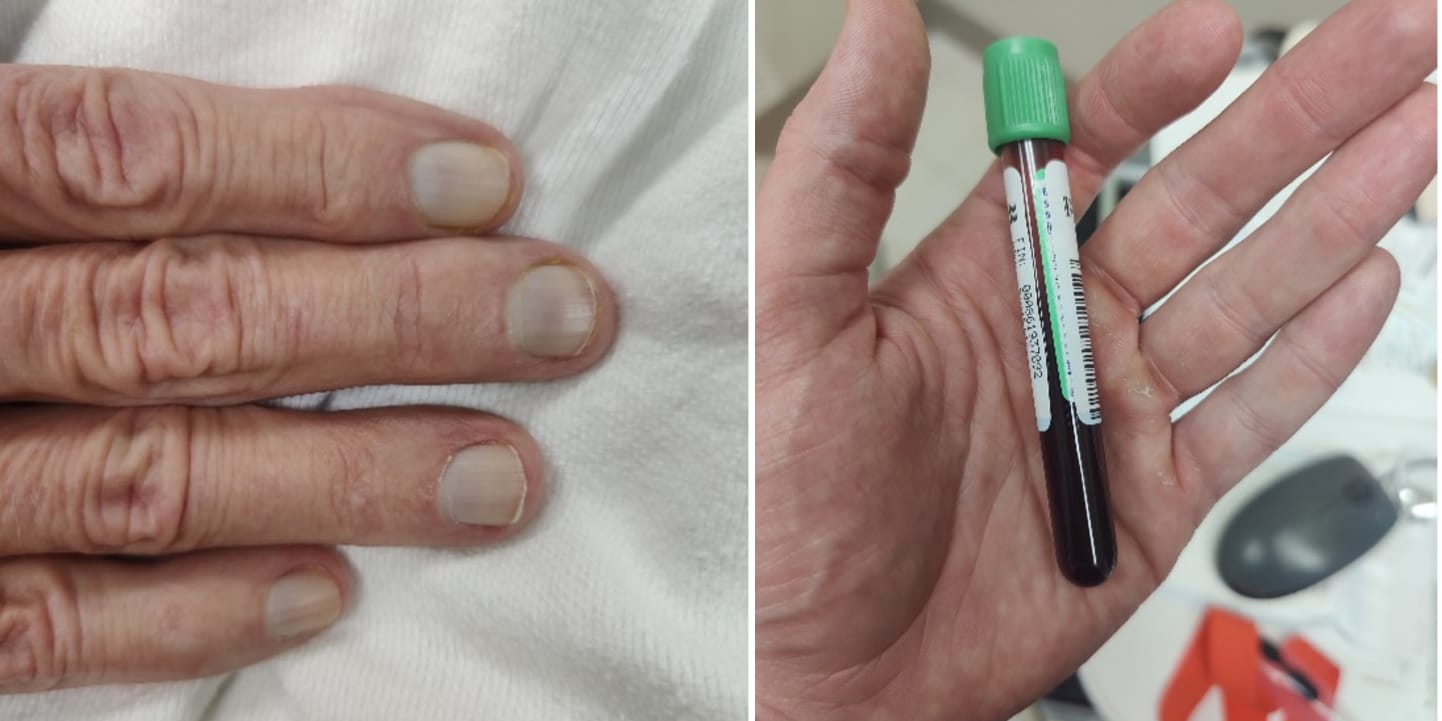
ACMT Toxicology Visual Pearl: Out of the Blue
Exposure to which of the following could produce the pictured results? Carbon monoxide Lead paint Morphine Oral analgesic gel [+]

Rafael Lima, MD
Indiana University School of Medicine
Latest posts by Rafael Lima, MD (see all)
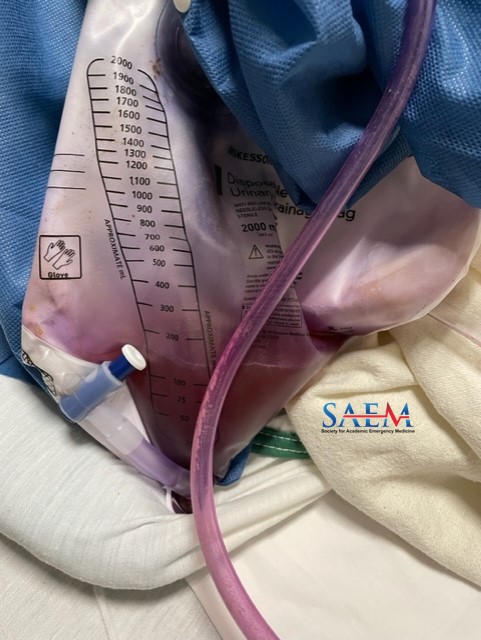
SAEM Clinical Images Series: The Color Purple
A 64-year-old female with a history of quadriplegia and bladder rupture secondary to a motor vehicle accident two years ago, complicated by chronic indwelling suprapubic foley, presents from her skilled nursing facility with fever, oliguria, tachycardia, low blood pressure, and a change in the color of her urine. Vitals: T 100.4°F; HR 126; BP 105/74; RR 24 General: Pleasant but mildly confused morbidly obese female smelling strongly of urine Genitourinary: Poorly maintained indwelling suprapubic catheter with purulence noted around the ostomy and purple urine in her foley tubing and bag Urinalysis (UA): [+]

PEM POCUS Series: Pediatric Lung Ultrasound
Read this tutorial on the use of point of care ultrasonography (POCUS) for pediatric lung ultrasound. Then test your skills on the ALiEMU course page to receive your PEM POCUS badge worth 2 hours of ALiEMU course credit. Take the ALiEMU PEM POCUS: Pediatric Lung Ultrasound Quiz Module Goals List indications for performing a pediatric lung point-of-care ultrasound (POCUS). Describe the technique for performing lung POCUS. Recognize anatomical landmarks and artifacts related to lung POCUS. Interpret signs of a consolidation, interstitial fluid, effusion, and pneumothorax on POCUS. Describe the limitations of lung POCUS. Child with [+]

SAEM Clinical Images Series: Back Yard Football Injury
A 10-year-old male with no past medical history presents to the Emergency Department (ED) by EMS for evaluation of an injury sustained while playing tackle football. The patient was forcibly hit by another child against a tree. He complains of sharp right shoulder and chest pain that worsens with movement of his right upper extremity and he arrives wearing a sling to immobilize the arm. Vitals: BP 123/86; HR 121; RR 25; T 37°C General: Alert and oriented, in moderate distress Cardiovascular: RRR without murmurs, rubs, or gallops, peripheral pulses 2+ [+]

Director of Growth, Strategic Alliance Initiative, Center for Innovation and Digital Health
Massachusetts General Hospital;
Chief Scientific Officer, Conductscience.com
Latest posts by Shuhan He, MD (see all)
- The Discharge Severity Index: Early Research on ED Readmission Risk Assessment - August 14, 2025
- Suboxone and the Emergency Physician: Get Waivered Training - August 12, 2022
- A Tale of Two Epidemics: COVID-19 and the Opioid Crisis - April 23, 2020