


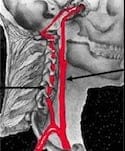
Paucis Verbis: Blunt cerebrovascular injuries
In the setting of blunt trauma, it is easily to overlook a patient's risk for blunt cerebrovascular injuries (BCVI). These are injuries to the carotid and vertebral arteries. Often they are asymptomatic with the initial injury, but the goal is to detect them before they develop a delayed stroke. Who are at risk for these injuries? What kind of imaging should I order to rule these injuries out? Do I really treat these patients with antithrombotic agents even in the setting of trauma to reduce the incidence of CVA? FYI: A simple seat-belt sign along the neck does not warrant [+]

An intern’s perspective: Doing well on your EM clerkship
It’s that time of year again. When medical students interested in EM are stressing over doing well on their EM rotation. Here’s a very insightful guest post from Dr. James Connolly, who is a new PGY-1 resident at Hahnemann Hospital in Philadelphia. I’ll write my personal top-10 list next week, from the perspective of a faculty member. Many MS4 interested in emergency medicine will be starting their EM Sub-I’s in the next few weeks and are naturally wondering what to expect, and how they can be successful, both in terms of getting a strong letter of recommendation, and all while still [+]
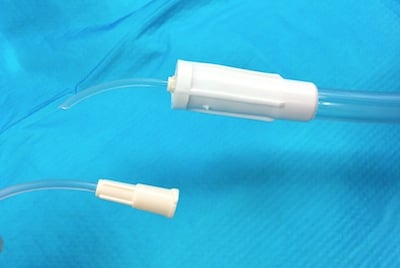
Trick of the Trade: A mini-suction device
You are doing a shift in the pediatric ED and you are evaluating a kid with a small bead in her ear. There are a ton different approaches you can use (eg. tissue adhesive glue on a q-tip stick). If the bead is in too deep, blindly trying to adhere the foreign body to the glue is a bit risky. Sometimes applying gentle irrigation might not be enough to wash out the bead. You want to avoid irrigation if you worry about a tympanic membrane rupture. [+]
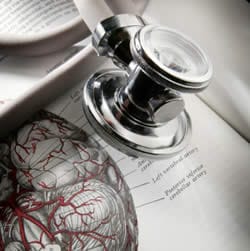
Article review: Carnegie’s vision for medical education
In 2010, the Carnegie Foundation for the Advancement of Teaching published recommendations for the future reform of medical education. This same Carnegie Foundation had also commissioned and published the landmark 1910 Flexner report 1 on medical education, exactly 100 hears prior. Here is a summary of the four major recommendations: [+]
![Shuhan [+]</p></body></html>](https://www.aliem.com/wp-content/uploads/2020/03/Shuhan_He_MD.jpg)

Paucis Verbis: Clostridium Difficile
I just finished taking the 2011 LLSA exam to remain eligible for recertification. The only good thing about this test is that it gives me interesting topics for my Paucis Verbis cards. Here's a card on a disease process that is becoming increasingly prevalent -- Clostridium difficile. This is a summary based on the 2010 guidelines by Society for Healthcare Epidemiology of America (SHEA) and the Infectious Diseases Society of America (IDSA). Because healthcare workers are often the culprit for transmitting C. difficile to other patients, be sure you wash your hands with soap and water really well. Wear gloves. Be aware [+]

Trick of the Trade: Cunningham maneuver for shoulder dislocation
We commonly see patients with shoulder dislocations in the Emergency Department. There are a myriad of approaches in relocating the joint, which includes scapular rotation, Snowbird, and Kocher maneuvers. I recently stumbled upon the Cunningham technique after hearing about it from Dr. Graham Walker (of MDCalc fame) on TheCentralLine.org. [+]

Article review: Professionalism in the ED through the eyes of medical students
Teaching professionalism in a formal curriculum is so much different than demonstrating professionalism in the Emergency Department. So much of what students and residents learn about professionalism are from observed behaviors of the attending physicians — that is, the hidden curriculum. In a qualitative study assessing medical student reflection essays during an EM clerkship, the authors (my friends Dr. Sally Santen and Dr. Robin Hemphill) found some startling results. The instructions to the medical students were to “think about an aspect of professionalism that has troubled you this month. Write a minimum of one half-page reflection describing what was concerning and how [+]
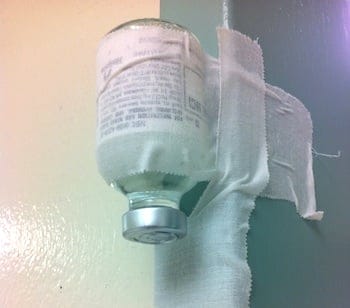
Trick of the Trade: I need more lidocaine but I have sterile gloves on!
How often has this happened to you — You are in the middle of a sterile procedure (chest tube, suturing, central venous line, lumbar puncture) and you realize that you need more lidocaine to provide better topical anesthesia. You don’t have any more in your kit and you are alone in the room with the patient. “Uh, can someone help me out there?” [+]
Simple rules to make your Powerpoint talk rock
I came across this great SlideShare set on some simple rules on slide design to make your Powerpoint-based talk great. Think of your favorite speakers (i.e. the Mattus and Weingarts) and inevitably part of the reason they are so great is because of their slide design. [+]

Article review: Inconvenient truths about effective teaching
At the CDEM meeting during the SAEM national meeting this past week, the keynote speaker (Dr. Charles Hatem from Harvard) mentioned a great editorial article called “Inconvenient Truths About Effective Clinical Teaching.” Here’s a summary of the opinion article from Lancet: [+]