PEM Pearls: Migraine Treatment for Pediatric EM Patients

migraine treatment for pediatric em patients © Can Stock Photo / SergiyNYou are working your evening shift at the pediatrics emergency department, and you walk into a darkened patient room with a distressed mother and her otherwise healthy 10-year old son who is curled in a ball, holding his head and crying. Her mother tells you that the around-the-clock ibuprofen has barely touched his 2-day headache.

After determining that your patient has no neurologic deficits and that this is most likely a primary headache, what can you do to break his symptoms?

(more…)

Trick of the Trade: Ear foreign body removal with modified suction setup

popcorn-kernelsA 5 year old boy comes in who has stuck a small unpopped popcorn kernel into each ear. My resident and I discuss  different methods to try to get it out including an ear curette, tissue glue, suction, and calling the ear-nose-throat (ENT) specialist. The ear curette won’t work to get around and the kernels are smooth and hard to grasp and might cause trauma with swelling or bleeding. We quickly excluded irrigation because the kernel might swell more. Another method considered was a drop of tissue adhesive onto a q-tip stick to adhere onto the foreign body (FB) for extraction. We were a little leary of this however for fear of gluing the FB to the ear canal and suffering the wrath of ENT.

(more…)

By |2020-03-01T18:14:04-08:00Aug 25, 2015|ENT, Tricks of the Trade|

Ultrasound For The Win! Case – 76M with Right-Sided Vision Loss #US4TW

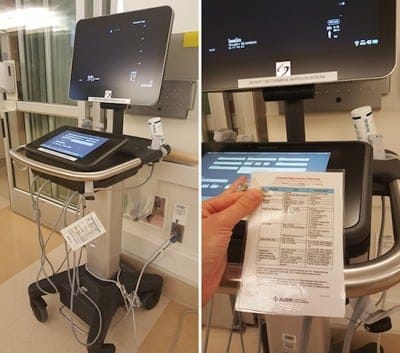
Welcome to another ultrasound-based case, part of the “Ultrasound For The Win!” (#US4TW) Case Series. In this case series, we focus on a real clinical case where bedside ultrasound changed the management or aided in the diagnosis. In this case, a 76-year-old man presents with sudden-onset right-sided vision loss.

(more…)

Utility of Pre-4-Hour Acetaminophen Levels in Acute Overdose

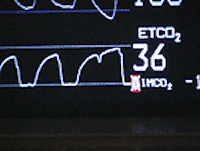
Utility of Pre-4-Hour Acetaminophen LevelsCase Presentation: A 37 y/o woman presents to the ED with altered mental status. The vital signs are within normal limits. The history is provided by a friend who states that the patient was normal 2 hours ago when they were together. When she returned home, she found the patient in this state next to an empty bottle of acetaminophen (APAP) and 5 empty beer cans. A recent loss in the family has led to some depression in the last few weeks. A battery of labs are sent off including a ‘tox panel’ consisting of serum EtOH, salicylate, and APAP levels. The presumed time of ingestion is 2 hours prior to presentation.

(more…)

60-Second Soapbox: New podcast series featuring Drs. Lin, Riddell, Shaikh

aliem_soapboxWe are excited to announce our new podcast series, 60-Second Soapbox! Each episode, one lucky individual gets exactly 1 whole minute to present their rant-of-choice to the world. Any topic is on the table – clinical, academic, economic, or whatever else may interest an EM-centric audience. Don’t worry if your are microphone-shy. We will carefully remix your audio to add an extra splash of drama and excitement. Even more exciting, participants get to challenge 3 of their peers to stand on a soapbox of their own!

(more…)

AIR Series: Respiratory Part 2 (2015)

We found an enormous amount of respiratory content and thus have divided the respiratory module into two modules. While the first module focused on general respiratory issues, this second module is focused on airway and pulmonary embolism. Below we have listed our selection of the 15 highest quality blog posts within the past 12 months (current as of March 2015) related to respiratory, curated and approved for residency training by the AIR Series Board. In this module we have 4 AIRs and 11 Honorable Mentions. We strive for comprehensiveness by selecting from a broad spectrum of blogs from the top 50 listing per the Social Media Index.

(more…)

Assessing and Managing Delirium in Older Adults

© Can Stock Photo / focalpoint delirium in older adultsEvery day in the Emergency Department we see older adults with dementia who have developed delirium and are brought in because of worsening agitation, combativeness, or confusion. In order to care for them, we have to consider what the underlying cause of their agitation may be, but we also have to protect the patient and staff in case of violent outbursts. Older adults experience a phenomenon termed ‘homeostenosis’ in which their physiologic reserve and the degree to which they can compensate for stressors is narrowed, putting them at risk for delirium. This post will outline ways to prevent and de-escalate agitation in a patient with delirium, and how to treat it pharmacologically in a cautious manner to minimize side effects.

(more…)

By |2024-04-25T11:36:22-07:00Jul 27, 2015|Geriatrics, Neurology|
Go to Top