



Diagnose on Sight: Swollen Upper Extremity in a Patient with End Stage Renal Disease
Case: A 45 year old female with end-stage renal disease presents with 2 days of worsening pain, swelling, and color change of her left upper extremity. The symptoms began after her left arm arteriovenous (AV) fistula was accessed for hemodialysis. The skin is tense and a bruit is present. What is your diagnosis for this swollen upper extremity? Click on the image for a larger view. [+]

AIR Series: HEENT Module 2014
Welcome to the second ALiEM Approved Instructional Resources (AIR) Module! In an effort to reward our readers for the reading and learning they are already doing online, we have created an Individual Interactive Instruction (III) opportunity utilizing FOAM resources for US Emergency Medicine residents. For each module, the board curates and scores a list of blogs and podcasts. A quiz is available to complete after each module to obtain residency conference credit. Once completed, your name and institution will be logged into our private Google Drive database, which participating residency program directors can access to provide proof of completion. [+]
ADJUST-PE Study: ALiEM-Annals of EM Journal Club
We are very excited this month to bring you our fourth ALiEM-Annals of EM Global Journal Club on the use of age-adjusted D-dimer levels to help exclude the diagnosis of pulmonary embolism (PE). We hope you will participate in an online discussion of the four posted questions below from now until August 29th. Respond by commenting below or tweeting (#ALiEMJC). Mark your calendars: On Thursday, August 28th at 16:30 CST (17:30 EST), we will be hosting a 30-minute live Google Hangout with Drs. Jeff Kline and Jonathan Kirschner, the authors of the Annals of Emergency Medicine Journal Club for the ADJUST-PE [+]
Inviting contributors to ALiEM: An open peer-reviewed content submission process
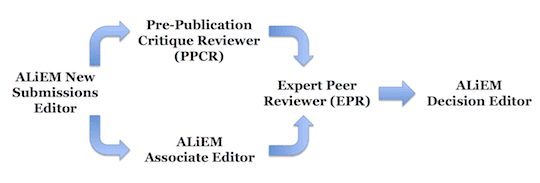
Over the last several years, ALiEM has recruited a team of regular contributors, each with their own individual passions within the entire breadth of Emergency Medicine. ALiEM has provided these individuals with a global platform capable of carrying their message to a target audience of thousands of regular subscribers. Furthermore, the evolution of a rigorous pre-publication Expert Peer Review process has helped ensure that the content is especially polished and scientifically accurate. Today marks a new day. The overwhelming success of the website and editorial process has led us to what we feel is the next step for this academic blog [+]

Diagnose on Sight: Palmar Rash
Case: A 41 year old male with one week of non-pruritic palmar rash that started on his trunk and spread to his hands. He has no history of travel, fever, joint pains, or medication use. What is your diagnosis for this palmar rash? Click on the image for a larger view. [+]
Trick of the Trade: V-to-Y flap laceration repair for tension wounds
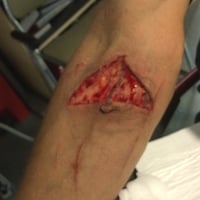
You see a patient with a large V-shaped laceration under tension requiring suture repair. Resist the temptation to simply pull the edges together and close the laceration with simple interrupted or running sutures. Excessive tension on a flap edge during the healing process can compromise its blood supply. This causes ischemia to the healing tissue, which in turn makes that flap edge more likely to dehisce, necrose, and become infected. [+]

The Opioid Prescription Epidemic: Annals of EM Resident Perspectives article
Misuse of prescription opioids is one of the defining health problems of our generation. The dramatic rise of opioid analgesic prescriptions in the US and Canada has been well documented, and opioids represent the most common cause of fatal prescription overdoses. On every shift, in every emergency department in the country, physicians struggle with the concerns of patients presenting with common pain complaints. Seeking to manage their patients’ symptoms in the face of dramatically rising prescription opioid misuse and fatal overdose, emergency physicians are challenged to distinguish those who are simply seeking pain relief, those who are seeking opioid prescriptions [+]

Management of Iron Toxicity
Iron toxicity is determined by the amount of elemental iron (Fe) ingested. Examples of Fe formulations and the amount of elemental Fe contained in each formulation are listed in the table below (adapted from 1). [+]

David Manthey, MD
Latest posts by [+]
SimLIFE-EM Challenge: Add to the conversation
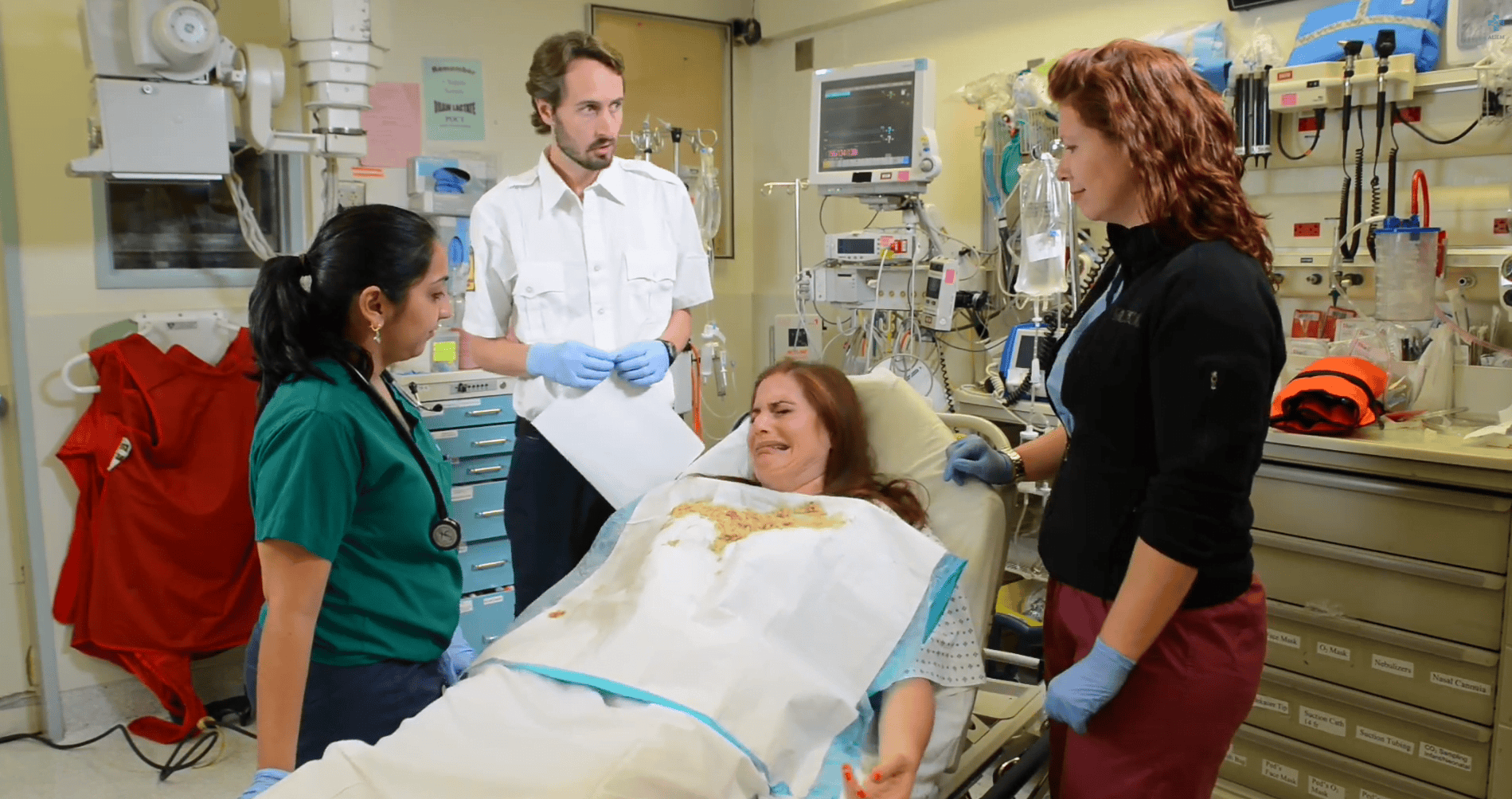
Debriefings in medical simulation are meant to be the bow on top of the gift that is medical simulation. It is the ultimate delicious dessert, served after a grueling dinner course. All analogies aside, debriefings are meant to drive home the teaching points, to gain a deeper understanding of medical resuscitation as a group, and create mental frameworks of the approach to various patients. But this is often easier described than actually done. We here at ALiEM paired with Dr. Henry Curtis to come up with a creative way of developing debriefing skills and gain deeper understanding of mental frameworks. [+]
Child Whisperer Series: After the Pediatric Code Blue
“We need to debrief” said the nurse manager after the medical team walked out of the critical care room after pronouncing a child who died after a traumatic accident. The social worker pointed at me (I am a Child Life Specialist) and looked at her and said “It’s our code blue now. We have to wait. We have a job to do”. Which was her way of saying we still had a lot of work to do with the family. At that point I walked in a room with the social worker and devastated parents, where the patient’s brother waited. He looked at me [+]

Director of Growth, Strategic Alliance Initiative, Center for Innovation and Digital Health
Massachusetts General Hospital;
Chief Scientific Officer, Conductscience.com
Latest posts by Shuhan He, MD (see all)
- The Discharge Severity Index: Early Research on ED Readmission Risk Assessment - August 14, 2025
- Suboxone and the Emergency Physician: Get Waivered Training - August 12, 2022
- A Tale of Two Epidemics: COVID-19 and the Opioid Crisis - April 23, 2020