



Diagnose on Sight: Bilateral Leg Rash
Case: A pre-teen girl, living in central California, recently started on fluconazole, now presenting with a bilateral leg rash. What is your diagnosis? Click on the image for a larger view. [+]

Director of Growth, Strategic Alliance Initiative, Center for Innovation [+]

Sternoclavicular Joint Dislocations: Diagnosis and Treatment
A 16-year-old football player presents to the emergency department directly from a game. He was tackled, falling onto his right shoulder. The patient is complaining of right-sided chest pain. On exam, there is tenderness over the right sternoclavicular joint (SCJ) with a prominent medial clavicle. Range of motion is limited in the right arm. What diagnostic studies need to be performed? What treatment is warranted in the emergency department? [+]

AIR Series: Infectious Disease, Hematology, Oncology 2014
Welcome to the first ALiEM Approved Instructional Resources (AIR) Module! In an effort to reward our readers for the reading and learning they are already doing online, we have created an Individual Interactive Instruction (III) opportunity utilizing FOAM resources for US Emergency Medicine residents. For each module, the board curates and scores a list of blogs and podcasts. A quiz is available to complete after each module to obtain residency conference credit. Once completed, your name and institution will be logged into our private Google Drive database, which participating residency program directors can access to provide access. [+]
New AIR Series: ALiEM Approved Instructional Resources
On behalf of the AIR Executive Board, we are excited to introduce the Approved Instructional Resources (AIR) series! The AIR series was conceived to provide a credible method by which an U.S. Emergency Medicine resident can receive academic credit for using Free Open Access Meducation (FOAM) resources. The Executive Board will release a list of high-quality FOAM educational posts and podcasts specially selected by our Executive Board, in parallel with the CORD residency training curriculum. We will have an accompanying quiz for each list and track who completes it. EM residents who complete the quiz can hopefully receive credit for Individualized Interactive Instruction (III) from their EM residency [+]

PV Card: Pediatric Ingestion Dose Thresholds for ED Referral
Clinical Toxicology has published guidelines for out-of-hospital management of 16 distinct overdoses and their dose thresholds, above which, pediatric patients should be referred to the Emergency Department for evaluation. Clinical Toxicology is the official journal of the American Academy of Clinical Toxicology (AACT, @AACTinfo), the American Association of Poison Control Centers (AAPCC, @AAPCC), and the European Association of Poisons Centres and Clinical Toxicologists (EAPCCT). There are two caveats to be aware of regarding these guidelines. They were developed between 2005 and 2007. New medications have been approved since that time and there may be more recent data available. As with any poisoning, dose is [+]

Intraosseous Rapid Sequence Intubation
Intravenous (IV) rapid sequence intubation (RSI) is by most considered the gold standard practice for securing an airway in the critically ill. There are, however, scenarios where it may not be possible to get rapid IV access in a timely manner (i.e. severe cutaneous burns, hemorrhagic shock, IV drug users, and/or the morbidly obese). It has been reported that intraosseous (IO) drug administration has similar pharmacokinetics to IV administration, but there have only been a handful of cases reported using the IO route for RSI. In this post we will discuss intraosseous rapid sequence intubation and if it is a feasible [+]

Anxiolytics and Hypnotics: Are They Doing Harm?
A patient presents to the emergency department complaining of increasing insomnia due to anxiety. She states that she is not actively suicidal nor homicidal but she has trouble “turning off her brain” at night in order to sleep and her insomnia is worsening her anxiety. She has a history of morbid obesity and smokes 1 pack of cigarettes per day. In order to help you consider writing her a prescription for 5 mg of zolpidem as you presume it to be a benign way to deal with her current sleep disorder. But what does the evidence say about these drugs [+]
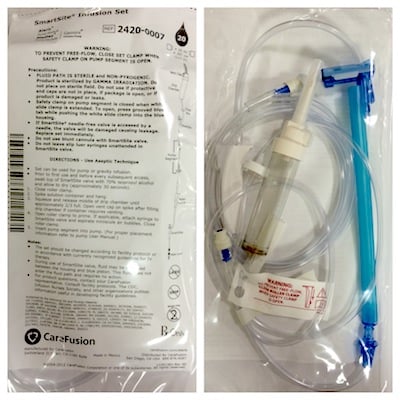
tPA Administration: Don’t Forget the Leftover Volume in the Pump Tubing
Whether alteplase (tPA) is given for ischemic stroke, pulmonary embolism, or STEMI, there is an important practical issue to be aware of during administration. Dr. Charles Bruen (@resusreview) published a great step-by-step pictorial tPA Mixing Tutorial. Once the tPA is mixed, it will invariably be infused via a smart pump through its corresponding tubing. At my institution we use Alaris® CareFusion smart pumps, through the principle applies irrespective of which brand pump is used. [+]

PV Card: Local anesthetic toxicity calculations
Local anesthetics (LAs) are widely employed to achieve tissue infiltration, peripheral and regional anesthesia, and neuraxial blockades. Despite their well-established toxic dose limits, these agents continue to pose a substantial risk of morbidity and mortality due to local anesthetic toxicity and overdose. For example, LAs and epinephrine account for a large proportion of medication errors resulting in adverse patient outcomes due to drug dosing miscalculations or errors converting between units. Dosage calculations vary by patient weight as well as by pharmacokinetics and pharmacodynamics of individual LA formulations. Further, non-standard units, additives (epinephrine), and varying concentrations among LAs complicate correct dosage [+]

AC Joint Separations: Overview of diagnosis and treatment
Separation of the acromioclavicular (AC) joint is a common injury encountered in the emergency department. Keys to optimal outcome and return of function in these patients include knowledge of injury mechanism, diagnosis and classification, and initial treatment. [+]
Director of Growth, Strategic Alliance Initiative, Center for Innovation and Digital Health
Massachusetts General Hospital;
Chief Scientific Officer, Conductscience.com
Latest posts by Shuhan He, MD (see all)
- The Discharge Severity Index: Early Research on ED Readmission Risk Assessment - August 14, 2025
- Suboxone and the Emergency Physician: Get Waivered Training - August 12, 2022
- A Tale of Two Epidemics: COVID-19 and the Opioid Crisis - April 23, 2020