


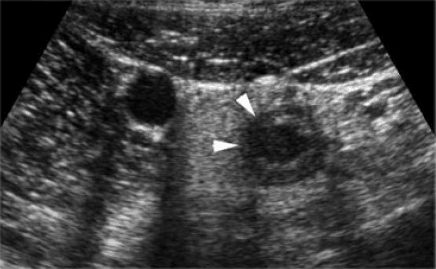
PEM Pearls: The nonvisualized appendix quandary on ultrasound
A 10-year old girl presents with progressively worsening right lower quadrant pain for the last 2 days. She reports having chills and feeling warm. Her review of systems is negative for nausea, vomiting, diarrhea, or urinary symptoms. Her abdominal exam is unremarkable except for some diffuse, mild tenderness with deep palpation in bilateral lower quadrants. Labs: WBC 9 x 10^9/L. Because of radiation exposure concerns, you order an abdominal ultrasound as the initial imaging modality to evaluate for appendicitis. The radiologist's reading was: "Unable to visualize the appendix." Now, what do you do? Appendicitis background Appendicitis is one of the [+]
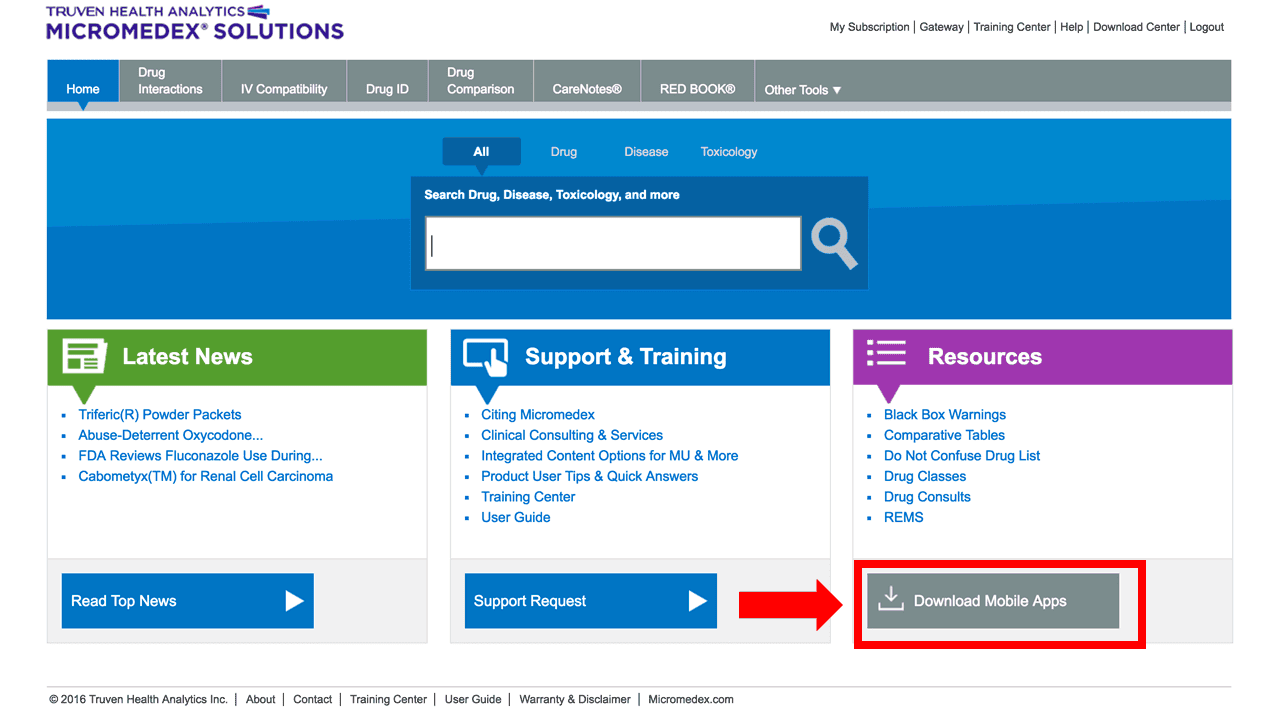
Trick-of-the-Trade: IV Compatibility Information at Your Fingertips
We often have less than optimal IV access to administer fluids, blood products, and medications in sick ED patients. If more than one medication needs to be infused in the same line, how do we know if they are compatible? The gold standard for checking IV compatibility is Trissel’s Stability of Compounded Formulations. 1 But a textbook doesn’t help us in critical situations. Is there a better way? [+]
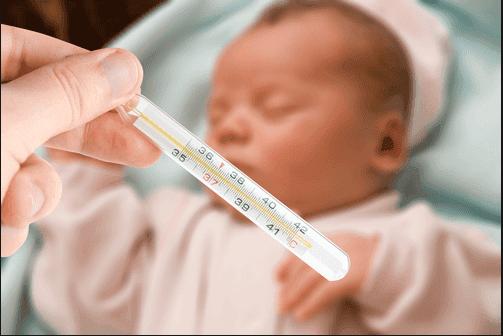
PEM Pearls: Prolonged Fever in Pediatric Patients – When should you worry?
Febrile pediatric patients are ubiquitous in emergency departments (ED) around the country. Parents agonize over the presence, height, and persistence of fever, despite the energy we invest in attempting to reassure them and minimize ‘fever phobia’. But when should we, as providers, also be worried? Very often in pediatric patients we are trying to distinguish self-limited viral infections from potentially harmful bacterial ones. In ill-appearing patients, it’s easy. We treat the patient aggressively as if their symptoms were attributable to a bacterial infection. The proper approach is more opaque with the relatively well-appearing febrile child. How do we pick out [+]

Trick of the Trade: Ultrasound for Pedal Pulse Identification and ABI
The Problem: A patient is rolled in to your ED by EMS with extremity trauma. You’re rightfully concerned about possible vascular injury to an upper or lower extremity, but you can’t palpate a dorsalis pedis (DP) or posterior tibialis (PT) pulse! You spend minutes, whisking the doppler probe, attempting to hear a waveform in a busy ED. Unfortunately you can’t seem to hear the “whoosh,” making accurate it nearly impossible for you to measure ankle-brachial indices (ABI). 1–3 [+]
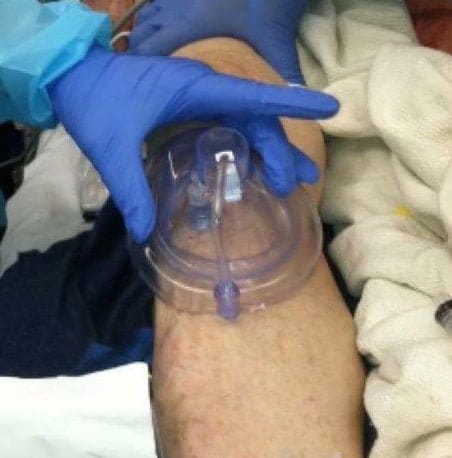
Trick of the Trade: Securing the intraosseous needle
So much attention is appropriately focused on the anatomy and technique for intraosseous needle placement. In contrast, very little attention is paid to securing the needle. Often this involves a make-shift setup which involves gauze, wraps, and/or tape. This becomes especially important in the prehospital setting where these can be easily dislodged. The following trick stems from a Twitter discussion in 2015 amongst prehospital providers, lamenting this fact. [+]
PEM Pearls: Hydrocortisone stress-dosing in adrenal insufficiency for children
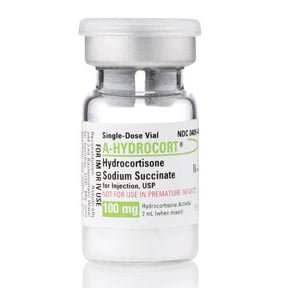
During your shifts in the pediatric ED, you may encounter a few patients with adrenal insufficiency or adrenal crisis. Some of the most common causes include those patients with Addison disease, pituitary hypothalamic pathology, and those patients on chronic steroids. When these patients get sick or sustain trauma, it is important to consider giving them a stress dose of hydrocortisone. Patients in adrenal insufficiency or crisis can present with dehydration, weakness, nausea, vomiting, confusion, lethargy, and severe hypotension refractory to vasopressors. 1–3 [+]

Synthetic cannabinoid use reaches new heights: K2 is not just a mountain on the China-Pakistan boarder
You are working a shift in the emergency department, and you hear the ambulance sirens. EMS is bringing you two patients, friends from a nearby shelter. Per report, the two men were “smoking drugs” together outside of the shelter. Bystanders noted that the 29-year-old man became increasingly agitated, shouting, banging on the door, and threatening his other shelter mates, while the other, a 50-year-old man, laid down on the sidewalk. EMS also reports picking up these patients in an area known for high “K2” use. [+]
Did the Affordable Care Act actually reduce ED visits as politicians promised?
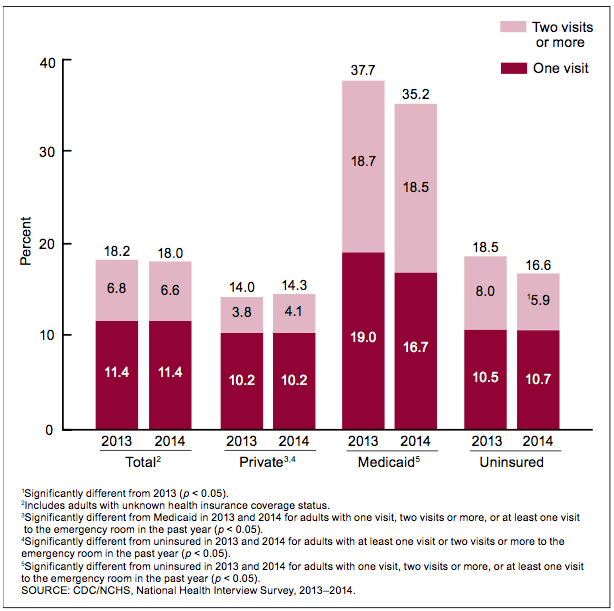
The Affordable Care Act (ACA) was supposed to expand coverage to the uninsured and many politicians claimed this would result in lower use of “expensive emergency rooms” for the treatment of patients’ acute complaints. Ignore, for the moment, the controversy about whether or not the emergency department (ED) is an expensive or appropriate place for patients to seek care. A new survey [PDF] from the Center for Disease Control and Prevention (CDC), asked the question: Did the ACA actually reduce ED visits as politicians promised?1 [+]
Ultrasound For the Win! Case – 43-year-old Man with Syncope #US4TW
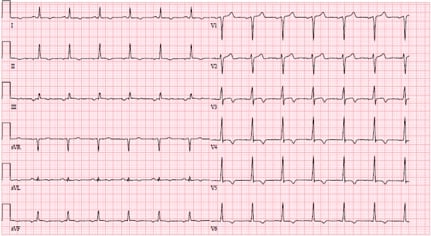
Welcome to another ultrasound-based case, part of the “Ultrasound For The Win!” (#US4TW) Case Series. In this peer-reviewed case series, we focus on real clinical cases where bedside ultrasound changed management or aided in diagnoses. In this case, a 43-year-old man presents to the Emergency Department after a syncopal episode. [+]

Peter Reardon, MD

AIR Pro Series: Critical Care, Part 1 (2016)
Below we have listed our selection of the 12 highest quality blog posts related to 5 advanced level questions on critical care topics posed, curated, and approved for residency training by the AIR-Pro Series Board. The blogs relate to the following questions: Ultrasound fluid assessment Ultrasound in critical care Vasopressors for critical care patients Peripheral intravenous vasopressor administration Extracorporeal membrane oxygenation basics In this module, we have 8 AIR-Pro’s and 4 honorable mentions. To strive for comprehensiveness, we selected from a broad spectrum of blogs identified through FOAMSearch.net. [+]

Director of Growth, Strategic Alliance Initiative, Center for Innovation and Digital Health
Massachusetts General Hospital;
Chief Scientific Officer, Conductscience.com
Latest posts by Shuhan He, MD (see all)
- The Discharge Severity Index: Early Research on ED Readmission Risk Assessment - August 14, 2025
- Suboxone and the Emergency Physician: Get Waivered Training - August 12, 2022
- A Tale of Two Epidemics: COVID-19 and the Opioid Crisis - April 23, 2020