



AIR Series: Orthopedics Lower Extremity Module (2016)
Welcome to the Orthopedics Lower Extremity Module! After carefully reviewing all relevant posts from the top 50 sites of the Social Media Index the ALiEM AIR Team is proud to present the highest quality orthopedic lower extremity content. Below we have listed our selection of the 3 highest quality blog posts within the past 12 months (as of March 2016) related to orthopedic lower extremity emergencies, curated and approved for residency training by the AIR Series Board. More specifically in this module, we identified 1 AIRs and 2 Honorable Mentions. We recommend programs give 1 hour (20 minutes per article) of III [+]

Lumbar Puncture on an Anticoagulated Patient in the Emergency Department: Is it safe?
The lumbar puncture (LP) procedure is commonly performed in the Emergency Department (ED). While minor complications of LP such as post-procedure headache or back pain occur somewhat regularly, significant complications such as post-procedural spinal hematomas, are rare.1 Despite their low incidence, these spinal hematomas are associated with a significant amount of morbidity for the patient and increased medicolegal risk for the provider. [+]


Ultrasound For The Win! – 63M with an Erythematous Abdomen #US4TW
Welcome to another ultrasound-based case, part of the “Ultrasound For The Win!” (#US4TW) Case Series. In this case series, we focus on a real clinical case where bedside ultrasound changed the management or aided in the diagnosis. In this case, a 63-year-old man presents with a painful, warm, and erythematous area of his abdomen. [+]
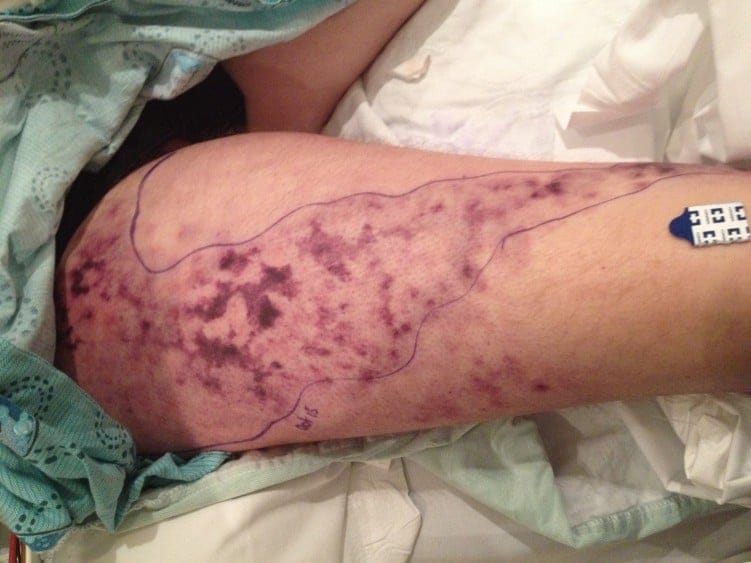
Diagnose on Sight: Swollen Leg
Case: A 58 year-old female presents with a one-day history of worsening right lower extremity pain and swelling, and an acute onset of dyspnea. Her past medical history consists of stage IV renal cell carcinoma diagnosed six months previously. Triage vitals are remarkable for a heart rate of 120 beats per minute and a blood pressure of 68/48 mmHg. What is the diagnosis? [+]
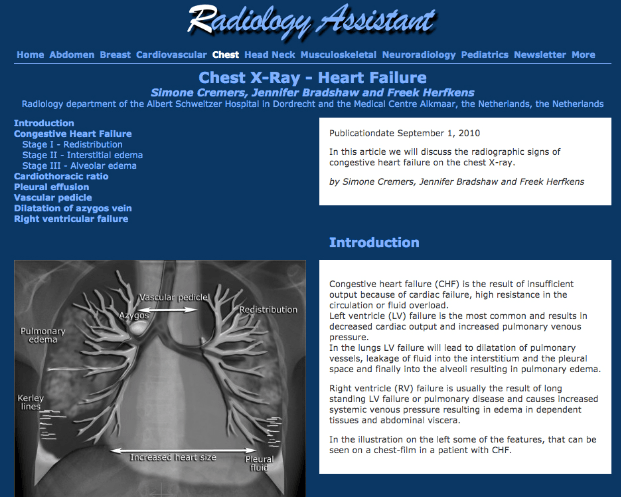
Top 5 FOAM Radiology Resources: ALiEM Chief Resident Incubator Recommendations
There is no shortage of free open access medical education (FOAM) resources available to the current emergency medicine (EM) learner. It seems that no matter what the concept, FOAM has it covered. And radiology is no different. However, with a specialty as vast as radiology, finding educational material pertinent to the emergency practitioner can be overwhelming. The 2016-2017 ALiEM Chief Resident (CRincubator) class also encountered this when attempting to create an organized FOAM radiology curriculum for EM residents. To tackle this challenge, the chief residents have brought together the best online resources to help EM practitioners gain expertise in the field [+]
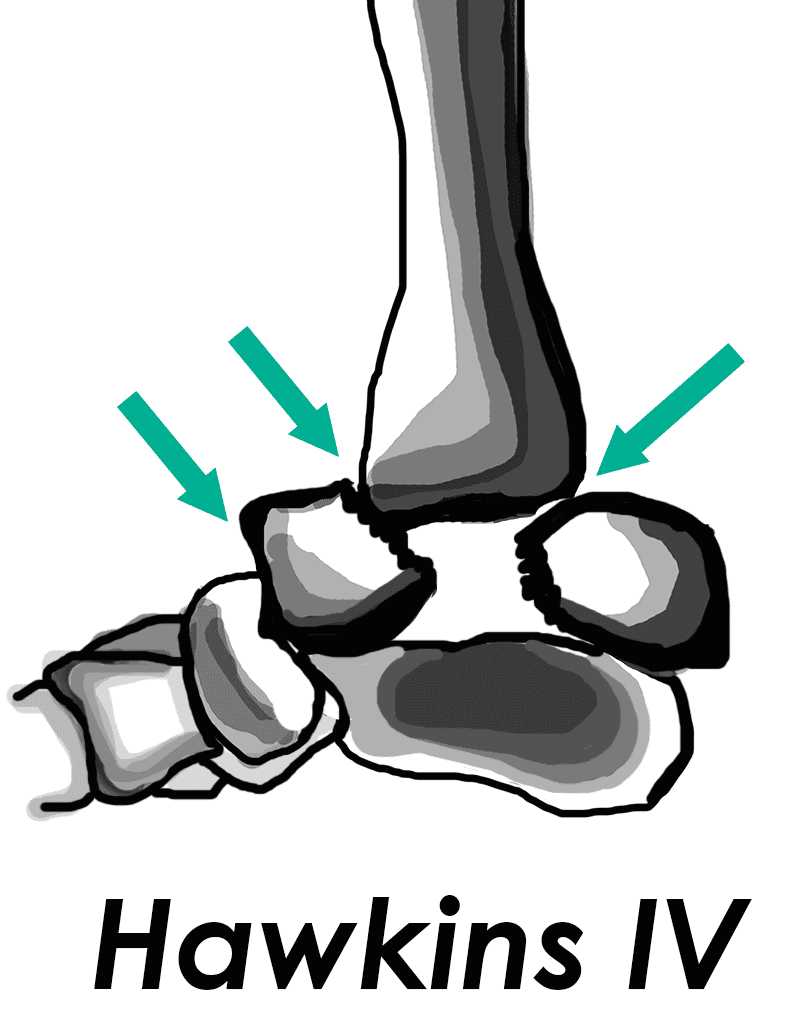
PV Card: Ankle and Hindfoot Fractures | Quick Reference Guide
Orthopedic fractures and injuries are commonly managed in the emergency department. Often a quick bedside reference card is needed to remind the clinician about the acute management and follow-up instructions. Thanks to the efforts of a 2015-16 ALiEM Chief Resident Incubator team, we are pleased to announce the first of these reference cards. Ankle and hindfoot fractures covered include ankle malleolar fractures, talus, and calcaneus fractures. These cards were expert reviewed by Dr. Scott Sherman, co-editor of the Emergency Orthopedics textbook and illustrations were created by Dr. Mary Haas. [+]

5 Tips for Managing Pain in Older Adults
Pain is the most common reason people seek care in Emergency Departments. In addition to diagnosing the cause of the pain, a major goal of emergency physicians (EPs) is to relieve pain. However, medications that treat pain can have their own set of problems and side effects. The risks of treatment are particularly pronounced in older adults, who are often more sensitive to the sedating effects of medications, and are more prone to side effects such as renal failure. EPs frequently have to find the balance between controlling pain and preventing side effects. Untreated pain has large personal, emotional, and [+]

PEM Pearls: This may hurt! How to manage pediatric anxiety in the ED
Pain and anxiety in the emergency department (ED) are two of the most common things we see in children. Pediatric patients, whether first time visitors or those with chronic illnesses, can exhibit marked anxiety and fear when in the ED setting. Child development, parenting styles and prior medical experiences will guide their reactions in these cases. Practitioners must have a unique set of tools to work with these children and understand the optimal methods for providing care, while decreasing some of these normal reactions to a stressful environment. The most important part of treating anxiety and fear in children is recognizing [+]

Managing migraine headaches in complicated patients
Case Vignette A 42-year-old female presents at 10 pm with a throbbing right frontal headache associated with nausea, vomiting, photophobia, and phonophobia. The headache is severe, rated as “10” on a 0 to 10 triage pain scale. The headache began gradually while the patient was at work at 2 pm. Since 2 pm, she has taken 2 tablets of naproxen 500 mg and 2 tablets of sumatriptan 100 mg without relief. The patient has a diagnosis of migraine without aura. She reports 12 attacks per month. The headache is similar to her previous migraine headaches. She is forced to present to [+]

Trick of the Trade: Pre-Charge the Defibrillator
In cardiac arrest care it is well accepted that time to defibrillation is closely correlated with survival and outcome.1 There has also been a lot of focus over the years on limiting interruptions in chest compressions during CPR. In fact, this concept has become a major focus of the current AHA Guidelines. Why? Because we know interruptions are bad.2,3 One particular aspect of CPR that has gotten a lot of attention in this regard is the peri-shock period. It has been well established that longer pre- and peri-shock pauses are independently associated with decreased chance of survival.4,5 Can we do better to [+]

Director of Growth, Strategic Alliance Initiative, Center for Innovation and Digital Health
Massachusetts General Hospital;
Chief Scientific Officer, Conductscience.com
Latest posts by Shuhan He, MD (see all)
- The Discharge Severity Index: Early Research on ED Readmission Risk Assessment - August 14, 2025
- Suboxone and the Emergency Physician: Get Waivered Training - August 12, 2022
- A Tale of Two Epidemics: COVID-19 and the Opioid Crisis - April 23, 2020