


Tips for Interpreting the CSF Opening Pressure
In Emergency Medicine, we are like Goldilocks when it comes to many things: We don’t like a patient’s PaO2 to be too high or too low. We don’t like the bed too high or too low when we intubate. We get concerned when we see a potassium that is too high or too low. The Goldilocks principle is also true of opening pressures on a lumbar puncture (LP). This post will discuss what the opening pressure means, and a differential diagnosis for when it is too high or too low and even when it is in the normal range. [+]

Trick of the Trade: Ocular ultrasound for the swollen traumatic eye
You are caring for a patient with an incredibly swollen eye – like a scene out of almost any Rocky film. This patient is likely going to the CT scanner, but regardless of the finding (retrobulbar hematoma, orbital wall fracture, etc.) you still need to evaluate for extraocular muscle entrapment and loss of pupillary response. There’s only one problem: you can’t see the eye. The old standards like getting the patient to retract their lid using paperclips or a cotton swab may help, but sometimes there is just too much swelling, and those techniques are just not enough. Without brute force – [+]

Cardiotoxicity from Loperamide Overdose: The Toxicologist Mindset
The Toxicologist Mindset series features real-life cases from the San Francisco Division of the California Poison Control System. A 21-year-old man with history of opiate abuse was brought in by ambulance after 2 episodes of syncope and 1 episode of self-limited ventricular fibrillation. On initial presentation, the patient was found altered and unresponsive. His mental status improved after the administration of naloxone. On further history, the patient reported ingesting 50 -100 tablets of loperamide (2 mg) daily. A rhythm strip was obtained. [+]
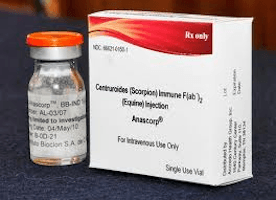
Bark Scorpion Sting: Indications for Anascorp and dosing controversies
The genus Centruroides, also known as the Bark Scorpion, is found throughout the southwestern United States and northern Mexico. Many emergency medicine practitioners in the Southwest are exceptionally familiar with the treatment of envenomation from Centruroides as a quarter million are reported annually1,2. Although typically mild envenomations occur in adults, children and the elderly are at increased risk for severe complications3. The toxic syndrome consists of a sympathetic and parasympathetic storm that can result in myocardial damage, involuntary jerking, wandering eye movements, and most threatening – loss of airway. [+]
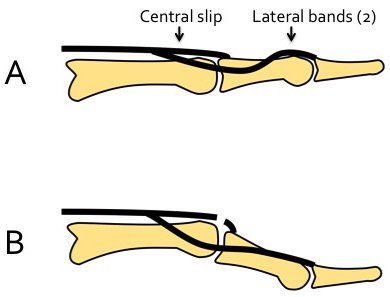
Diagnosing the central slip injury
Figure 1. Laceration overlying proximal interphalangeal (PIP) joint of right second digit. (Photograph by Daniel Ting and Jared Baylis) A 34-year-old cabinet maker presents to your Emergency Department after accidentally getting his finger caught in a drawer. On examination, he has a superficial, clean laceration over the dorsal surface of the right second digit (Figure 1). In a previous post, we discussed the approach to identifying, treating, and managing extensor tendon injuries of the hand. In it, we advocate for a high index of suspicion for extensor tendon injuries whenever a patient suffers a laceration to the dorsal aspect [+]

Trick of the Trade: Tibial Intraosseous Line Stabilization in an Agitated Patient
With the advent of commercial intraosseous (IO) needles for vascular access, administering IV medications for patients in extremis has been made much easier. Securing the IO needle to the patient’s tibia, femur, or humerus, however, is a different story. After successful patient resuscitation, these needles often tenuously secured through creative uses of sterile gauze, trimmed paper cups, bag valve masks, and/or just tape. Stabilization of tibial IO lines can be difficult in a sedated, intubated patient. This can be even more difficult in an agitated, moving patient. [+]
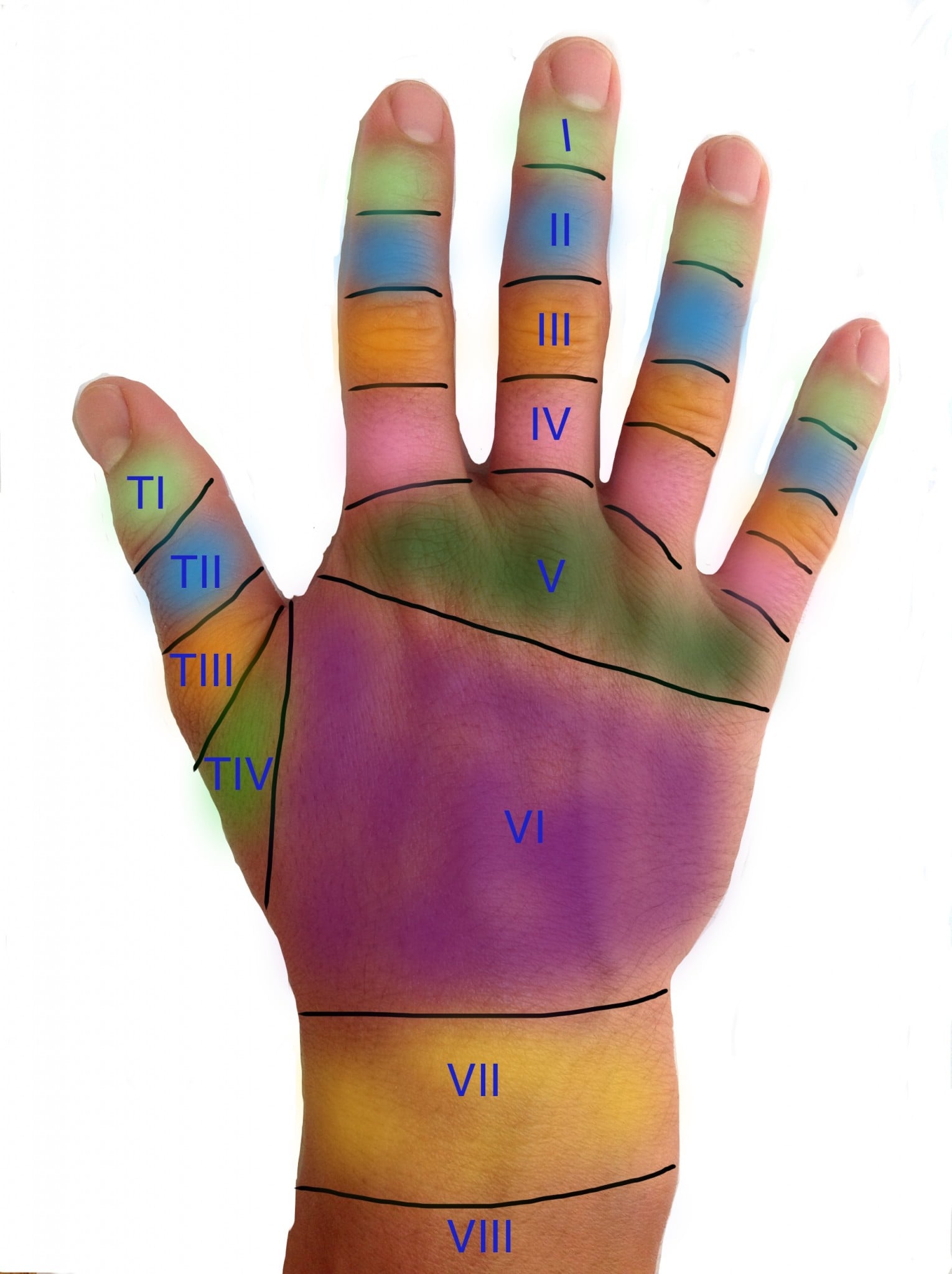
Extensor tendon injuries of the hand: Emergency Department management
You are working in the treatment area with a medical student and she is ready to review a “straightforward” case with you. She presents a young, healthy 27-year-old man with a laceration over the dorsal surface of the left hand after a kitchen mishap. It appears clean, and she doesn’t suspect a foreign body. The neurovascular status seems okay with the intact ability to extend the fingers. Her plan is to repair the wound and send the patient for follow up in 7 to 10 days with his family physician for suture removal. The wound appears superficial, but you are an astute clinician and wonder [+]

AIR-Pro Series: Critical Care (part 2) Module
Welcome to the Critical Care (Part 2) Block! Below we have listed our selection of the highest quality posts related to 4 advanced level questions on critical care topics posed, curated, and approved for senior residents by the AIR-Pro Series Board. The blogs relate to the following questions: Advanced ventilatory management Submassive pulmonary embolism management Hypotensive intubation End of life discussion AIR Stamp of Approval and Honorable Mentions In an effort to truly emphasize the highest quality posts, we have 2 subsets of recommended resources. The AIR-Pro stamp of approval will only be given to posts scoring above a strict scoring cut-off of ≥28 points (out [+]
AIR Series and AIR-Pro Series are moving to ALiEMU!
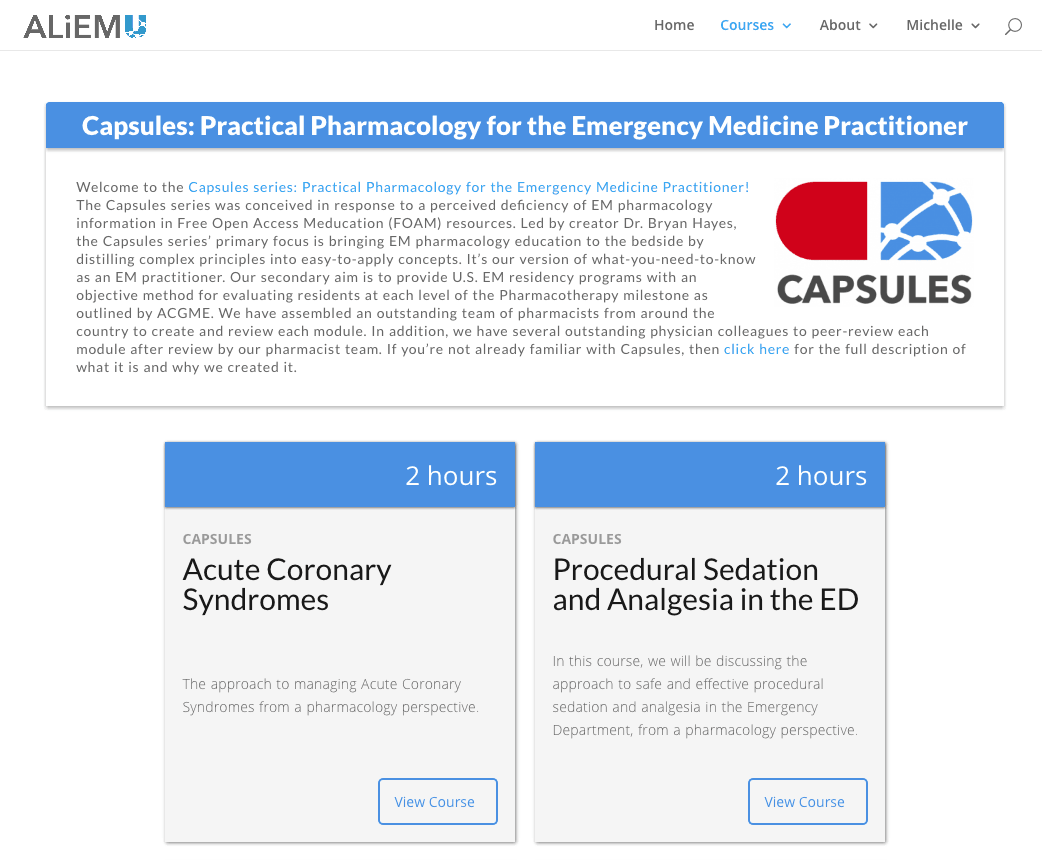
The ALiEM Approved Instructional Resources (AIR) and AIR-Pro series are moving from this ALiEM blog, which uses embedded Google Forms for quizzes into our custom learning management system called ALiEMU. ALiEMU will be our one-stop system for asynchronous learning. For U.S. EM residency programs, this will also serve as a central repository for Individualized Interactive Instruction (III) resources for asynchronous conference credit. The cornerstone e-course already on ALiEMU is CAPSULES — a comprehensive EM pharmacology curriculum, whose authorship and editorial team is led by Dr. Bryan Hayes. For the AIR and AIR-Pro series, we have over 80 U.S. EM residency programs, 4 international EM programs, and 1 PA [+]

AIR Series: Orthopedics Upper Extremity Module (2016)
Welcome to the Orthopedics Upper Extremity Module! After carefully reviewing all relevant posts from the top 50 sites of the Social Media Index the ALiEM AIR Team is proud to present the highest quality orthopedic upper extremity content. Below we have listed our selection of the 14 highest quality blog posts within the past 12 months (as of March 2016) related to orthopedic upper extremity emergencies, curated and approved for residency training by the AIR Series Board. More specifically in this module, we identified 2 AIRs and 12 Honorable Mentions. We recommend programs give 5 hours (just over 20 minutes per [+]

Director of Growth, Strategic Alliance Initiative, Center for Innovation and Digital Health
Massachusetts General Hospital;
Chief Scientific Officer, Conductscience.com
Latest posts by Shuhan He, MD (see all)
- The Discharge Severity Index: Early Research on ED Readmission Risk Assessment - August 14, 2025
- Suboxone and the Emergency Physician: Get Waivered Training - August 12, 2022
- A Tale of Two Epidemics: COVID-19 and the Opioid Crisis - April 23, 2020