



Epistaxis Management in the Emergency Department: A Helpful Mnemonic
Epistaxis is a common presentation to the emergency department (ED)1 that can be challenging and time consuming. Knowledge of the pearls, pitfalls, and troubleshooting tips around managing nosebleeds often can be the difference between a frustrating versus straightforward ED stay for patients. Use the EPISTAXIS mnemonic to help you remember these points. [+]

Trick of the Trade: Rapid Insertion of Orogastric Tube
We have all been in the situation: an intubated patient needs an orogastric (OG) tube and no one has been able to place it successfully. Unfortunately, we typically find out about this situation after several failed attempts, when the patient is bleeding and/or the anatomy is distorted. It may coil in the mouth or esophagus. Here I present a novel technique to rapidly place an OG tube within seconds. [+]

Ultrasound For The Win! – 46M with Diffuse Abdominal Pain #US4TW
Welcome to another ultrasound-based case, part of the “Ultrasound For The Win!” (#US4TW) Case Series. In this case series, we focus on a real clinical case where point-of-care ultrasound changed the management of a patient’s care or aided in the diagnosis. In this case, a 46-year-old man with a history of alcohol abuse presents with diffuse abdominal pain. [+]

PEM Pearls: Calming techniques while repairing a laceration
Most children who come into the Emergency Department present with pain or experience pain during their ED stay.1,2,3 Pain and distress during a procedure can leave a lasting impact on a child and contribute to mistrust of the medical system and compliance with future procedures.1 ,4,5 Children who use active forms of coping report less pain and distress during a procedure.3 To help with coping, when feasible, involve parents or family, nursing and a child life specialist. If the parents are willing, try to get them involved in all parts of the medical procedure.2,3 This includes positioning the patient with a parent in [+]

AIR Series: Respiratory Module (2017)
Welcome to the Respiratory Module! After carefully reviewing all relevant posts from the top 50 sites of the Social Media Index the ALiEM AIR Team is proud to present the highest quality procedure content. Below we have listed our selection of the 12 highest quality blog posts within the past 12 months (as of August 2016) related to Respiratory emergencies, curated and approved for residency training by the AIR Series Board. More specifically in this module, we identified 4 AIRs and 8 Honorable Mentions. We recommend programs give 4 hours (about 20 minutes per article) of III credit for this module. [+]

PEM Pearls: Brief Resolved Unexplained Events (BRUE)
A 2-month old boy was brought in by his mother after an episode of the child’s face turning blue and a pause in breathing. Mom reports this lasted a few seconds. The mother was terrified, so she brought the baby to the ED. Sometimes infants briefly stop breathing or go limp. How do we determine if an infant is low-risk for serious illness? Earlier last year, the American Academy of Pediatrics (AAP) released guidelines on the evaluation and management of Brief Resolved Unexplained Events (BRUE, replacing a 30-year old label “apparent life-threatening event” or ALTEs).1 [+]
Introducing In-Line Expert Peer Review: Advancing the State of Academic Blogging
A peer review process, in one form or another, has long been the de facto standard for academic publishing. In 2013, ALiEM was the first FOAM resource to initiate an attributed peer review process for all submitted content–effectively bringing a traditional standard to a new frontier of medical education.1 Since our expert peer review (EPR) program inception, reviewers have published critical appraisals alongside 114 ALiEM posts to date. [+]

Top 10 ALiEM Clinical Posts of 2016
Seasons greetings from the ALiEM team. We have been publishing so many posts this year that you may have missed a few. Did you catch at least the top 10 most-read ALiEM clinical posts, which were published in 2016? These include some Tricks of the Track pearls and clinical tips in toxicology, orthopedics, and neurology. Check them out. [+]
Top 8 Must-Know EM Pharmacotherapy Articles of 2016
For the third consecutive year, we provide a quick summary of some important Emergency Medicine pharmacotherapy articles from the last 12 months. We have tried to focus on articles you may have missed, but are potentially high-impact for improving clinical practice in the ED. Without further ado, we present the 8 must-know EM pharmacotherapy articles of 2016. [+]
Trick of the Trade: Warfarin tablet strength identification
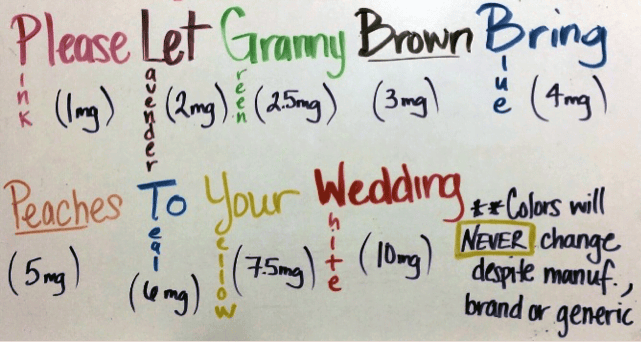
Medical providers commonly encounter patients in the emergency department who state they are anticoagulated with warfarin, but they have no idea what dose they are taking. “I know that I take two pills of warfarin daily.” Dosing becomes critically important especially when continuing their medication as an inpatient, refilling their medications, or adjusting their outpatient dose because of an inappropriately high or low INR level. How can you determine the patient’s warfarin dose? [+]

Director of Growth, Strategic Alliance Initiative, Center for Innovation and Digital Health
Massachusetts General Hospital;
Chief Scientific Officer, Conductscience.com
Latest posts by Shuhan He, MD (see all)
- The Discharge Severity Index: Early Research on ED Readmission Risk Assessment - August 14, 2025
- Suboxone and the Emergency Physician: Get Waivered Training - August 12, 2022
- A Tale of Two Epidemics: COVID-19 and the Opioid Crisis - April 23, 2020