



PV Card: Algorithm for acute bronchiolitis management
Bronchiolitis is a common lower respiratory tract infection in children less than 2 years old, and especially in those 3-6 months old. In a collaboration with the American Academy of Pediatrics’ (AAP) Section on Emergency Medicine Committee on Quality Transformation, we present a PV card summarizing the Section’s “Clinical Algorithm for Bronchiolitis in the Emergency Department Setting” (reproduced with permission).1 Dr. Shabnam Jain sums it up best in her expert peer review below: “In bronchiolitis, less is more.” [+]

ED Charting and Coding: Review of Systems
Editor’s Note (Jan 13, 2023): The new AMA CPT 2023 Documentation Guidelines have been published and the prior Review of Systems section is no longer incorporated into the billing and coding guidelines. See the ACEP FAQ page on the 2023 Emergency Department Evaluation and Management (E/M) Guidelines. The Review of Systems (ROS) was the most frustrating aspect of charting as an intern. Documenting at least 10 elements from systems seemingly unrelated to the chief complaint took as long as a physical exam and was much harder to remember. For efficiency, many of us include any pertinent positives and negatives [+]
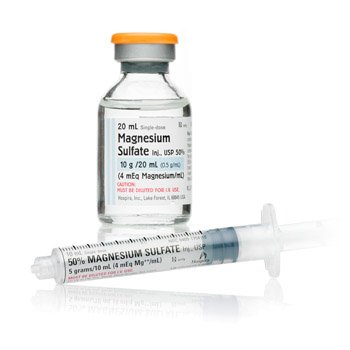
Magnesium for Rapid Atrial Fibrillation Rate-Control in the ED
We love magnesium in the Emergency Department. It’s been said that magnesium is second-line for everything (kind of like doxycycline). But what about rate/rhythm control in atrial fibrillation (AF)? The 2014 AHA/ACC/HRS guideline for the management of patients with AF doesn’t mention magnesium at all.1 Dr. Josh Farkas (@PulmCrit) wrote about magnesium infusions for atrial fibrillation and torsade last year. His post looked at its use for cardioversion, rhythm-control, and rate-control in critically-ill patients. Our post will focus specifically on the IV magnesium data for rate-control in ED-related settings. [+]

52 Articles in 52 Weeks (2nd edition, 2016)
Maintaining lifelong learning is challenging, especially when trying to keep up with all of the journal publications in emergency medicine (EM). In 2013, we published a compilation of 52 journal articles, which interns could read over a 52-week period, at an average pace of 1 journal article per week. In the list below, we present an updated compilation for the “52 Articles in 52 Weeks” initiative. [+]
![Emily [+]</p></body></html>](http://academiclifeinem.com/wp-content/uploads/2013/11/Junck.jpg)

Whipped Cream Charger Abuse: The Toxicologist Mindset
The Toxicologist Mindset series features real-life cases from the San Francisco Division of the California Poison Control System. Case: A 39-year-old man, with no significant past medical history, was brought to the emergency department by family members, over three consecutive days, for anxiety, confusion, and ataxia. In the first two visits, his laboratory work-up, including complete blood cell count, chemistry panel, liver function tests, urine drug screen, and non-contrast head CT, were unremarkable. On his third visit, he was profoundly encephalopathic with confusion and poor concentration. He had bilateral lower extremity weakness and ataxia. He was admitted to the neurology [+]

Introducing CME for ALiEM via FOAMbase
Ever wish you could get Continuing Medical Education (CME) credit for the Free Open Access Meducation (FOAM) you already consume? We are excited to announce that 10 ALiEM articles are now available for AMA PRA Category 1 CME. This is a pilot program in collaboration with FOAMbase and EB Medicine. There is great content on trauma, geriatrics, pediatrics, critical care, and more. We think CME for FOAM is going to be a great way to increase sustainability for FOAM authors while keeping FOAM 100% free and open access. [+]

ALiEMU CAPSULES Module 7: Emergency Thyroid Disorders
We are proud to present CAPSULES module 7: Emergency Thyroid Disorders, now published on ALiEMU. Here is a summary of the key points from this outstanding module by Drs. Craig Cocchio and Colleen Martin. [+]

Director of Growth, Strategic [+]

AIR-Pro: Toxicology (Part 1)
Welcome to the Toxicology (Part 1) AIR-Pro Module. Below we have listed our selection of the 10 highest quality blog posts related to 5 advanced level questions on toxicology topics posed, curated, and approved for residency training by the AIR-Pro Series Board. The blogs relate to the following questions: Flumazenil in benzodiazepine overdose Acetaminophen – drawing and timing of levels Opioid overdoses Acetaminophen toxicity related to liver transplant Salicylates and hemodialysis In this module, we have 6 AIR-Pro’s and 4 Honorable Mentions. To strive for comprehensiveness, we selected from a broad spectrum of blogs identified through FOAMSearch.net and FOAMSearcher.We have a brand new chief resident team and want to thank the [+]

Ultrasound for the Win! Emergency Medicine Cases: Volume 1 Book
The Ultrasound for the Win! book, available now on Amazon and coming soon to the Apple iBooks Store, is a compilation of real ultrasound cases that have been featured on the blog’s Ultrasound for the Win! Series. [+]
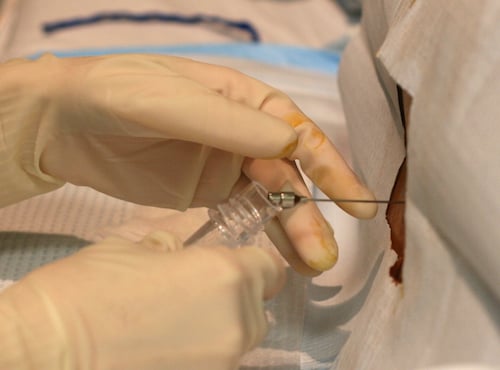
PEM Pearls: Perfecting your pediatric lumbar puncture using ultrasound
A lumbar puncture (LP) is a common procedure that every emergency physician must master. Pediatric LPs can be challenging for even the most experienced clinician due to small anatomy, difficulty with patient cooperation, and lack of frequency performed. A successful procedure is defined by obtaining cerebrospinal fluid and/or performing a non-traumatic lumbar puncture. There are multiple variables that lead to a successful pediatric lumbar puncture including provider experience, use of anesthesia, and patient positioning. Success rates for pediatric lumbar punctures are variable, with a large range from 34%-75%.1 [+]
Director of Growth, Strategic Alliance Initiative, Center for Innovation and Digital Health
Massachusetts General Hospital;
Chief Scientific Officer, Conductscience.com
Latest posts by Shuhan He, MD (see all)
- The Discharge Severity Index: Early Research on ED Readmission Risk Assessment - August 14, 2025
- Suboxone and the Emergency Physician: Get Waivered Training - August 12, 2022
- A Tale of Two Epidemics: COVID-19 and the Opioid Crisis - April 23, 2020