



AIR Series: Procedures Module (2016)
Welcome to the Procedures Module! After carefully reviewing all relevant posts from the top 50 sites of the Social Media Index the ALiEM AIR Team is proud to present the highest quality procedure content. Below we have listed our selection of the 13 highest quality blog posts within the past 12 months (as of June 2016) related to procedure emergencies, curated and approved for residency training by the AIR Series Board. More specifically in this module, we identified 3 AIRs and 10 Honorable Mentions. We recommend programs give 4 hours (about 20 minutes per article) of III credit for this module. [+]

ED Charting and Coding: History of Present Illness & Past Medical, Family, Social History
Editor's Note (Jan 13, 2023): The new AMA CPT 2023 Documentation Guidelines have been published and the prior history and physical elements are no longer incorporated into the billing and coding guidelines. See the ACEP FAQ page on the 2023 Emergency Department Evaluation and Management (E/M) Guidelines. Remember the “OPQRST” mnemonic? It stands for Onset, Provocation/Palliation, Quality, Region/Radiation, Severity, Timing. Not only can it guide your history taking, but charting these descriptors also ensures you can code at an appropriate level. The patient’s history is the first example of the balance between essential information and over-documentation. It should be comprehensive, [+]

Trick of the Trade: Simple finger traps using gauze roll
Closed reduction of fractures or dislocations in the hand and wrist can be difficulty to achieve. Gravity can serve as an assistant. Commercial finger traps are available, but can sometimes be hard to find in the Emergency Department. An earlier trick of the trade describes the use of a gauze role to build your own finger trap setup. The following describes a simpler way to build finger traps using a gauze roll. [+]
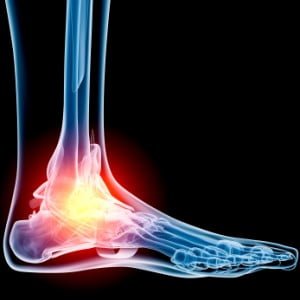
Radiograph-Negative Lateral Ankle Injuries in Children: Occult Growth Plate Fracture or Sprain?
An 7-year-old girl presents to your Emergency Department (ED) with an ankle inversion injury from while performing gymnastics. Plain films of her ankle show no fracture. It has been a long-held presumption that skeletally immature children with fracture-negative radiographs should be immobilized with a cast given the concern for an occult Salter-Harris 1 fracture. “Children do not get sprains” is a common teaching point. But a recent 2016 JAMA Pediatrics article challenges that premise in a prospective cohort study of 135 pediatric patients.1 Can these injuries be managed more like a sprain, utilizing a removable ankle brace? [+]

‘Treat and Release’ after Naloxone – What is the Risk of Death?
Often in the prehospital setting, naloxone is administered by EMS (or possibly a bystander) to reverse respiratory and CNS depression from presumed opioid overdose. The patient then wakes up, and not uncommonly, refuses transport to the hospital. The question is: Is it safe to ‘treat and release?’ Or, rather, what is the risk of death associated with this practice. Last updated: January 2, 2019 [+]

Trick of the Trade: Paraphimosis – Pour Some Sugar On Me
Paraphimosis occurs when a retracted foreskin can’t be reduced back over the glans of the penis. Risk factors for paraphimosis include scarring, vigorous sexual activity, chronic balanoposthitis, and forgetting to replace the foreskin after catheterization or manipulation. Paraphimosis can be a urological emergency as the tight ring formed by the foreskin can cause ischemia to the tip of the penis and eventually gangrene. Timely reduction is of high importance. Treatment involves gentle compression of the glans and gradual manual foreskin retraction.1 Unfortunately, as time goes on, more swelling occurs making traditional reduction techniques more difficult. [+]
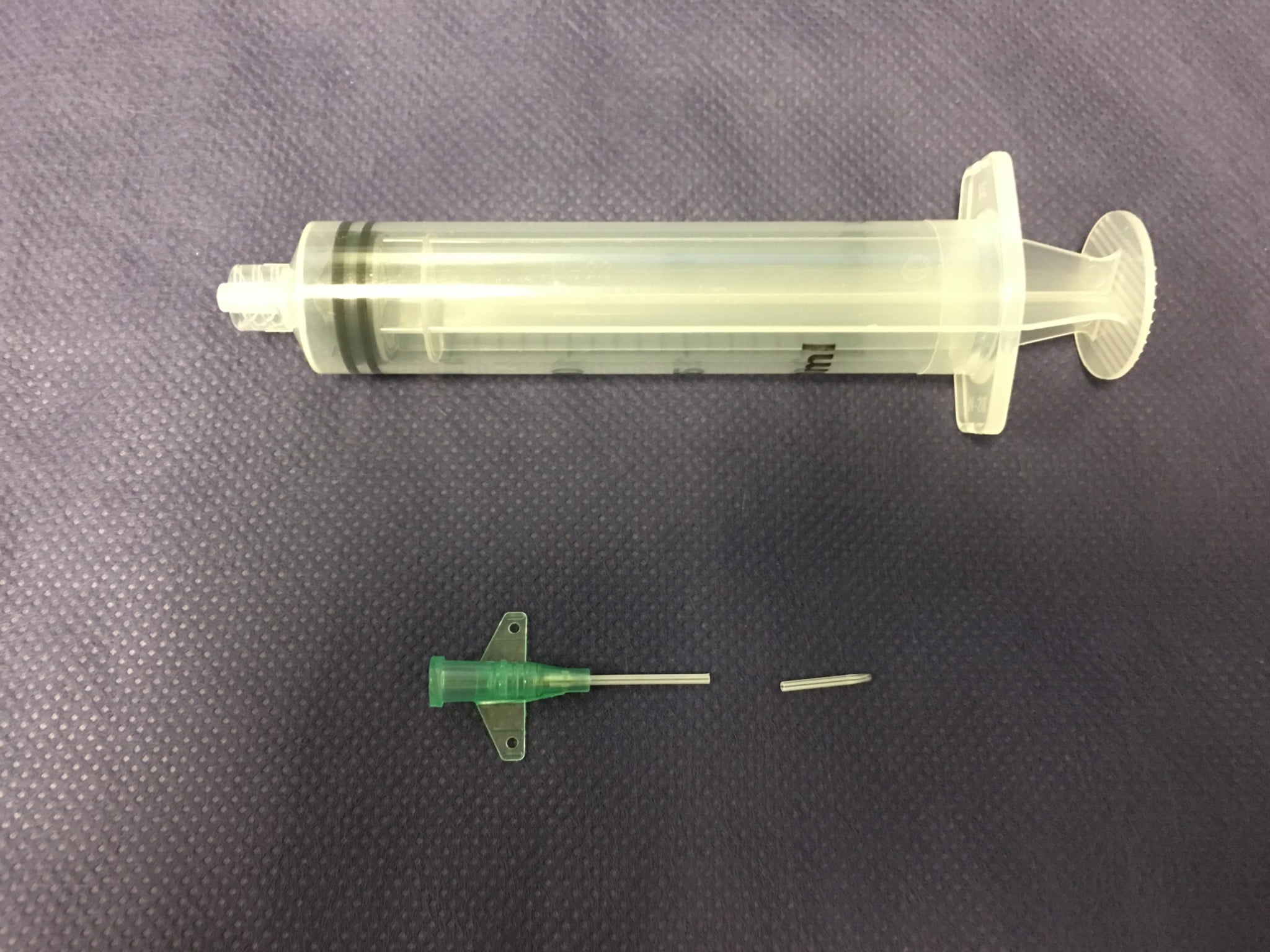
Trick of the Trade: Ear Irrigation in the Emergency Department
Ear irrigation is an important tool for adult and pediatric patients in the Emergency Department (ED) with ENT complaints. Irrigation can be used to clear ear cerumen, visualize tough-to-see tympanic membranes, and remove foreign bodies. This may reduce the need for subspecialist care and improve the patient’s hearing and quality of life.1 Commercial electronic and mechanical devices are available for irrigation and have been studied. Moulton and Jones presented the improved efficacy of foreign body removal using an electric ear syringe in an (ED) population.2 In this trick of the trade, we present a low cost and effective way of “ear-rigation” [+]
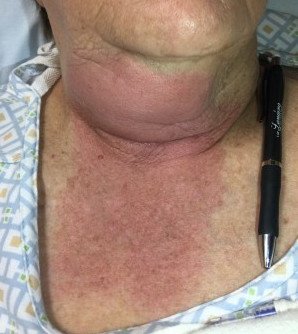
Diagnose on Sight: Case of a red, swollen neck
Case: A 78 year-old female with a past medical history of asthma and hypothyroidism presents with a three day history of sore throat and a two day history of a “lump” along the right side of her neck. The “lump” has now progressed to involve both sides of her anterior neck and is accompanied with erythema, tenderness to palpation, and swelling. In addition, the patient has developed a hoarse voice and odynophagia. The patient’s primary care physician referred her to an ENT specialist, who then referred the patient to the ED for urgent imaging due to the concern for a deep space [+]

PV Card: Introduction to ED Charting and Coding
Editor’s Note (Jan 13, 2023): The new AMA CPT 2023 Documentation Guidelines have completely revamped how the billing and coding for Emergency Department charts is done. See the ACEP FAQ page on the 2023 Emergency Department Evaluation and Management (E/M) Guidelines. What makes a good chart? How do you write a good chart quickly? How about a good, efficient, billable chart? On average, residents and practicing physicians report they did not receive adequate training in charting and coding [1–3] and resident charts are more often down-coded due to documentation failures than those of attendings and PAs [4]. Thankfully, resident [+]
ALiEM Book Club: A Thousand Naked Strangers: A Paramedic’s Wild Ride to the Edge and Back
“EMS is wild and imperfect. Just like our patients. It’s dangerous and a little mad and possibly contagious…patients don’t come to us… we go to them, and where and how we find them, well, that, too, is part of the story. once in the field, we should expect no help.” – Kevin Hazzard [+]

Tanner Gronowski, DO

Director of Growth, Strategic Alliance Initiative, Center for Innovation and Digital Health
Massachusetts General Hospital;
Chief Scientific Officer, Conductscience.com
Latest posts by Shuhan He, MD (see all)
- The Discharge Severity Index: Early Research on ED Readmission Risk Assessment - August 14, 2025
- Suboxone and the Emergency Physician: Get Waivered Training - August 12, 2022
- A Tale of Two Epidemics: COVID-19 and the Opioid Crisis - April 23, 2020