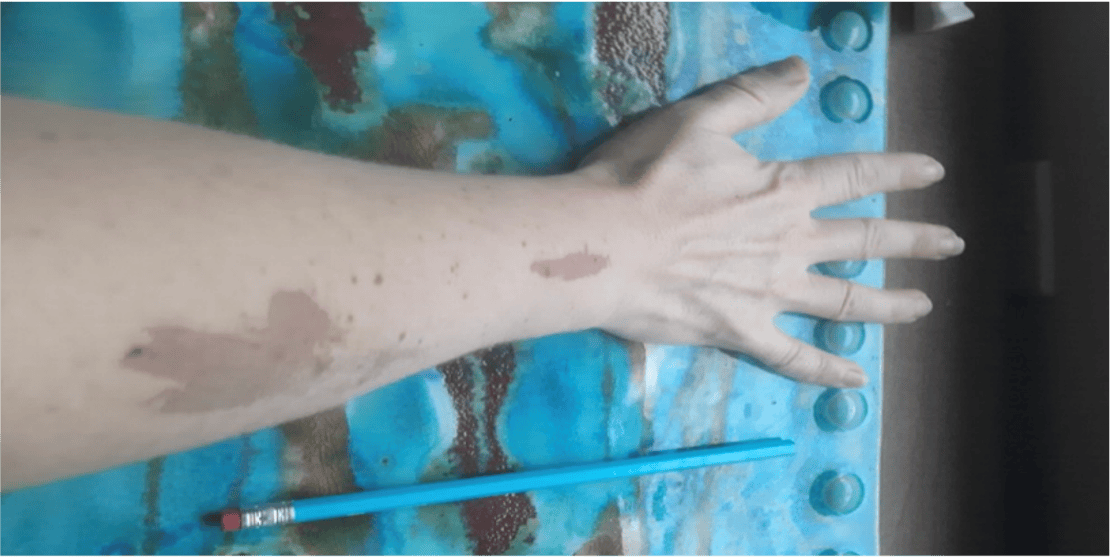
ACMT Toxicology Visual Pearl: Not Very A-peel-ing
Which of the following chemicals, commonly used in chemical peels, can cause severe, gray colored skin burns upon direct contact? Acetone Hydrogen peroxide Phenol Salicylic acid [Author’s own image] [+]

Emma Lindemann, MD
Corewell Health West - Butterworth Hospital
Grand Rapids, MI
Latest posts by [+]
EM Match Advice 48: Transitioning from ERAS to ResidencyCAS – Platform Features and Essential Resources
In this episode of EM Match Advice, Dr. Sara Krzyzaniak (Stanford University EM Program Director) speaks with Dr. Liza Smith (Clerkship Director/Associate Program Director at UMass Baystate and past Chair of the CORD Application Process Improvement Committee, and Dr. Tim Fallon (Associate Program Director at Maine Medical Center and the committee's current Chair), about the historic transition from ERAS to ResidencyCAS for EM residency applications. This marks the first year that EM is using ResidencyCAS as an application service, moving away from the ERAS platform used in previous years. The discussion focuses on essential resources and new platform features [+]
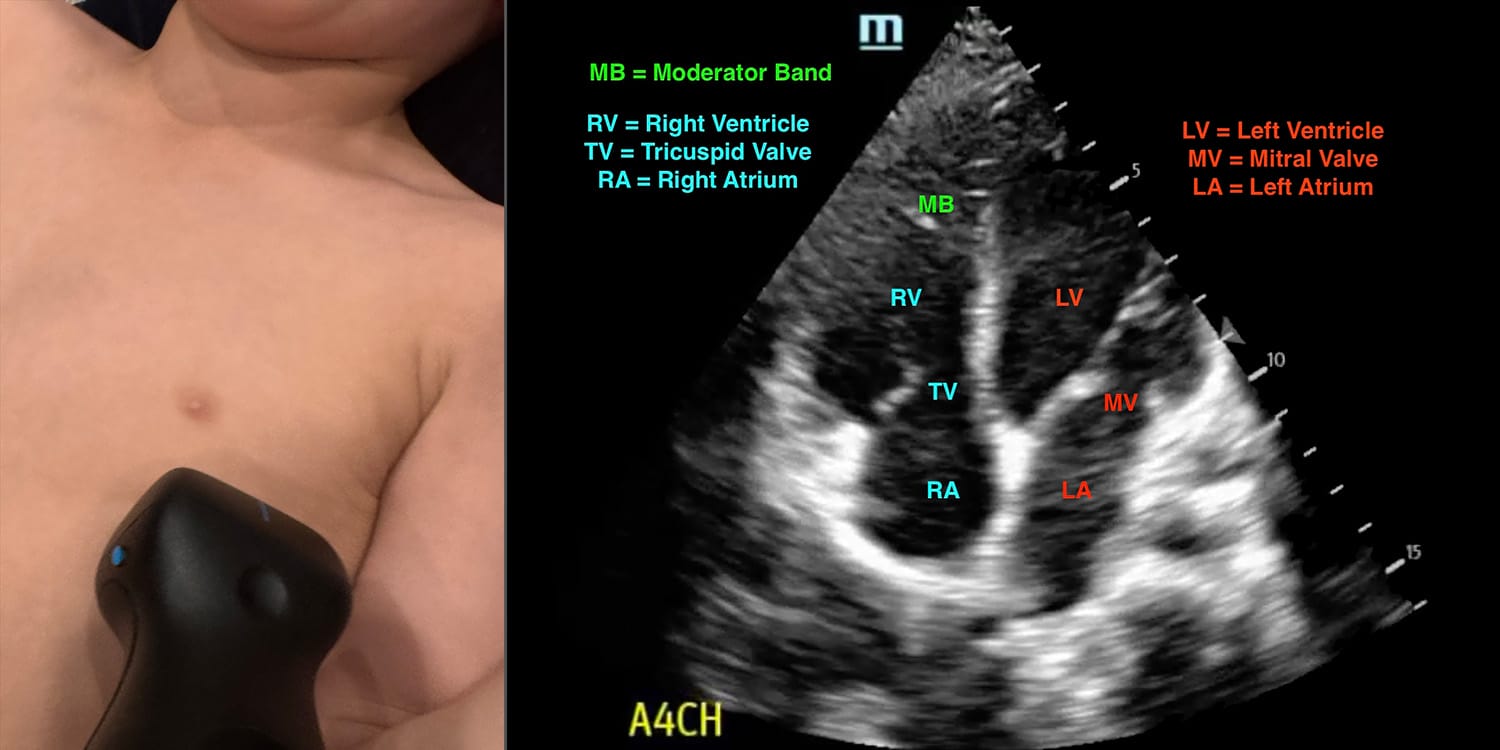
PEM POCUS Series: Pediatric Cardiac
Read this tutorial on the use of point of care ultrasonography (POCUS) for pediatric cardiac evaluation. Then test your skills on the ALiEMU course page to receive your PEM POCUS badge worth 2 hours of ALiEMU course credit. Take the ALiEMU PEM POCUS: Pediatric Cardiac Module Goals List the indications and limitations of pediatric cardiac point-of-care ultrasound (POCUS) Describe the technique for performing cardiac POCUS Identify anatomical landmarks accurately on cardiac POCUS Interpret abnormal findings on cardiac POCUS Describe the basic literature behind pediatric cardiac POCUS Case Introduction: Child with respiratory distress You are in [+]
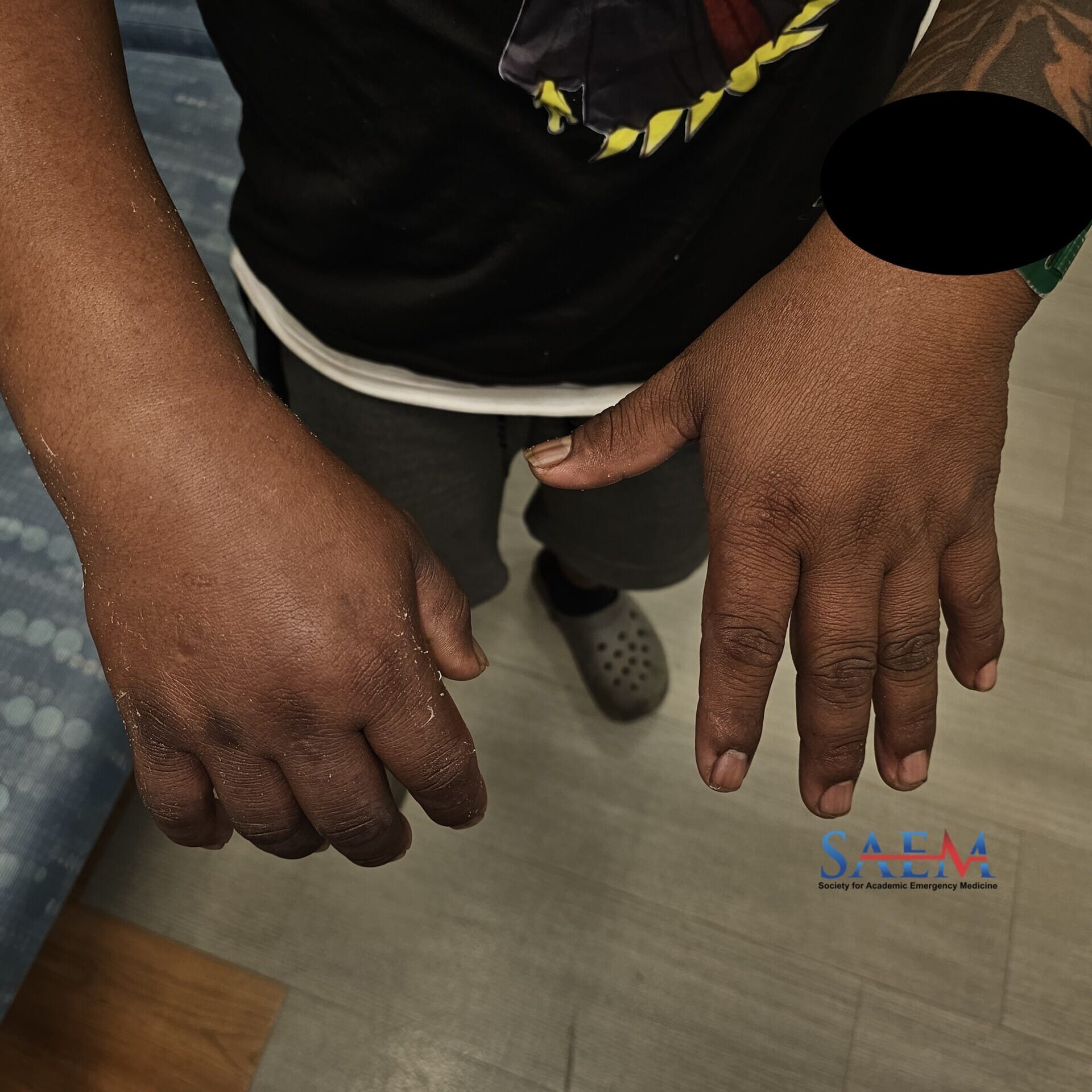
SAEM Clinical Images Series: Pain and Swelling in a Roofer’s Right Wrist
A 27-year-old male with no significant past medical history presented to the ED due to right hand pain and swelling. The patient reported that he works as a roofer and felt severe, sharp pain in his right hand immediately after using a nail gun this morning. The pain was followed by gradual swelling of the right wrist and hand. There was no loss of sensation or bleeding from the injury site. He additionally denied any injury from the nail itself. The patient was in moderate pain but hemodynamically stable while in the ED. [+]
SAEM Clinical Images Series: Painful Great Toe
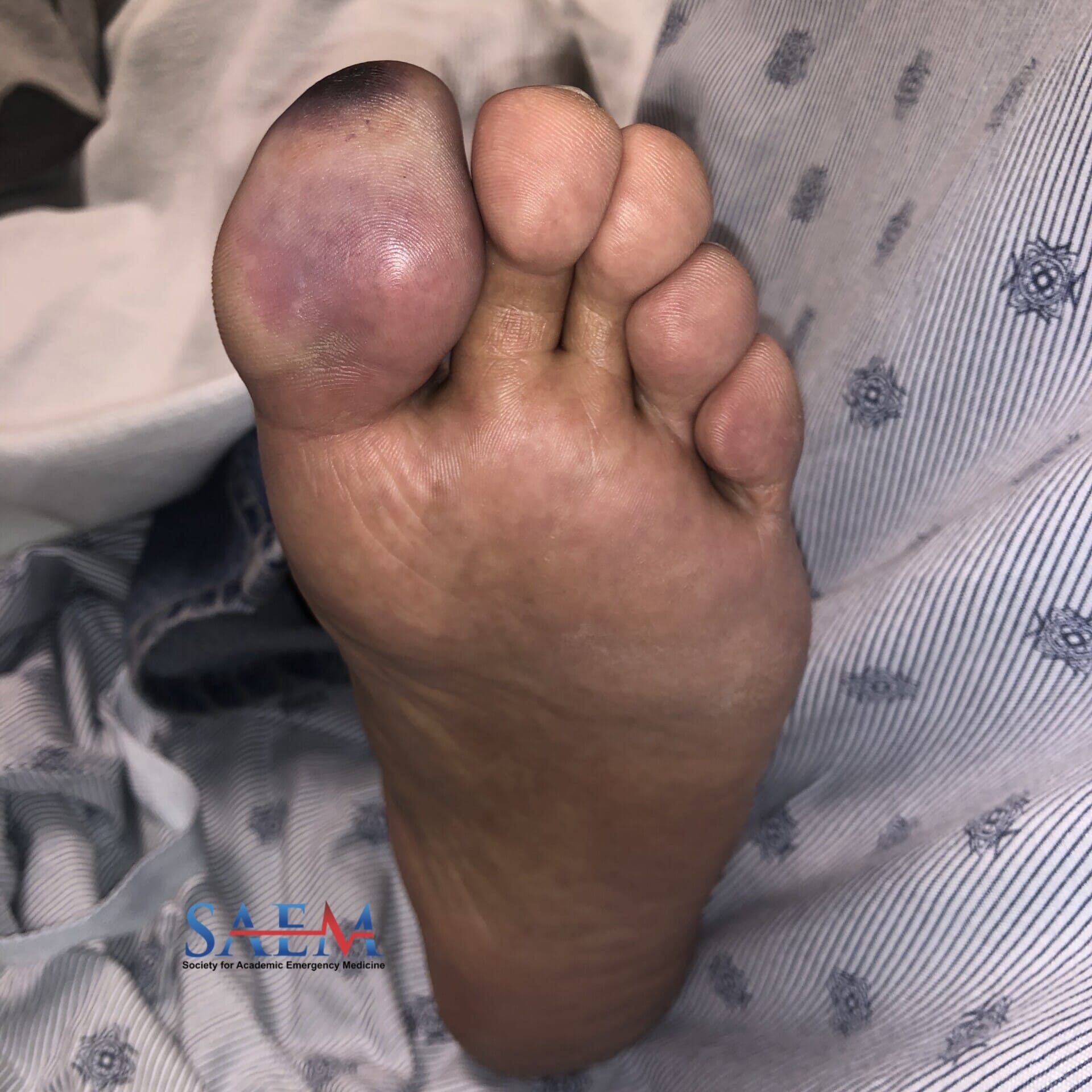
A 63-year-old-male with a past history of hypertension, renal failure with dialysis three times per week, and prior infective endocarditis appropriately treated with a regimen that ended four weeks ago presented with left great toe pain that started three weeks ago. The toe began swelling two weeks ago with continued pain and tenderness, becoming discolored approximately one week ago. He noted subjective fever and chills, but had no other complaints. Vitals: Heart Rate 104, BP 111/69 mmHg, Temperature oral 38.1°C, Respiratory Rate 16; SpO2: 99% on room air Skin: The plantar [+]
EM Match Advice 47: 2025 EM Match By The Numbers
The Emergency Medicine (EM) Match process continues to evolve, with the specialty experiencing significant shifts in recent years. In this 47th installment of the EM Match Advice podcast series, Dr. Sara Krzyzaniak (Stanford EM PD) hosts the annual program director reflection on the Match with Dr. Abra Fant (Northwestern EM PD), who returns for her fourth consecutive year to share insights on the NRMP Match trends and data. Podcast Episode: EM Match by the Numbers Tables: EM Match by the Numbers Key 2025 Match Statistics: A Clear Improvement Significant Reduction in Unfilled Positions The most notable [+]

ALiEM AIR Series | Environmental Module (2025)
Welcome to the AIR Environmental Module! After carefully reviewing all relevant posts in the past 12 months from the top 50 sites of the Digital Impact Factor [1], the ALiEM AIR Team is proud to present the highest quality online content related to related to Environmental emergencies in the Emergency Department. 5 blog posts met our standard of online excellence and were approved for residency training by the AIR Series Board. More specifically, we identified 1 AIR and 4 Honorable Mentions. We recommend programs give 3 hours of III credit for this module. AIR Stamp of Approval and Honorable Mentions [+]
SAEM Clinical Images Series: I Cannot See My Rashes
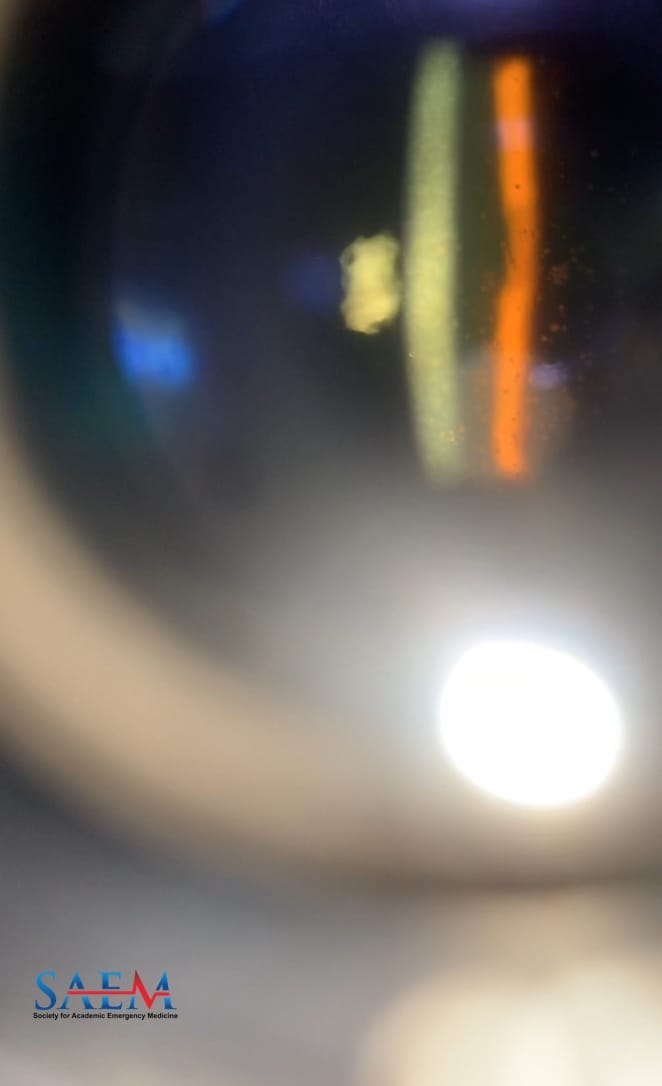
A 37-year-old African-American transgender patient presented with progressive, bilateral painful vision loss. The symptoms began acutely in the right eye two weeks prior to presentation, eventually extending to the left eye. Symptoms were worse in the right eye and included headache, blurry vision, photophobia, and pain with eye movement. Additionally, the patient reported the appearance of a diffuse, generalized, non-pruritic, non-tender rash of unknown duration or timeline. The rash was hyperpigmented and located on the trunk, face, genitalia, palms, and soles. The patient denied any recent trauma, using eye drops, wearing glasses, recent new detergents, [+]
SAEM Clinical Images Series: I’m Plugged Up
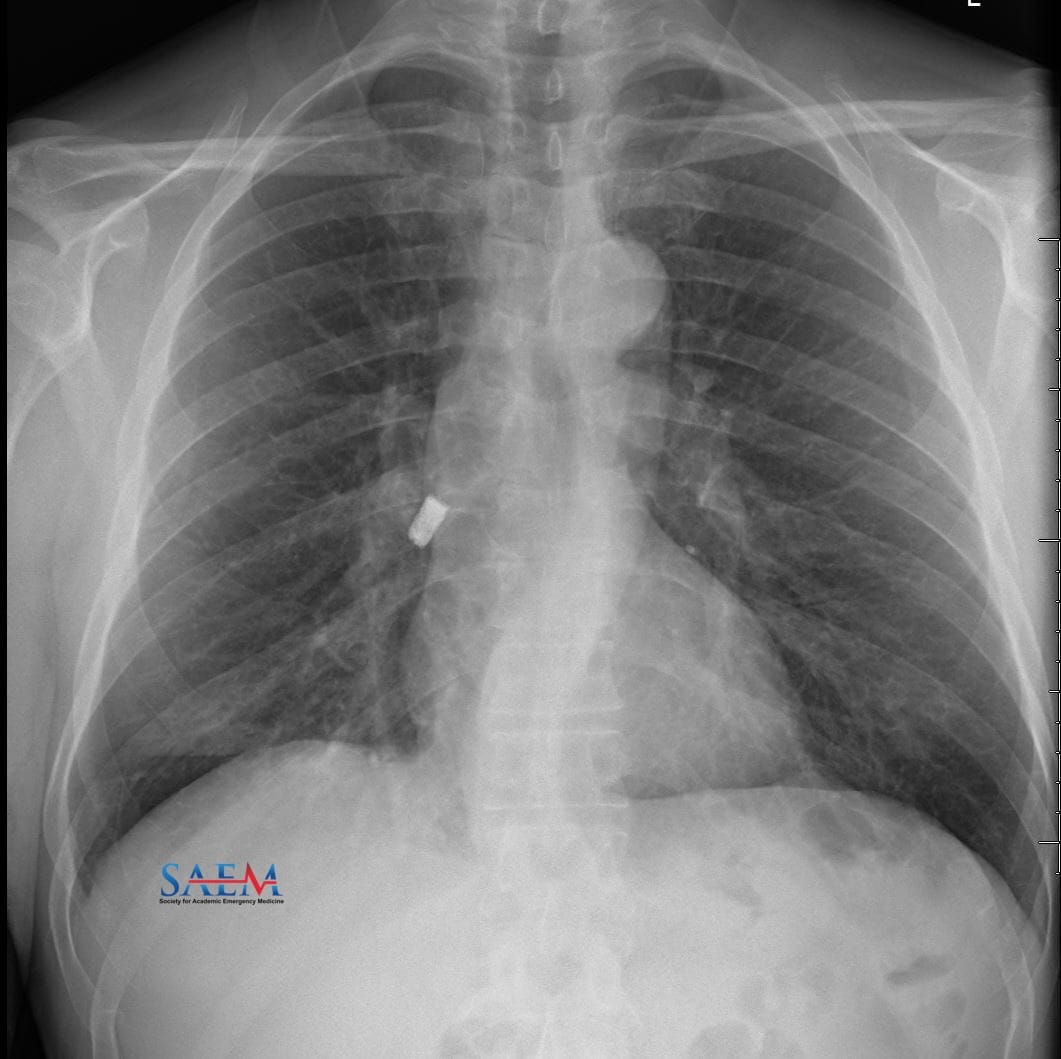
A 56-year-old male with a history of crack cocaine and opiate drug use presented to the Emergency Department (ED) with concerns about a persistent dry cough for seven days. The cough started after smoking cocaine from a homemade glass pipe. The day before arrival, he developed sharp chest pain with coughing associated with shortness of breath and a sore throat. The patient denied fevers, chills, or shortness of breath. He denied hemoptysis, nausea, vomiting, and diarrhea. A chest x-ray was obtained with the findings seen below. Vitals: Temp: 36.6°C; HR: 78 [+]
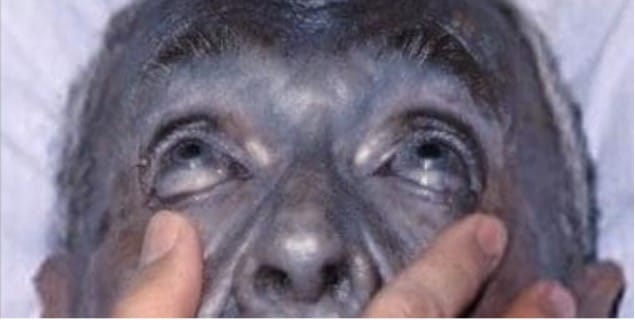
ACMT Toxicology Visual Pearl: Turning Blue
What commercially available product can cause blue-grey discoloration of the skin and conjunctiva with long term use? Benzocaine, 20% oral gel Colloidal silver, 30 ppm liquid solution Ferrous sulfate, 325 mg tablet Methylene blue, 1% oral solution [Image from Herbert L. Fred, MD and Hendrik A. van Dijk via Wikimedia Commons] [+]