


The Post-ROSC Checklist: Standardizing Clinical Practices
In emergency medicine, we are so heavily trained in resuscitation that any senior resident could recite the ACLS algorithm to you after being woken up at 3 am. However, the real work begins after the pulse return. Up to two-thirds of patients with return of spontaneous circulation (ROSC) will not survive to discharge.1,2 This approach, modeled after the 2015 American Heart Association Guidelines3 and an excellent review article by Dr. Jacob Jentzer et al,4 can help guide you through the chaos to stabilize your next post-ROSC patient. [+]

ACMT Toxicology Visual Pearls: Suicide plant
The seeds of the Suicide Plant, when ingested, may result in significant toxicity, including the ECG findings shown. Which kind of toxicity does it cause? Anticholinergic poisoning Cardiac glycoside poisoning Cardiac sodium channel blockade Cholinergic poisoning Nicotinic poisoning [+]


ALiEMU Capsules Module 8: Venous Thromboembolism
We are proud to present Capsules Module 8: Venous Thromboembolism, now published on ALiEMU. Here is a summary of the key points from this outstanding module by Drs. Jill Logan and Doug Gowen. [+]
Director of Growth, Strategic Alliance [+]
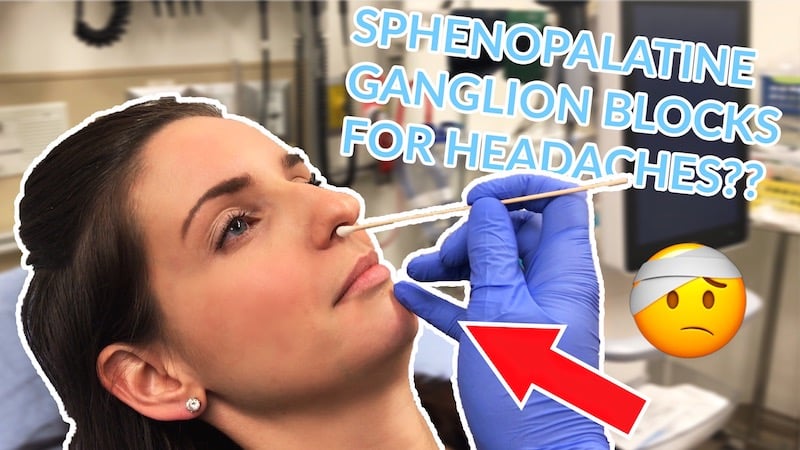
Trick of the Trade: Sphenopalatine Ganglion Block for Treatment of Primary Headaches
It is thought that the autonomic nervous system is likely involved in migraines and other primary headache disorders given commonly associated symptoms such as nausea, lacrimation, emesis, and rhinorrhea. The sphenopalatine ganglion (SPG) is an extracranial parasympathetic ganglion with both sensory and autonomic fibers. It has therefore been hypothesized that blockade of the sphenopalatine ganglion may produce relief from primary headaches by modulating the autonomic fibers involved in headache disorders.1 While in our anecdotal experience with SPG blocks has been overall very positive, thus far there have been only a few small studies that have investigated it’s use in the [+]

PEM Pearls: 2017 AAP Section of EM’s Guide to Pediatric Community Acquired Pneumonia
Pediatric community-acquired pneumonia (CAP) is an acute, common, and potentially serious infection of the pulmonary parenchyma in children. In November 2010, the American Academy of Pediatrics endorsed “The management of community-acquired pneumonia in infants and children older than 3 months of age: clinical practice guidelines by the Pediatric Infectious Diseases Society and the Infectious Diseases Society of America.” [PDF]1Based on this guideline, the American Academy of Pediatrics (AAP) Section on Emergency Medicine’s Committee on Quality Transformation developed a clinical algorithm for CAP in the ED setting. [+]

Beyond the Abstract: Patient video testimonials improve physician interpretation of advance directives and POLST
Over 1,300 physicians across the U.S. were asked to interpret patient preferences for end-of-life care in theoretical cases. Physicians rarely reached consensus about patient preferences when they were given only living wills and POLST documents to interpret. The addition of a patient video testimonial helped physicians make better care decisions that reflected their patients’ wishes. Will video become the new national standard for advance care planning? [+]
AIR Series: Trauma Module (2017)
Welcome to the Trauma Module! After carefully reviewing all relevant posts from the top 50 sites of the Social Media Index the ALiEM AIR Team is proud to present the highest quality procedure content. Below we have listed our selection of the 21 highest quality blog posts within the past 12 months (as of September 2016) related to Trauma emergencies, curated and approved for residency training by the AIR Series Board. More specifically in this module, we identified 5 AIRs and 16 Honorable Mentions. We recommend programs give 7 hours (about 20 minutes per article) of III credit for this module. [+]

PV Card: Laceration Repair and Sutures – A cheat sheet guide
Laceration repair and suturing are foundational skills for the Emergency Department. This pocket card serves as a quick reference guide for clinicians, and provides a much-needed update and design upgrade from the 2011 PV card on Sutures. This card covers suture/staple removal times, suture sizes, suture material characteristics, special laceration considerations, and suture techniques. [+]


PEM Pearls: Pediatric Sepsis Management – Understanding the Basics
Just as in adults, pediatric sepsis is a complex topic with continued research. In the United States, there are an estimated 75,000 cases per year of pediatric severe sepsis with an in-hospital mortality of 5-10%.1,2 This is one of the deadliest conditions treated in children. In addition, after the Rory Staunton case, New York State passed regulations requiring all hospitals to have pediatric specific recognition, treatment, and data reporting systems. Several other states have adopted, or are considering, similar requirements. Thus it is critical that emergency physicians understand at least the basics of pediatric sepsis management. [+]
60 Second Soapbox: Messman (Vertigo), Dolcourt (Charcoal), Stiell (C-spine Rules)
After a bit of a hiatus we are back with another round of 60-Second Soapbox! Each episode, one lucky individual gets exactly 1 minute to present their rant-of-choice to the world. Any topic is on the table – clinical, academic, economic, or whatever else may interest an EM-centric audience. We carefully remix your audio to add an extra splash of drama and excitement. Even more exciting, participants get to challenge 3 of their peers to stand on a soapbox of their own! [+]
Director of Growth, Strategic Alliance Initiative, Center for Innovation and Digital Health
Massachusetts General Hospital;
Chief Scientific Officer, Conductscience.com
Latest posts by Shuhan He, MD (see all)
- The Discharge Severity Index: Early Research on ED Readmission Risk Assessment - August 14, 2025
- Suboxone and the Emergency Physician: Get Waivered Training - August 12, 2022
- A Tale of Two Epidemics: COVID-19 and the Opioid Crisis - April 23, 2020